Notting Hill Carnival 2026: The 60th Anniversary, As It Happened
Notting Hill Carnival 2026 ended with 636 arrests, four knife assaults none life-threatening, and one death under IOPC investigation. The 60th, verified.
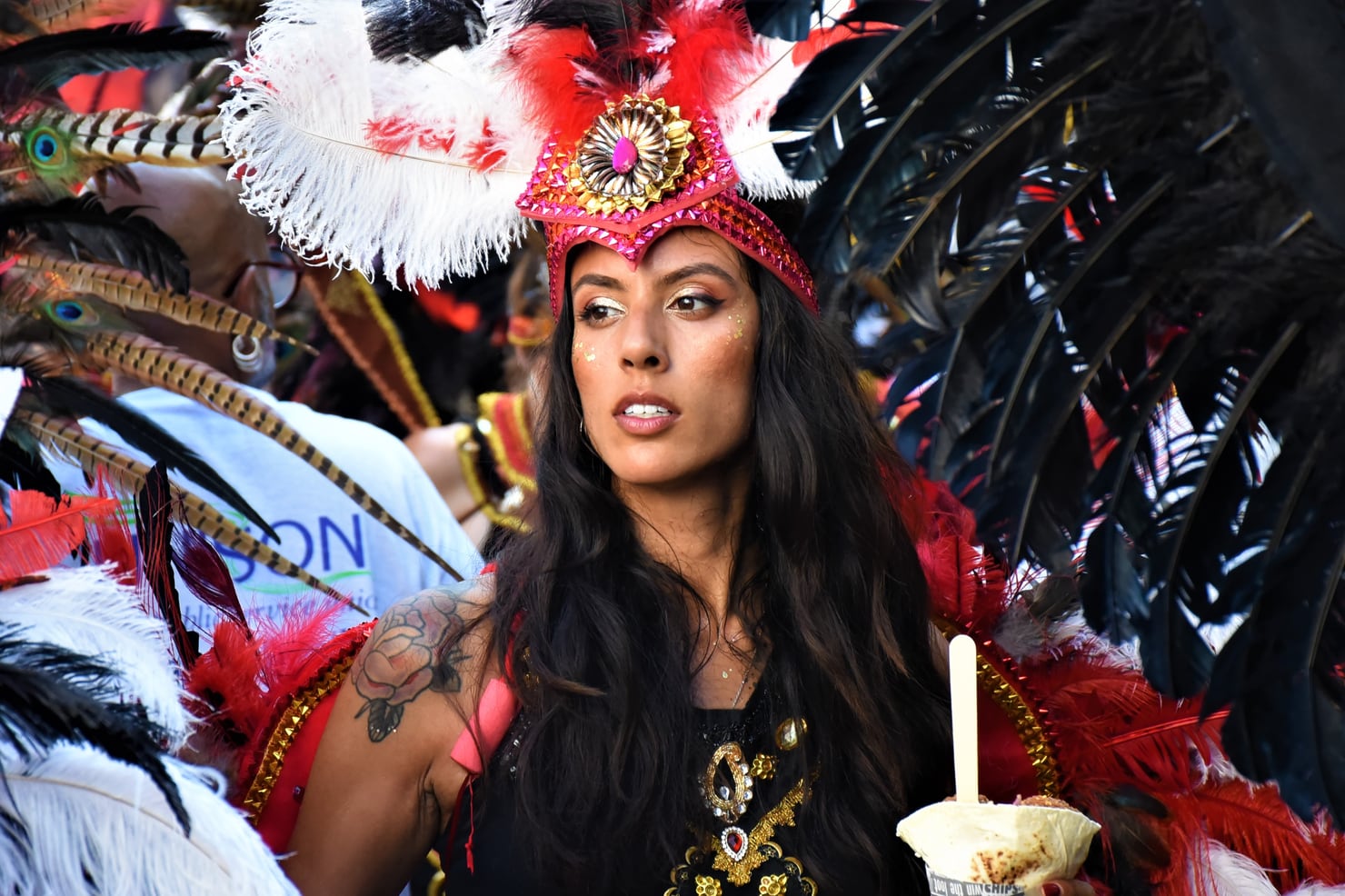
Notting Hill Carnival 2026 is over, and the 60th anniversary edition finished with 636 arrests, the Met's final count, four knife assaults none of which were life-threatening, and one death now under independent investigation by the police watchdog. Two days of parade, mas and sound systems moved through W10 and W11 as they have for six decades, music from midday to the 7pm cut-off, free, no ticket. Ebony Steelband took the Panorama title on the Saturday. This is our recap, updated with the Met's final figures of Tuesday 1 September and the IOPC's statement of 4 September, told from a DJ's ear rather than a tourist board's checklist. Where a number is still provisional, we say so rather than rounding it into a headline.
Notting Hill Carnival 2026 at a glance
- Dates: Sunday 30 and Monday 31 August 2026, the August Bank Holiday weekend, with Panorama on Saturday 29 August.
- The anniversary: 60 years, the Diamond Jubilee edition, counting from the first Notting Hill street festival in 1966.
- Sunday: Family Day, J'ouvert from around 6am, opening ceremony near 10am, children's parade from about 10:30am to 5pm.
- Monday: Adults' Day, the Grand Finale parade from around 10:30am to 5pm.
- Music hours: sound systems and stages ran 12pm to 7pm on both days, all music off at 7pm.
- Moment of Reflection: a 72-second silence at 3pm on both days for the 72 people who died in the Grenfell Tower fire.
- Free: the street carnival is free with no ticket, only Panorama on the Saturday is separately ticketed.
- Route: a roughly 3.5-mile circular loop through Notting Hill, Ladbroke Grove, Westbourne Grove, Westbourne Park and Kensal Road.
- Sound systems: more than 30 static systems across west London, 36 on the 2026 list, from Channel One to Aba Shanti-I.
- Scale: around two million people typically over the two days, described by organisers as Europe's largest street festival.
- Economy: the Mayor of London puts Carnival's worth at roughly £400 million to London a year.
- Panorama winner: Ebony Steelband, a 25th title, arranged by Ojay Richards on Voice's Cyah Behave.
- Arrests: 636 across the two days, 242 on the Sunday and 394 on the Monday (Met final figure, 1 September), against 528 in 2025.
- Serious violence: four knife assaults over the weekend, none life-threatening.
- Policing: more than 7,000 officers, 68 weapons found through stop and search, 121 arrests from live facial recognition.
- One death: Karnell Kelly, 25, died on the Monday after entering the canal off Kensal Road; the IOPC has opened an independent investigation.
- Funding backdrop: £4.66 million in extra City Hall money announced on 27 March 2026 for safety and crowd management, on top of £946,300 already committed.
Sixty years in one weekend: why this edition mattered
You could feel the anniversary before you heard a single bassline. Notting Hill Carnival has spent most of its six decades being told, in one way or another, that it should be smaller, quieter or somewhere else. That it arrived at its Diamond Jubilee still occupying the same streets, still free, still loud, is the whole point of it. The 2026 edition was built to say so, wrapped inside a six-month heritage programme, Carnival 60, running from roughly May to October with walks, talks, suppers and an exhibition, "In Full Colour: Notting Hill's Caribbean Story".
The history is worth telling properly, because the guides that flood the search results tend to nod at "60 years" and move straight to transport advice. The lineage runs back further than 1966. The Trinidadian activist Claudia Jones organised an indoor "Caribbean Carnival" at St Pancras Town Hall in 1959, widely seen as the forerunner, staged in the shadow of the 1958 Notting Hill racial attacks and the 1959 racist murder of Kelso Cochrane. In 1966 the social worker Rhaune Laslett organised the outdoor festival that became Carnival proper, with Russ Henderson's steel band leading the first procession. From 1973 the Trinidad-born director Leslie Palmer expanded it into a mass event, bringing in sound systems and more mas bands, and turning a neighbourhood parade into the thing two million people now travel for.
That arc, a community turning exclusion into expression, is exactly what Notting Hill Carnival Ltd, the organising body, leaned into for the 60th. Its chief executive Matthew Phillip framed the anniversary, on the official Carnival channels, as marking "six decades of a community that turned exclusion into expression, and struggle into celebration". Stand on a corner in W10 on the Monday and that sentence stops being a press line. The sound-system culture MNEEMO cares about most, the roots and dub lineage that seeded so much of British bass music, was born on these exact junctions in the 1970s, a direct ancestor of the modern UK soundsystem culture that now fills festival main stages worldwide.
The sound systems that ran it
If you come to Carnival for the parade, you go home having seen a spectacle. If you come for the sound systems, you go home having been rearranged. The static systems are the reason this weekend belongs on a music site at all, and 2026 fielded the full spread: more than 30 systems bolted to west London railings and shopfronts, 36 on the official list, each holding a corner and a genre from midday until the 7pm cut-off. This is the part the travel pages never name. If you want the corner-by-corner map, the genres and a DJ's walking route, it lives in our full guide to the 36 Carnival sound systems, and this recap will not duplicate it.
What the recap can tell you is how the spread was laid out this year. The two anchors were where they always are. Channel One did what Channel One does: the same corner it has held for four decades, dub at chest pressure, a queue of heads who plan their whole day around it. Aba Shanti-I ran the Southern Row and East Row corner, a deeper, more meditative churn of dub that keeps its devoted crowd rooted to one spot for hours. Around those two poles the map fanned out exactly as our guide lays it: reggae and bashment, big party sounds, house, ska, hip-hop, soca and calypso, and the harder electronic edges further out. It is the widest single-weekend snapshot of Black British music you will find anywhere, and it maps cleanly onto the UK's homegrown dance genres, most of which trace some part of their DNA back to a Carnival sound system.
The genre breadth is also why the crowd is not one crowd: a roots pilgrim at Aba Shanti-I and a soca dancer following a mas band want opposite things from the same three miles of tarmac, and the weekend gives both what they came for. That lineage runs right up to the present, into the Bristol bass crossover, and into rooms that broadcast it, like the London underground broadcast culture that grew up documenting exactly this kind of music.
Sunday: J'ouvert, Panorama and Children's Day
Carnival does not begin on the Monday, whatever the day-tripper's schedule suggests, and the people who know it best treat the Sunday as the real one. The weekend actually opened on the Saturday with the UK National Panorama steel band competition at Emslie Horniman's Pleasance Park, the one ticketed element of the whole affair. Ebony Steelband won it, taking a 25th national title with Ojay Richards arranging, on Voice's Cyah Behave, and putting the defending champions Mangrove off the top after a year away from the competition; Mangrove finished second. If you have never heard a full steel orchestra locked into a tune under lights, it is the most underrated night of the weekend, and it is where the discipline lives.
The Sunday itself began in the dark. J'ouvert, Carnival's dawn opening rooted in Trinidadian tradition, started around 6am near the Canal Way roundabout, all paint, powder and percussion, the rawest and most participatory hours of the entire weekend. By mid-morning the mood had shifted to the Family Day programme: an opening ceremony around 10am and the children's parade from roughly 10:30am to about 5pm. Sunday is calmer by design, the crowds are lighter, and if your priority is hearing as many sound systems as possible with room to move between them, it is the better of the two days. The systems keep identical hours across both, 12pm to 7pm, so the Sunday buys you the same music with more space to receive it.
The Family Day framing matters more than it sounds. Carnival is often reported as a policing story, and the children's costume bands and school groups on the Sunday are the corrective: this is a neighbourhood festival that happens to be enormous, not an enormous festival in a neighbourhood. The families on the route are, in a lot of cases, the third generation of the households that walked it in the 1970s.
Monday: the Grand Finale and the 3pm Moment of Reflection
Monday is Adults' Day, and it is the one the two million come for. The main Grand Finale parade began around 10:30am and ran to about 5pm, the mas bands at full strength, the costumes at their most spectacular, the crowds at their heaviest. This is Carnival at maximum volume, the day the aerial shots are taken and the whole route feels like a single organism moving to a dozen tempos at once. The sound systems ran their last shift of the year alongside it, midday to 7pm, and the walk between corners on the Monday afternoon is a slow, shoulder-to-shoulder negotiation that is somehow part of the pleasure.
And then, at 3pm on both days, the whole thing stopped. The Moment of Reflection is a 72-second silence, one second for each of the 72 people who died in the Grenfell Tower fire, held within sight of the tower for a community that lives with it every day. It is the most affecting ninety seconds of the weekend by a distance: two million people, thirty-six sound systems and a mile of parade falling quiet together, then rising again. The silence also carries the older grief the whole event is built on, the memory of Kelso Cochrane and the generation told it did not belong here. Carnival never lets you forget that its joy is the deliberate, chosen answer to that. For a weekend outsiders reduce to a party, the 3pm silence is the truest thing it does.
Safety, stewarding and the £4.66m question
The 60th arrived carrying a serious backstory, and it would be dishonest to recap the weekend without it. For the last couple of years the question hanging over Carnival has not been whether it is loved but whether it is safe at its current scale and, bluntly, whether it can afford to keep going. A crowd-safety review the previous year flagged crush risks along the tightest stretches of the route, and a funding shortfall was reported as a genuine threat to the event's future, with roughly £958,000 in emergency money needed to stage the 2025 edition.
That is the context for the 2026 headline. On 27 March 2026 the Mayor of London announced £4.66 million in additional funding toward the anniversary Carnival, on top of £946,300 already committed, earmarked squarely for safety: barriers, stewarding, crowd-management plans and building future income so the event is not back at the brink every August. The money let organisers put more stewards on the ground, lean harder on technology and take on more of the responsibility that has historically sat with partners including the Metropolitan Police, which deployed more than 7,000 officers over the 2026 weekend. Further support came from Kensington and Chelsea and Westminster Council.
The people running Carnival framed the funding as survival, not luxury. Carnival's leadership had framed the record safety funding as the backbone of the anniversary edition, a story we told in full in our sound systems guide before the weekend. The Mayor, Sadiq Khan, called Carnival "one of our capital's biggest events" in the same statement. Read together, those are the words of an organisation that spent the winter fighting for the event's existence, then spent the Bank Holiday proving the case.
The nuance the police-blotter coverage misses is that all of this sits inside a wider squeeze on London's cultural life. The pressures behind crush-risk reviews and funding cliff-edges are cousins of the ones driving the pressure on London nightlife in 2026: rising costs, risk-averse authorities and a property map closing in on the spaces where crowds gather. Carnival is the largest and most defended of those spaces, but it is fighting the same war as the small rooms.
The numbers, now that they exist
This section was a placeholder when we published on the Monday morning, because the honest answer at the time was that nobody had the figures. The first full set landed on the Monday night, and the Met confirmed its final figures on Tuesday 1 September. Everything below comes from the Metropolitan Police's own operational updates for this weekend.
Arrests. 636 across the two days, the Met's final figure: 242 on the Sunday and 394 on the Monday, with 193 of them made on the approaches to the event rather than inside it. The Monday-night count had stood at 560, with 315 on the Monday by 20:30 and a Sunday figure first given as 169 at 19:45. For scale, 2025 finished on 528. So the 60th ended 108 arrests higher, against a crowd of the same order.
Officers. More than 7,000 deployed across west London over the weekend.
Knife assaults. Four in total across both days: a slashing to the leg and one to the hand on the Sunday, a stabbing and a slashing on the Monday. None resulted in life-threatening injuries. That is the same count as 2025, and it is the number that matters most here, because it is the one that used to be catastrophic. Commander Claire Smart, the Gold Commander, put it plainly: "This is the second year now that we have seen a marked difference in the prevalence of serious violence at Carnival."
Weapons. 68 found through stop and search over the two days, including a handgun recovered on the Monday afternoon. Separate pre-Carnival operations had already taken 66 zombie knives off north east London and a further haul of zombie knives, flick knives and a machete in the east.
Live facial recognition. This is the part that will be argued about for months. Across the weekend LFR produced 214 alerts and 121 arrests, according to the Met's final update. It also led officers to stop and speak to 86 registered sex offenders, seven of whom were arrested for breaching their conditions or notification requirements. Whatever your position on the technology, those are the figures, and 2025's equivalent was 61 LFR arrests across the weekend.
Attendance. No separate verified count for 2026 has been published. Coverage over the weekend described millions on the streets, and the standing estimate for a full Carnival remains around two million across the two days. Treat any precise 2026 headcount you see as an estimate rather than a measurement, because nobody counts a free street festival at the turnstile.
Set the arrest total against the crowd and the proportion is the thing the headlines will not lead with: 636 arrests among roughly two million people is around one in every 3,100. It is not nothing. It is also not the story that a weekend of this size is usually sold as.
The death on Kensal Road
One thing from the Monday cannot sit inside a statistics section, and should not.
At about 15:19 on Monday afternoon, officers on duty attempted to stop a man in his twenties in the vicinity of Harrow Road. He ran, and entered the canal near Kensal Road. Officers and members of the public went into the water and pulled him out, and CPR was started immediately. Paramedics continued treating him at the canal side before he was taken to a central London hospital, where he was pronounced dead at 16:43.
Because it followed contact with police, the incident has been referred to the Independent Office for Police Conduct, which is standard and which means the circumstances will be examined independently. Commander Claire Smart said: "This is a tragic incident and our thoughts are with the loved ones of the man who has lost his life."
On 4 September the IOPC named the man as Karnell Kelly, 25, and confirmed it had opened an independent investigation. It said officers had briefly spoken to him near Harrow Road before he ran off, that they followed him down Hormead Road before he entered the Grand Union Canal, and that it was reviewing officers' body-worn video and had taken initial accounts from 10 officers treated as witnesses. It appealed for anyone who saw or filmed any part of the incident to contact its investigators.
We are not going to speculate beyond that. What is on the record is what is above. The IOPC investigation is where the rest of it gets established, and that takes months rather than weeks.
After 7pm: where Carnival kept going
At 7pm the sound systems cut out, and they cut out all at once. Two million people who have been building energy since midday do not simply go home, and the 7pm rule is less an ending than a handover: Carnival stops on the street and continues, at volume, across the rest of London. The travel guides that got you to Ladbroke Grove almost never tell you what happens next, a strange omission given it is the question every attendee is asking by six o'clock.
We wrote a separate map for exactly this, covering where London actually goes after 7pm, from the official Carnival afterparties to the club nights across town that programme around the Bank Holiday. If you are reading this with the cut-off approaching, that is the piece to open next. The night splits between big-room events built for the Carnival crowd and the regular weekend rooms that treat the Sunday and Monday as their heaviest of the summer, and the continuity is the whole appeal: the daytime roots, dub and soca hand off to house, garage and bass, the same crowd carrying it across the city. To place the after-hours in the wider context of the city's venues, London's wider club map is the companion piece.
What the 60th says about London's music culture in 2026
Step back and Carnival at 60 tells you something specific about where London's music sits in 2026. The city spent the last few years losing rooms, tightening licences and pricing out the spaces where scenes incubate, and yet the single largest gathering in its calendar is a free, community-run celebration of Caribbean sound-system culture that keeps getting bigger. That is not a contradiction. It is the clearest statement of what London's music actually is once you strip away the packaging: Black British, diasporic, built on bass and volume and the refusal to be moved off a corner.
You can trace almost every worthwhile thing in the current UK scene back through this weekend. The soundsystem lineage runs straight into the bass and garage genres now exported worldwide, and the African diaspora music that fills Carnival's stages is the same current running through Afro house in 2026 and the sounds of the motherland at the UK rave. Carnival is not a museum piece to preserve against the modern scene, it is that scene's oldest and most vital root system, still feeding it every August.
The £4.66 million, the extra stewards and the crush-risk reviews are, in the end, the price a city pays to keep that root system alive at scale, and the 60th made the argument for paying it about as forcefully as an event can. Two million people, thirty-six sound systems and a 72-second silence for Grenfell are a harder case for the value of public cultural space than any policy paper. Sixty years in, Carnival is still the thing London does best, and still the thing London keeps having to justify. Both are true at once, and together they tell you where the city's music stands.
FAQ
How many arrests were there at Notting Hill Carnival 2026?
636 across the two days, the Metropolitan Police's final figure published on 1 September: 242 on the Sunday and 394 on the Monday. The Monday-night count had been 560. The 2025 total was 528. Live facial recognition accounted for 121 of the arrests.
Was anyone hurt at Notting Hill Carnival 2026?
There were four knife assaults across the weekend, two on each day, and none caused life-threatening injuries. Separately, a man in his twenties died on the Monday after entering the canal near Kensal Road when officers attempted to stop him near Harrow Road. Officers and members of the public pulled him from the water and CPR was given, but he was pronounced dead at 16:43 at a central London hospital. Because it followed police contact, the incident was referred to the Independent Office for Police Conduct, which named him as Karnell Kelly, 25, and opened an independent investigation on 4 September.
Who won Panorama 2026?
Ebony Steelband, taking their 25th UK National Panorama title with an arrangement by Ojay Richards of Voice's Cyah Behave, beating defending champions Mangrove, who finished second, after a year out of the competition. Panorama was held on Saturday 29 August at Emslie Horniman's Pleasance Park.
Was Notting Hill Carnival 2026 safer than previous years?
On serious violence, yes. Four knife assaults with no life-threatening injuries matches 2025 and is far below the levels that made headlines in earlier years. Gold Commander Claire Smart said it was "the second year now that we have seen a marked difference in the prevalence of serious violence". Total arrests were up on 2025, 636 against 528, across a crowd of the same order.
When was Notting Hill Carnival 2026?
Notting Hill Carnival 2026 took place on Sunday 30 and Monday 31 August, the August Bank Holiday weekend, with the ticketed UK National Panorama steel band competition on Saturday 29 August. The two free street days ran the parade and sound systems from midday, with all music finishing at 7pm on both days.
What made the 60th Carnival different on the ground?
2026 was the 60th anniversary, sixty years since the first Notting Hill street festival in 1966. It was billed as the Diamond Jubilee edition and sat inside a six-month heritage programme, Carnival 60, with walks, talks and an exhibition tracing the Caribbean and Windrush history behind the event.
What time did the sound systems play?
The static sound systems and stages played from 12pm to 7pm on both Sunday 30 and Monday 31 August 2026, identical hours across the two days. The 7pm cut-off is enforced and the whole crowd leaves at once, so the after-hours moves off the street into afterparties and clubs across London.
Was Notting Hill Carnival 2026 free?
Yes. Both street days, Sunday 30 and Monday 31 August 2026, were completely free and needed no ticket, including access to the full parade route and every static sound system. The only ticketed part of the weekend was the UK National Panorama steel band competition on the Saturday.
What is the 3pm Moment of Reflection?
It is a 72-second silence held at 3pm on both days, one second for each of the 72 people who died in the Grenfell Tower fire, observed within sight of the tower. It also honours community members lost and the older grief the event carries, including Kelso Cochrane, whose 1959 murder is part of Carnival's origin story. Two million people fall quiet together, then it rises again.
How many people go to Notting Hill Carnival?
Around two million people typically attend across the two days, making it what organisers describe as Europe's largest street festival and the world's second-largest carnival. The Mayor of London estimates the event is worth roughly £400 million to London's economy each year. No separate verified headcount was published for 2026: coverage across the weekend described millions on the streets, and nobody counts a free street festival at a turnstile, so treat any precise 2026 figure as an estimate.
What was the £4.66m funding for the 60th about?
On 27 March 2026 the Mayor of London announced £4.66 million in additional funding for the anniversary Carnival, on top of £946,300 already committed, earmarked for safety: barriers, stewarding and crowd management. It followed warnings the previous year that a crowd-safety review flagged crush risks and a funding shortfall threatened the event's future. Kensington and Chelsea and Westminster also contributed.
Who started Notting Hill Carnival?
The 1966 street festival is credited to Rhaune Laslett, with Russ Henderson's steel band leading the first procession. Claudia Jones's 1959 indoor Caribbean Carnival at St Pancras Town Hall is seen as the forerunner. From 1973 Leslie Palmer scaled the event up into a mass festival, introducing the static sound systems that define it today.
What was the Carnival route in 2026?
The parade followed a roughly 3.5-mile circular route through W10 and W11, taking in Notting Hill, Ladbroke Grove, Westbourne Grove, Westbourne Park and Kensal Road. The static sound systems sit at fixed corners just off that loop, so hearing several means walking a planned route between pitches rather than following the parade.
Where did the Carnival 2026 afterparties actually go off?
When the sound systems cut out at 7pm the night moves into the official and unofficial Carnival afterparties and the regular club nights across London that build around the Bank Holiday. The daytime roots, dub and soca hand off to house, garage and bass, and the same crowd carries it across the city.
Next year's dates are already confirmed: Saturday 28 to Monday 30 August 2027. The early plan is in the Notting Hill Carnival 2027 guide.
Facts in this piece were checked against current sources in August 2026 and updated in September 2026 against the Metropolitan Police's Carnival policing updates (final figures, 1 September), the IOPC's witness appeal (4 September), Notting Hill Carnival Ltd's schedule pages and When Steel Talks' 2026 UK National Panorama results. If something has moved since, that is the nature of a living scene.