Notting Hill Carnival 2026 Sound Systems: A DJ's Guide to the 60th Anniversary Corners
All 36 Notting Hill Carnival 2026 sound systems: where Channel One, Aba Shanti-I and Rampage play, 12pm to 7pm hours, and a DJ's route for the 60th year.
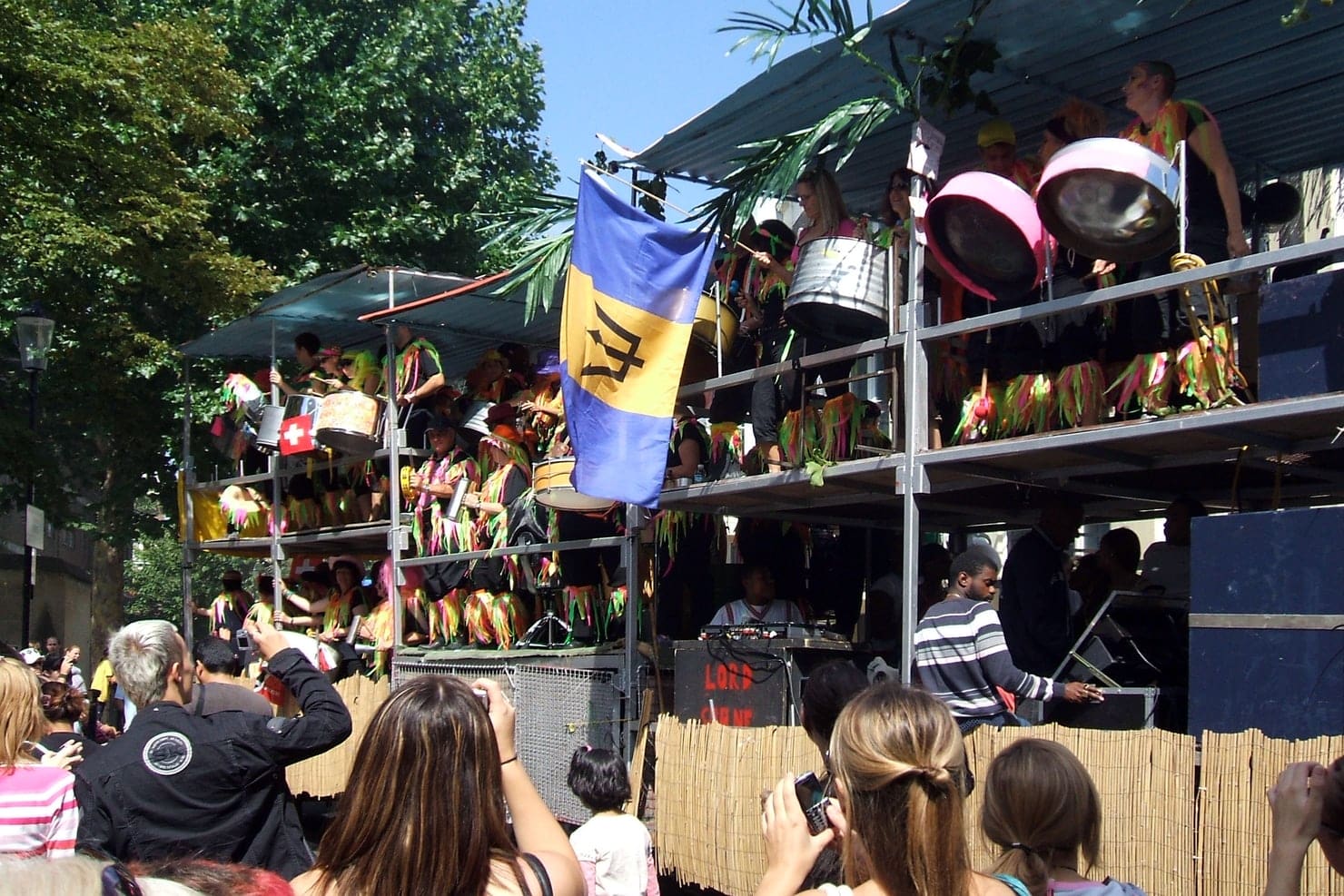
Notting Hill Carnival 2026 runs Sunday 30 and Monday 31 August, and its 36 static sound systems play from 12pm to 7pm on both days, free, on the same West London corners many of them have held for decades. When they cut out, the night moves indoors, and we have mapped the 2026 carnival afterparties separately. This year is the 60th anniversary of the 1966 street festival, backed by an extra £4.66m from the Mayor of London after two years in which the event's future looked genuinely uncertain. Most guides treat the sounds as a flat A to Z list. We think they deserve better. Here is where the big systems sit, how they got there, how to route your day like a DJ rather than a tourist, and why the money story behind 2026 matters to anyone who cares about hearing a proper stack on a London street.
Carnival 2027: the organisers have confirmed the next edition for Saturday 28 to Monday 30 August 2027. The dates, the day-by-day structure and what to expect are in our Notting Hill Carnival 2027 guide; this page stays as the record of the 2026 sound systems until the 2027 list is published.
Notting Hill Carnival 2026 at a glance
- Dates: Saturday 29 to Monday 31 August 2026; the street days are Sunday 30 (Families & Children's Day) and Monday 31 (Adults Day)
- Sound system hours: static systems and stages play 12pm to 7pm on both Sunday and Monday
- Cost: both street days are free to attend
- Panorama: the ticketed UK National Panorama Steel Band Competition runs from 4pm on Saturday 29 August at Emslie Horniman's Pleasance Park
- J'Ouvert: from 6am on Sunday 30 August at Canal Way Roundabout; the Opening Ceremony follows at 10am to 10:30am on Great Western Road
- Sound systems: 36 static systems on the official nhcarnival.org list, plus mobile sounds on the parade and live stages
- Route: roughly a 3.5-mile loop through W10 and W11, from near Westbourne Park down Westbourne Grove, along Great Western Road and up Ladbroke Grove, back via Kensal Road
- Scale: attendance regularly reported at around 2 million over the weekend, Europe's largest street event, worth an estimated £400m a year to London's economy
- Anniversary: 2026 marks 60 years since the first Notting Hill street festival in September 1966
- Funding: £4.66m in additional Mayor of London support announced on 27 March 2026, on top of £946,300 already committed by City Hall
- Moment of Reflection: a 72-second silence is held at 3pm on both days honouring the victims of the Grenfell Tower fire
- 2026 extras: a new MAGNUM Stage at Powis Square, a seventh consecutive Spotify partnership, and an official Carnival app with maps and live updates
The 60th anniversary, and why the sound systems are the point
Every Carnival guide leads with the parade, and the parade is spectacular. But if you are reading MNEEMO, you are probably coming for the same reason we are: the static sound systems. Thirty-six of them, wedged into corners across W10 and W11, each one a self-contained world with its own stack, selectors, crowd and decades of history. They switch on at midday and off at 7pm sharp, both days, and between those hours you can walk from foundation dub to bashment to US house to hard techno in fifteen minutes on foot.
2026 raises the stakes. Carnival CEO Matthew Phillip set the tone in the official announcement on nhcarnival.org: "2026 is a special year for Notting Hill Carnival. It is six decades of costumes, colour, sound, Steelpan, Calypso, Soca…" The anniversary edition arrives with real institutional weight behind it, a research collaboration with UCL's Institute for Innovation and Public Purpose, support for the African Caribbean Leukaemia Trust in its own 30th year, and the biggest public funding package in the event's history. More on that below, because the money story is inseparable from whether the sounds you love keep stringing up at all.
One practical note. Corner locations in this piece follow Time Out's 2026 sound systems guide, which lists the same 36 systems as the official site. The official 2026 map from nhcarnival.org tends to land in mid-August and the odd pitch can shift, so treat corners here as extremely likely rather than gospel until it drops.
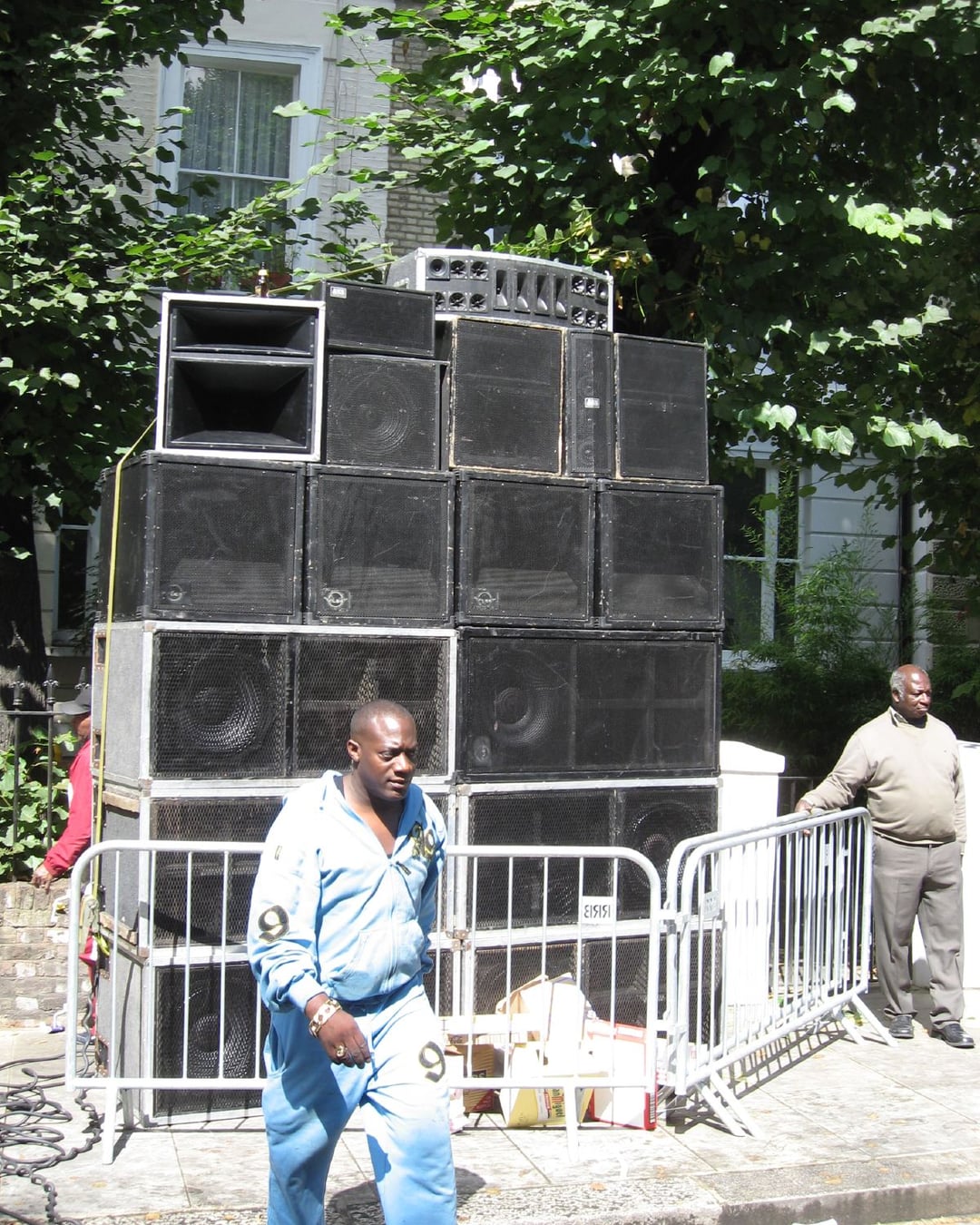
How sound systems got into Carnival: Claudia Jones, Rhaune Laslett and the 1973 gamble
Carnival's origin story has two mothers and, for our purposes, one crucial godfather. Claudia Jones organised the first indoor Caribbean carnival at St Pancras Town Hall on 30 January 1959, a defiant act of joy in the aftermath of the 1958 Notting Hill race attacks; the racist murder of Antiguan carpenter Kelso Cochrane followed months later, in May 1959, and hardened the community's resolve. Seven years later, local social worker Rhaune Laslett created the 1966 street festival that became today's event, with Trinidadian musician Russell Henderson's steel band famously drawing Caribbean residents out into the streets behind it. The London Museum records Laslett's vision in her own words: "I could see the streets thronged with people in brightly coloured costumes, they were dancing and following bands and they were happy… men, women, children, black, white, brown, but all laughing."
The sound systems came later, and they came deliberately. In 1973, Trinidad-born director Leslie "Teacher" Palmer, who ran Carnival from 1973 to 1975, invited static Jamaican-style sound systems into the event for the first time as its "5th discipline", alongside mas, steelpan, calypso and soca. Before Palmer, the music moved with the parade on trucks. After Palmer, it also stood still, strung up on corners, and that decision changed everything. It plugged Carnival directly into the sound system tradition that would go on to shape virtually all UK dance music. As Palmer put it, in a line quoted by the London Museum, "The sound systems were the voice of the youth." The bet paid off fast: by 1976, Carnival was drawing over 150,000 people. In 2023 the sounds marked 50 years at Carnival, and in 2026 they remain the reason a two-day street party doubles as the most important free music event in Britain.
That lineage is not a museum piece. It runs straight through jungle, garage, dubstep and everything after. When we wrote about how UK soundsystem culture carried "Skanka" around the world, and about jungle's return to the heart of British music, we were describing the downstream of what Palmer switched on in 1973. Carnival is where you can still hear the source, at full pressure, for free.
The reggae and dub royalty: Channel One, Aba Shanti-I, King Tubby's, Saxon
Start with the foundation. If you have never stood in front of a proper dub stack while the bass rearranges your ribcage, Carnival is the best free education in London.
- Channel One Sound System: founded in London in 1979 by brothers Mikey Dread and Jah T, who renamed their father's Admiral Bailey sound after Jamaica's legendary Channel One studio. A Carnival keystone since 1983, on the corner of Leamington Road Villas and Westbourne Park Road, and for our money the single most reliable session of the weekend. One deck, one box of dubplates, forty-odd years of knowing exactly what a crowd needs.
- Aba Shanti-I: Joseph Smith has been a resident Carnival sound since 1993, playing roots and dub at East Row and Southern Row. This is the spiritual end of the spectrum, sirens, horns and message music, and the corner where you are most likely to see three generations skanking in the same crowd.
- King Tubby's Hi-Fi: the UK sound was established in March 1970 by its founder Cecil, then just 19, and named in honour of Jamaican dub pioneer Osbourne "King Tubby" Ruddock. You will find it on Clydesdale Road playing reggae into bashment, a bridge between the foundation sounds and the party corners.
- Saxon Sound System: founded in the seventies, Saxon is the sound that launched UK reggae toasting, the MC tradition that fed directly into jungle and grime. It plays at Chesterton Road and St Lawrence Terrace, and if you care about where British MC culture comes from, this corner is a pilgrimage.
A working note from the booth: these sessions reward patience. Dub sounds run long, slow arcs, not festival sets. Give any of these corners a full hour and you will understand why Boiler Room has repeatedly pointed cameras at Carnival sounds, something we covered in our history of Boiler Room. The static sound is the original livestream: one crowd, one system, no skip button.
The party corners: Rampage, Nasty Love, Disya Jeneration
If the dub sounds are Carnival's church, these are its main rooms.
- Rampage Sound: founded in 1993 by Mike Anthony and described as Carnival's largest static sound system, drawing around 20,000 dancers to Colville Terrace and Colville Square. Past guests include Stormzy, Sean Paul, Ms. Dynamite and Dizzee Rascal, and the corner runs like a festival main stage compressed into a residential street. Anthony told DJ Mag in 2023: "It's our DNA. It's something that I protect fiercely."
- Nasty Love: R&B, reggae and bashment at Colville Houses, delivered in the dancehall "juggling" style, multiple turntables, rapid-fire selections, constant energy management. For DJs, this is the corner to study. Juggling is crowd control as an art form, and Nasty Love are masters of it.
- Disya Jeneration: running since 1985 and playing mixed Caribbean sounds at Westbourne Park Road and Powis Terrace. If you want the broadest cross-section of what Carnival sounds like in one spot, soca into dancehall into reggae into whatever the moment demands, park here.
The Rampage numbers explain the economics of the whole weekend. DJ Mag's 2023 feature reported that Rampage has invested around £1.8m over 30 years into its free Carnival events, with running costs of £80,000 to £90,000 per year. One crew, spending that annually, to play for free, for the culture. Every one of the 36 sounds is running some version of that maths.
House, garage, ska and the rest: the corners most guides skip
Carnival's sound systems are usually filed under reggae, but the 36 systems span reggae, dub and roots, dancehall, soca, calypso, Latin, soul, funk and rare groove, US house, UK garage, jungle and drum & bass, hip-hop and techno. Some of the longest-running corners are nowhere near a dubplate.
- KCC & the Rockin Crew: US house since 1991, at Munro Mews and Wornington Road. Three and a half decades of house music on a West London corner, and still one of the friendliest crowds of the weekend.
- Gaz's Rockin' Blues: started in 1980, playing ska and rocksteady on Talbot Road. The deepest crates at Carnival, full stop.
- Rapattack: established 1984, holding down All Saints Road and McGregor Road. A hip-hop and soul institution.
- Mastermind Roadshow: since 1989, in its long-time spot at Canal Close and Canal Way.
- Sir Lloyd: running since 1979 at Leamington Road Villas and Tavistock Road, with occasional guest slots from Shy FX over the years.
- Pineappletribe: the hard house and techno outlier, at West Row and Southern Row. Yes, there is a techno corner at Carnival, and yes, it goes off.
For garage heads, Carnival weekend lands in the middle of a genuinely strong year for the sound. We have made the case that UK garage works again in 2026, and half of the UKG names we tipped this year learned their craft in exactly this tradition: Caribbean sound system discipline filtered through London pirate radio. Walking from a bashment corner to a house corner to a garage selection inside one afternoon is the fastest way to hear how connected it all is.
Map your day: a DJ's route through the corners
Here is how we would actually run the weekend, based on the published 2026 schedule and a lot of accumulated blisters.
Pick your day first. Sunday 30 August is Families & Children's Day: calmer streets, easier movement between sounds, and the only day with J'Ouvert, which starts at 6am at Canal Way Roundabout with paint, powder and percussion in the Trinidadian tradition. Monday 31 August is Adults Day: the full-strength parade, the heaviest crowds, and the corners at maximum pressure. If your goal is to hear as many systems as possible, go Sunday. If your goal is peak Carnival, go Monday. The sound systems play identical hours both days, 12pm to 7pm.
Arrive before noon. The systems switch on at 12pm, and the first ninety minutes are the golden window: full sound, breathing room, and selectors warming up with the records they actually love. Any DJ knows the warm-up is where the taste lives.
Route by genre, not geography. A rough shape that works: start in the dub corridor, Aba Shanti-I at East Row and Southern Row with Pineappletribe's techno corner nearby at West Row for the most surreal genre whiplash of the weekend. Work south and east towards Channel One at Leamington Road Villas and Westbourne Park Road, with Sir Lloyd on the same road. Push on to King Tubby's on Clydesdale Road, then choose your afternoon: Rampage at Colville Terrace if you want the biggest crowd in West London, Nasty Love at Colville Houses for the juggling masterclass, Disya Jeneration at Westbourne Park Road and Powis Terrace for the all-rounder, or KCC at Munro Mews if seven hours of house music sounds like heaven. The new MAGNUM Stage at Powis Square sits right in that party cluster.
Respect the 3pm silence. A 72-second Moment of Reflection is held at 3pm honouring the victims of the Grenfell Tower fire. Every system stops. It is one of the most powerful moments in British music, two million people and total silence, and you should plan to be standing somewhere you can feel it.
Plan your exit before 7pm. The sounds cut at 7pm sharp and the entire crowd moves at once. Transport gets heavily managed: in previous years Ladbroke Grove station has been closed all weekend with Westbourne Park and Royal Oak restricted at peak times, and while TfL's 2026 arrangements were not published at the time of writing, expect something similar and check before you travel. Walking out towards Notting Hill Gate, Holland Park or Paddington usually beats fighting for the nearest station. And if 7pm feels too early to stop dancing, that is what London's club map is for; Carnival weekend afterparties are their own ecosystem.
Judging Zone vs sound systems: two different sports
A common first-timer mistake is trying to do the parade and the sounds simultaneously and doing both badly. The mas bands are judged as they pass the Judging Zone on the parade route on both days, and the 2026 Opening Ceremony happens on Great Western Road on the Sunday morning. Parade watching means holding a spot and letting Carnival come to you: costumes, steel bands, mobile sounds on trucks, the full moving spectacle. Sound system listening means the opposite, planting yourself in front of a static stack and letting one crew build a session over hours.
Our advice is to split cleanly. Give the parade the late morning, then commit to the corners from early afternoon, when the systems are at their best. The deep crowd experience in front of a stack is not something you can sample in passing; it asks for the same attention a great club room does. In a year when we keep writing about where club culture goes next, it is worth remembering that the sound system corner is the original format: free, outdoors, communal, and completely uninterested in your phone.
What £4.66m buys: the funding crisis behind the 60th anniversary
Now the part the listicles leave out. Carnival 2025 was genuinely at risk, and went ahead only after City Hall, Kensington & Chelsea and Westminster jointly provided around £958,000 in emergency funding following an independent safety review. The backdrop was stark: Met Assistant Commissioner Matt Twist had publicly raised concerns that crowd density at the event risked a "mass casualty event", a warning reported by Mixmag and the BBC among others. For an event drawing around two million people into a 3.5-mile loop of residential streets, safety is not bureaucratic box-ticking. It is the precondition for everything else.
The 2026 response was substantial. On 27 March 2026, Mayor Sadiq Khan announced an additional £4.66m for the 60th anniversary edition, on top of £946,300 already committed by City Hall, roughly £5.6m in total, targeted at enhanced safety and crowd management. "Notting Hill Carnival is one of our capital's biggest events, drawing Londoners and visitors from across the globe to West London every year," Khan said in the City Hall announcement. Ian Comfort, chair of Notting Hill Carnival Ltd, responded in the same release: "On behalf of the community, I welcome the Mayor's vital support, which ensures that we can deliver a safe, spectacular and sustainable Carnival." Set against the estimated £400m Carnival contributes annually to London's economy, per 2024 JN Bank research cited by City Hall, £5.6m reads less like generosity and more like basic maintenance on one of the city's most valuable cultural assets.
The safety conversation has touched the sounds directly. Ahead of Carnival 2025, Kensington & Chelsea Council revoked the licence of Volcano Sound System after a bottle attack within the footprint of its Faraday Road site at Carnival 2024, as reported by The Voice. Volcano appears again in Time Out's 2026 guide and retains its page on the official Carnival site, which points to a return this year, though treat that as provisional until the official 2026 list is final. However it resolves, the episode shows how exposed each sound is: one incident near your stack, and a corner your crew built over decades can be gone the following August.
This is why the funding story and the sound system story are the same story. The sounds play for free, at enormous private cost, inside a safety and licensing framework they do not control. Rampage's £80,000 to £90,000 a year is the visible tip of an economy of favours, day jobs, sponsorships and pure stubbornness that keeps 36 stacks on the street. The £4.66m does not pay the sounds. It pays for the conditions that let them exist. In an anniversary year, with the event's global profile as high as it has ever been and sounds from the whole diaspora reshaping the UK rave, that feels like the least a city can do for the culture that built its dance floors. After the bank holiday, our recap of Carnival 2026 reports how the weekend played out on the ground.
FAQ
When is Notting Hill Carnival 2026?
The street days are Sunday 30 and Monday 31 August 2026, both free to attend. Saturday 29 August is the ticketed UK National Panorama Steel Band Competition, from 4pm at Emslie Horniman's Pleasance Park.
What time do the sound systems play at Carnival?
Static sound systems and stages play from 12pm to 7pm on both the Sunday and the Monday. The cut-off is enforced, so plan your day around a hard 7pm finish.
How many sound systems are at Notting Hill Carnival 2026?
There are 36 static sound systems on the official nhcarnival.org list, alongside mobile sounds on the parade floats and the live stages, including the new MAGNUM Stage at Powis Square.
Where does Channel One play at Carnival?
On the corner of Leamington Road Villas and Westbourne Park Road, the pitch it has held since 1983. The sound was founded in London in 1979 by brothers Mikey Dread and Jah T.
When did sound systems become part of Notting Hill Carnival?
In 1973, when director Leslie "Teacher" Palmer invited static Jamaican-style sound systems into the event for the first time as Carnival's "5th discipline". By 1976, Carnival was drawing over 150,000 people.
Is Notting Hill Carnival free?
Yes. Both street days, Sunday 30 and Monday 31 August 2026, are free, including every static sound system. Only Saturday's Panorama steel band competition is ticketed.
Should I go on Sunday or Monday?
Sunday is Families & Children's Day: calmer crowds, easier movement between sounds, and J'Ouvert from 6am at Canal Way Roundabout. Monday is Adults Day: the full parade and the heaviest crowds. The sound systems play 12pm to 7pm on both days, so sound-first visitors often prefer Sunday.
What is J'Ouvert?
The dawn opening celebration, rooted in Trinidadian tradition, with paint, powder and percussion. In 2026 it starts at 6am on Sunday 30 August at Canal Way Roundabout, followed by the Opening Ceremony on Great Western Road at 10am.
Why is 2026 a special year for Carnival?
It is the 60th anniversary of the 1966 street festival, supported by an additional £4.66m from the Mayor of London for safety and crowd management, announced in March 2026, on top of £946,300 already committed by City Hall.
What genres do the Carnival sound systems play?
Roots and dub (Channel One, Aba Shanti-I), reggae and bashment (King Tubby's, Nasty Love), multi-genre party sounds (Rampage, Disya Jeneration), US house (KCC), ska (Gaz's Rockin' Blues), hip-hop (Rapattack), hard house and techno (Pineappletribe), plus soca, calypso, Latin, soul, rare groove, UK garage, jungle and drum & bass elsewhere on the map.
This editorial is part of House of MNEEMO's ongoing coverage of the electronic and club music scene, written by London-based DJ and producer MNEEMO, millions of streams to his name and a party series running through some of London's best clubs. Listen to MNEEMO: Spotify · Instagram · YouTube
Facts in this piece were checked against current sources in late July 2026. If something has moved since, that is the nature of a living scene.