Hannah Laing: Real Name, Doof and the Dundee Dental Nurse Who Built a Festival
Hannah Laing is her real name: the Dundee dental nurse turned DJ behind doof, the Platinum single Good Love and Doof in the Park, sold out at 15,000 in 2025.
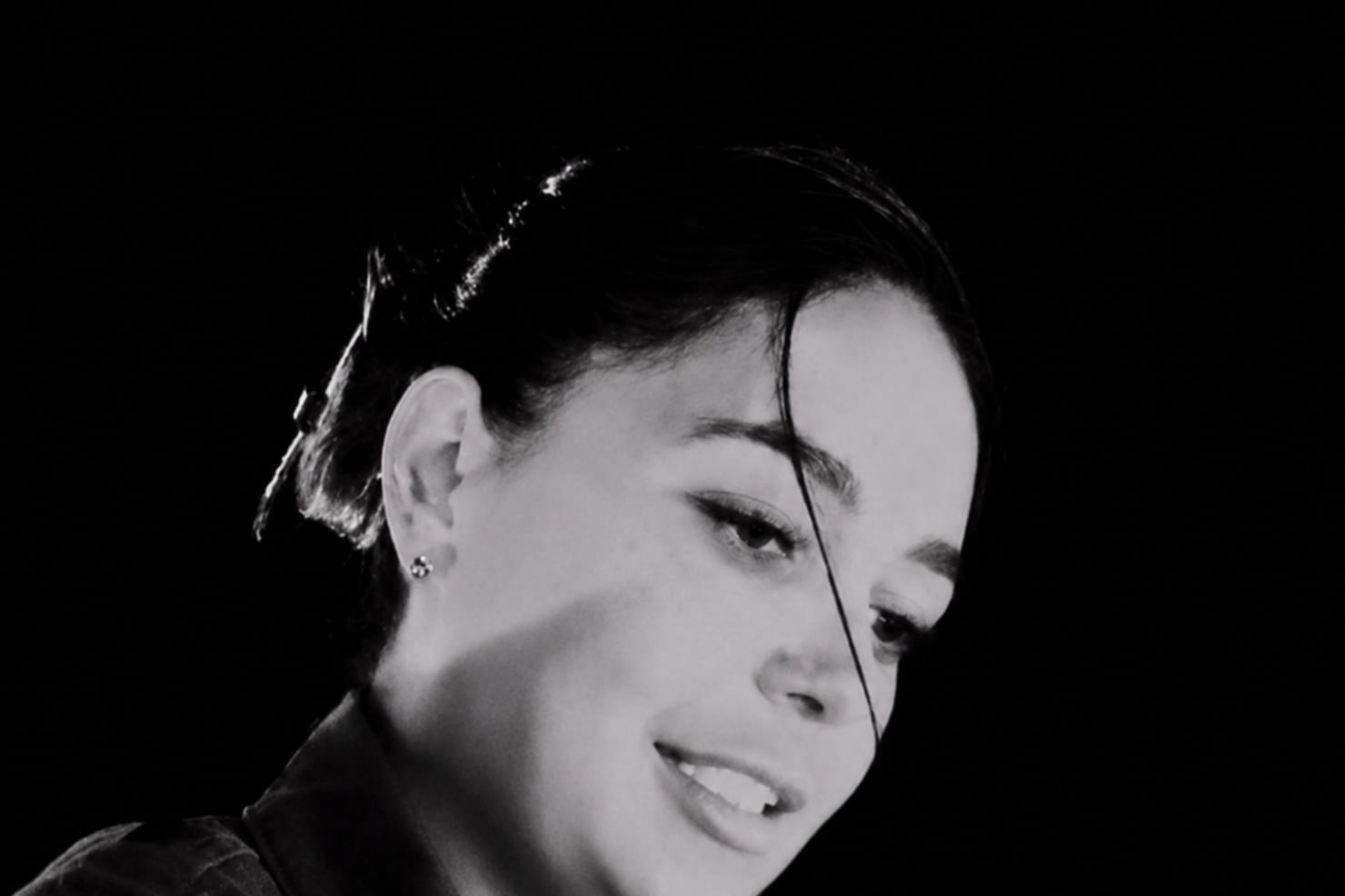
Hannah Laing is her real name, not a stage alias, and she is a Scottish DJ and producer from Dundee who spent roughly a decade as a dental nurse before dance music became the day job. She is the founder of the doof label and brand, the woman behind the Platinum single "Good Love", and the founder of Doof in the Park, a Dundee festival that sold out 15,000 tickets in 2025, returned on 4 July 2026 with a reported 17,000 people, and is booked again for 3 July 2027. This is the full picture: whether she was really a dentist, what "doof" means, and how a former dental nurse ended up headlining her own festival. It is the story of one of British dance music's fastest recent rises, and of a sound that turns trance, hard house, bounce and donk into something an entire generation now sings back at her.
Hannah Laing at a glance
- Real name: Hannah Laing. It is her birth name, not a stage persona.
- From: Dundee, Scotland. She grew up in the Balgay area and attended Ancrum Road Primary School and Harris Academy.
- Reported birth: 12 August 1994 in Dundee, which makes her 32.
- Former job: a dental nurse for roughly ten years, not a dentist, before going full-time in music.
- The pivot: a well-received Creamfields 2022 set convinced her to leave nursing for DJing.
- Her brand: doof, styled lowercase, a label and events name taken from the "doof-doof" of a hard kick drum.
- The breakout: "Good Love" featuring RoRo, released 12 May 2023, which peaked at No.7 and was certified Platinum by the BPI.
- Radio: she headlined the dance stage at BBC Radio 1's Big Weekend in 2023, and Radio 1 named her 2025 single "Have You Ever Loved (Ellie)" its Hottest Record.
- Awards: the Go Radio Breakthrough Award at the 2024 Scottish Music Awards and a 2025 DJ Award in the Hard Dance / Bounce category.
- Her festival: Doof in the Park at Camperdown Park, Dundee, sold out 15,000 tickets in 2025, returned on 4 July 2026 with a reported 17,000, and is listed for 3 July 2027.
- The sound: a hard-dance hybrid of trance, techno, hard house, bounce and donk, all filed under "doof music".
- Next dates: Boiler Room Los Angeles on 27 September 2026, the Warehouse Project's Teletech presents DOOF night in Manchester on 16 October, Dreamstate SoCal on 20 November and Wildlands in Brisbane on 31 December.
Who is Hannah Laing?
Hannah Laing is a Scottish DJ and electronic-music producer from Dundee, and the first thing to clear up is the question that sends most people to a search bar. Yes, Hannah Laing is her real name. There is no alias, no invented persona, no separate stage identity to decode. In a scene full of masked acts, she is simply herself, a Dundee woman who happens to fill fields and arenas, and that plainness is part of the appeal.
She was, by most accounts, born on 12 August 1994 in Dundee, and grew up in the city's Balgay area, going through Ancrum Road Primary School and then Harris Academy. That local grounding matters more than it might for a lot of touring artists, because Dundee is not incidental to her story. It is the site of her festival, the source of her audience and the thing her whole brand is built around. Where an earlier generation of Scottish dance talent left for Glasgow or London, Laing has done the opposite, planting her biggest statement squarely in her home city.
For neighbouring reference points, she sits naturally alongside Ewan McVicar, the other Scottish DJ who built his own festival, though the two work in very different registers. He makes vocal-led house; she makes high-energy hard dance. What they share is a model: a homegrown Scottish artist who turned local loyalty into a festival they own outright. Add her to the wider wave of British breakouts and the pattern runs clear, the same one behind Sammy Virji, another festival-scale UK breakout, where an underground name goes overground without softening the sound that got them there.
From dental nurse to DJ: the ten-year day job and the Creamfields turning point
Here is the correction worth making early, because a lot of write-ups get it wrong. Hannah Laing was not a dentist. She was a dental nurse, the assisting role, and she did it for roughly ten years before music paid the bills. It is a small distinction that changes the whole shape of the story. This is not a professional swapping one lucrative career for another. It is someone who worked a grinding, unglamorous job for a decade while quietly building a second life behind the decks.
The DJ life started early. She did her first paid booking at around eighteen, at a venue in Arbroath, and kept at it around the day job for years. A decade of shifts in a dental surgery is no neat overnight-success narrative, but it is why the eventual leap felt earned rather than lucky.
The pivot point was Creamfields in 2022. Her set there went down well enough to force a decision that had probably been building for a while, and she left dental nursing to commit to music full-time. From the outside it looks sudden, one big festival slot and a career change. From the inside it was ten years of groundwork finally paying off in a single weekend. Within a year she had a Platinum single and a foothold on national radio. Few artists have made that jump this cleanly or this fast, and fewer still have turned the risk into something as concrete as a festival with their name on the gates.
What is "doof"? The label, the sound and the doof-doof kick
The word "doof" is everywhere in her world, and it is worth explaining because it is doing several jobs at once. At its simplest, doof is onomatopoeia, the doof-doof-doof thud a hard kick drum makes. Laing took that noise and turned it into a brand, styled in lowercase, and now the word functions as a label, an events name and a catch-all for her entire sonic identity. When she says "doof music", she means her particular blend of high-energy dance styles rather than any one established genre.
That is the clever part. Rather than pin herself to trance, hard house, techno or bounce, all of which she draws on, she coined an umbrella term that lets her move between them without contradiction. Doof is deliberately elastic, euphoric and trancey one minute and bounce-heavy the next, and because it is her own coinage, nobody can accuse her of straying from a genre she never claimed. It is branding and creative freedom rolled into a single, punchy syllable.
The label side of doof is arguably the most underrated part of her rise. What started as a personal brand has grown into a serious releases operation, putting out her own singles and those of collaborators. Running your own imprint gives an artist control over output, curation and revenue in a way a traditional deal rarely does, and Laing has used doof to build not just a catalogue but an ecosystem, from records to remixes to the festival itself. It is a founder's approach as much as an artist's, closer in spirit to the way UK drum and bass turned community into a festival platform than to the lone-DJ template.
Donk, hard dance and the DnB crossover: what she actually plays
If you have never stood in front of a doof set, the genre labels can be baffling, so here is the translation. Laing plays a hard-dance hybrid. The core ingredients are trance, hard house, techno, bounce and donk, and the through-line is energy: peak-time, hands-in-the-air, high-BPM music, the styles blurring into one another rather than sitting in tidy boxes.
Donk is the term that trips people up most. It is a hard-dance style built around a springy, hollow, percussive "donk" sound, the bouncing off-beat that gives the music its name. It has deep roots in the north of England and in Scotland's scheme-party and bounce culture, and for years it lived largely outside the mainstream, treated as a regional in-joke as often as a genre. Laing is a big part of why it no longer is, having welded that bounce sensibility to trance melodies and festival-grade production so it reaches a far wider room than donk ever used to.
The interesting bit for anyone tracking the broader British dance landscape is the tempo. A lot of hard dance sits at an energy level that rubs right up against drum and bass, and that adjacency is not accidental. You can hear the family resemblance to Nia Archives and the jungle revival and to the jump-up drum and bass surge, not in the drum patterns but in the shared refusal to slow down. It is why she has translated so well to festival bills that have nothing to do with donk's regional roots. When the whole live circuit is leaning harder and faster, as it did across the festival dance-stage boom of 2026, a doof set is not a niche booking. It is a main-stage proposition, and promoters have clocked it.
"Good Love" and the Platinum breakthrough (with RoRo, not anyone else)
The record that changed everything is "Good Love", and it is worth setting the credit straight because it gets muddled a lot. "Good Love" is a Hannah Laing single featuring the Scottish singer RoRo, released on 12 May 2023. The featured vocalist is RoRo, full stop. Any version that attaches a different name to the collaboration is simply wrong.
The numbers are the real headline. "Good Love" spent 26 weeks on the UK Singles Chart, peaked at No.7 and was certified Platinum by the BPI. For a hard-dance record built around a bouncing kick and a euphoric vocal, that is a remarkable mainstream crossover, the track that took her from a well-regarded Scottish DJ to a name your non-clubbing relatives might recognise. The single package helped, gathering remixes, and the Dutch acid-techno force Reinier Zonneveld later joined her and PUSH on the 2024 single "Bouncing Ball". The vocal made "Good Love" sing on radio; the remixes kept it detonating on dancefloors, and together they turned "Good Love" into the foundation everything since has been built on.
Into the doof: the EPs and the collaborations
"Good Love" was the crossover, but the catalogue around it is what turned a hit into a career. On 24 July 2024 she released the six-track EP "Into The Doof", which included "IBIZACORE" with Muki, alongside "Tell Me", "I Need It More", "Stay" with Jem Cooke and "Bouncing Ball". It reads less like a collection of singles than a mission statement.
She has kept the output varied. A separate three-track EP, "Into The Bounce", released in July 2025 with Charlie Sparks and Shlømo, leans into the bounce end of her palette and was billed by DJ Mag as the first of a trilogy covering techno, hard house and trance. In November 2025 she released "Have You Ever Loved (Ellie)" with the singer Hannah Boleyn, a tribute to her late childhood friend Ellie Scanlan that Radio 1 made its Hottest Record, according to the BBC. The breadth is the point. Laing is not a one-lane producer, and the "doof" umbrella exists precisely so she can chase a euphoric trance record and a filthy bounce cut without anyone crying inconsistency. It is the same catalogue-first logic behind a lot of the current British breakouts. Compare it to another Scottish-scene breakout, Barry Can't Swim, who turned a run of singles into an album-scale reputation. Different genre entirely, same principle: the hit opens the door, the catalogue keeps it open.
Doof in the Park: how she built a 17,000-capacity festival at home
The clearest sign that Laing is more than a DJ is the festival with her brand on the gates. Doof in the Park is a one-day electronic festival at Camperdown Park in Dundee, and staging it there rather than in Glasgow or Edinburgh is a statement of intent, a deliberate bet on her home city as a destination worth travelling to. The bet is paying off at speed. The 2025 edition took place on 5 July, and all 15,000 tickets sold out within a week, before any other artists were announced, as the BBC reported. That bill was no support-act padding either, with headliners including the trance titan Armin van Buuren alongside Judge Jules, Lisa Lashes and Will Atkinson. For a festival in its early years, in a city not previously known as a festival hub, that is a serious pull.
2026 went bigger. The festival returned to Camperdown Park on 4 July 2026, with tickets at £75 on Resident Advisor, a reported attendance of about 17,000 and a headline roster including Paul van Dyk, Eddie Halliwell, Lilly Palmer and Maddix. The jump from 15,000 to a reported 17,000 in a single year is exactly the kind of controlled growth that suggests a durable institution rather than a one-off, and a 2027 edition is already listed for 3 July 2027. There are neat details baked in too. One of the stages, "The Highlander", is named after the Highlander bar in San Antonio, Ibiza, where Laing held an early DJ residency, a nod to the graft that preceded the glory. Very few artists get to build something on this scale in their home town while the rise is still happening. The nearest reference points are the great British club and festival institutions, the sort of operation that turns a scene into a season the way the Warehouse Project's 2026 season does for Manchester, except Laing has built hers from a standing start, around her own name, in a handful of years.
BBC Radio 1, awards and going global
The institutional recognition arrived quickly once "Good Love" landed. She was the headline act on the dance stage at BBC Radio 1's Big Weekend in 2023, and Radio 1 has made her records its Hottest Record, "Have You Ever Loved (Ellie)" among them in November 2025. That kind of daytime national support put doof music in front of an audience far wider than the club circuit.
The awards followed. She took the Go Radio Breakthrough Award at the 2024 Specsavers Scottish Music Awards, then in 2025 won a DJ Award in the Hard Dance / Bounce category, a nod from the wider international dance world rather than just the Scottish scene. The touring scaled to match. In summer 2025 she held a weekly Monday residency in the Club Room at Hï Ibiza, according to DJ Mag, and her 2024 set at DJ Mag HQ showed a harder, techno-leaning side than the chart singles suggest. That range is a strength. She can headline a euphoric festival main stage and then play a dark, techno-heavy studio set, which keeps her credible with the heads while the hits keep her visible to everyone else.
Hannah Laing in 2026: festivals, tour and what's next
As of late September 2026, Hannah Laing is in the thick of an active festival and tour run, with her own Doof in the Park the anchor of the summer. Resident Advisor lists her at Boiler Room Los Angeles on 27 September, the Tomorrowland and Dimitri Vegas & Like Mike closing party at Ushuaïa Ibiza on 30 September, EDC Colombia on 10 October, a Warehouse Project night with Teletech that presents DOOF at Depot Mayfield in Manchester on 16 October, Dreamstate SoCal on 20 November, Beyond The Valley on 28 December and Wildlands in Brisbane on 31 December and Perth on 2 January 2027, with Doof in the Park 2027 on 3 July. Listings move, so check her official channels and ticketing pages before you travel. The broad picture is clear: she is busier and bigger than at any point so far, and the trajectory is still pointing up.
What makes her interesting from here is that she has more levers to pull than a straightforward touring DJ. There is the artist career, with more singles and EPs to come under the doof umbrella. There is the label, doof, which now carries her own releases and her collaborators'. And there is the festival, an asset that grows every year it returns. Most DJs have one of those things. Laing has all three, and they feed one another.
She also sits at a useful point in the wider British scene. Hard dance, bounce and donk have spent years as regional and slightly disreputable pleasures, and Laing is the artist doing the most to drag them into the daylight without sanding off the grit. If the mid-2020s belong to a faster, harder, more physical British dance culture, the same energy that fills the northern club circuit and drove the UK garage and bass resurgence, then she is one of its defining figures. The dental nurse from Dundee has become the person translating an underground Scottish and north-of-England sound for a national audience, on her own terms, with her own word for it. Doof, it turns out, was never just a noise. It was a business plan.
FAQ
What is Hannah Laing's real name?
Hannah Laing is her real name. She is a Scottish DJ and producer from Dundee who performs under her birth name, with no alias or stage persona. She is reported to have been born on 12 August 1994 in Dundee, where she grew up in Balgay and attended Harris Academy before building the doof brand around her home city.
Where is Hannah Laing from?
Hannah Laing is from Dundee, Scotland. She grew up in the Balgay area and went through Ancrum Road Primary School and Harris Academy. She has kept Dundee at the centre of her career, most obviously by staging her own festival, Doof in the Park, at Camperdown Park in the city rather than in Glasgow or London.
Was Hannah Laing really a dentist?
No. Hannah Laing was a dental nurse, the assisting role, not a dentist. She worked in dental nursing for roughly ten years while DJing on the side, having taken her first paid booking at around eighteen. She left the job to pursue music full-time after a well-received Creamfields set in 2022.
What does "doof" mean?
Doof is Hannah Laing's label and brand, styled in lowercase, named after the "doof-doof" sound of a hard kick drum. She uses "doof music" as a catch-all for her high-energy party sound rather than tying herself to one genre. Over time it has grown from a personal brand into a serious releases operation and the name of her festival.
What genre does Hannah Laing play?
Hannah Laing plays a hard-dance hybrid that blends trance, hard house, techno, bounce and donk, all grouped under her own term "doof music". The common thread is high energy, with sets built for peak-time festival crowds. The tempo and physical impact sit close to drum and bass, part of why she fits the faster, harder British festival bills of the mid-2020s.
What sound made Hannah Laing famous?
Donk is a hard-dance style built around a springy, hollow, percussive "donk" sound, the bouncing off-beat that gives the music its name. It has deep roots in the north of England and in Scotland's scheme-party and bounce culture, and long lived outside the mainstream. Hannah Laing is a big part of why it no longer does, welding it to trance melodies and festival-grade production.
Who sings on "Good Love"?
The Scottish singer RoRo provides the vocal on "Good Love". It is a Hannah Laing single featuring RoRo, released on 12 May 2023. The featured artist is RoRo and no one else, a point worth stressing because the credit is sometimes reported incorrectly.
Did "Good Love" go Platinum?
Yes. "Good Love" spent 26 weeks on the UK Singles Chart, peaked at No.7 and was certified Platinum by the BPI. That is a rare crossover run for a hard-dance record, and it is the single that took Hannah Laing from a well-regarded Scottish DJ to a nationally recognised name.
What is Doof in the Park?
Doof in the Park is Hannah Laing's own one-day electronic festival at Camperdown Park in Dundee. All 15,000 tickets sold out within a week in 2025, and the second edition on 4 July 2026 drew a reported 17,000, with headliners including Paul van Dyk, Eddie Halliwell, Lilly Palmer and Maddix. A 2027 edition is listed for 3 July 2027.
Does Hannah Laing have a BBC Radio 1 residency?
We could not confirm a Radio 1 Residency series in the BBC's own listings. What is on the record is that she headlined the dance stage at Radio 1's Big Weekend in 2023, and that Radio 1 made her November 2025 single "Have You Ever Loved (Ellie)" its Hottest Record.
Is Hannah Laing touring in 2026?
Yes. As of late September 2026, Resident Advisor lists Boiler Room Los Angeles on 27 September, EDC Colombia on 10 October, a Warehouse Project night in Manchester on 16 October, Dreamstate SoCal on 20 November and Wildlands in Australia over New Year, with Doof in the Park 2027 on 3 July 2027. Check her official channels and ticketing pages for changes.
Facts in this piece were checked against current sources in August 2026 and updated in late September 2026 against the BBC, DJ Mag, Resident Advisor and Wikipedia. If something has moved since, that is the nature of a living scene.