Why Are London Clubs Closing? The Real Reasons in 2026
Why are London clubs closing? The 2026 numbers, the cost, licensing and property pressures behind the losses, and the fixes now on the table.
London clubs are closing, and the why is a squeeze from four directions at once: rising operating costs, a punishing business-rates system, restrictive and inconsistent borough licensing, and redevelopment pressure on the land underneath the dancefloor. What is not driving the closures is a collapse in demand. The Night Time Industries Association's reading in May 2026 was that demand is changing rather than disappearing, while the venues that host it are priced and planned out of existence. Below: the mid-2026 numbers, the four mechanisms that kill a club, who London lost and who survived, and what is finally being done about it.
London club closures at a glance
- Sector size: UK late-night venues down 28.7% since March 2020, nightclubs down 36.1% (NTE Market Monitor, NTIA and NIQ, 22 September 2026)
- Current rate: venue numbers rose 0.4% between March and June 2026, the first quarterly rise in two years, but were still 3.1% lower than a year earlier
- The longer arc: around 480 UK nightclubs lost June 2020 to June 2024, per NTIA
- Club deserts: 26% of UK towns and cities that had a nightclub in 2020 now have none
- London's biggest 2026 casualty: Corsica Studios closed at the end of March 2026 after 24 years
- Also gone: The Pickle Factory held its final party on 1 January 2025
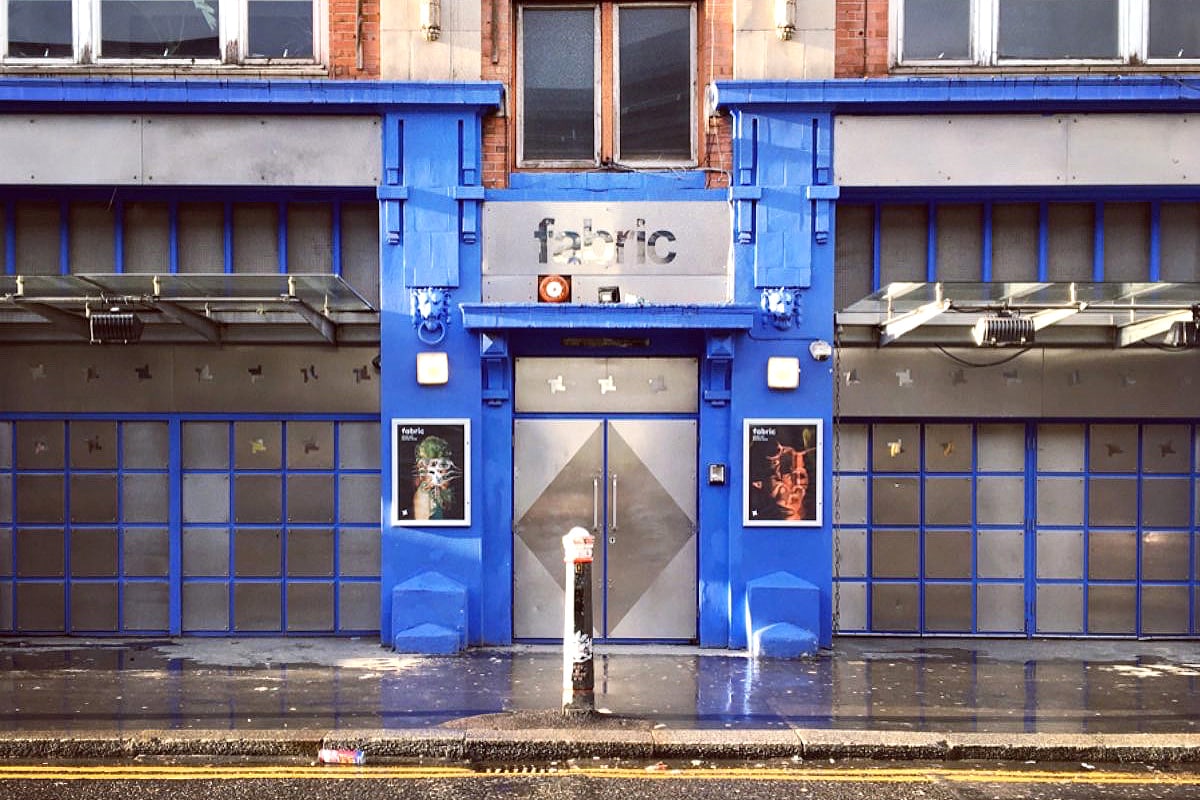
- The survivor template: fabric had its licence revoked in September 2016, reopened January 2017 under 32 new conditions
- Governance: the night czar role ended in October 2024; the Taskforce's January 2026 report recommended a Nightlife Commission in its place
- The plan: the London Nightlife Taskforce published 23 recommendations on 27 January 2026
- New powers: first announced in April 2025, the Mayor of London's call-in powers over strategically important licensing decisions became law in the English Devolution and Community Empowerment Act 2026 (Royal Assent 29 April 2026)
- Rates: nightclubs qualify for the lower retail, hospitality and leisure business-rates multipliers from April 2026 (SI 2025/1093); a separate 20% cut announced on 23 July 2026 names pubs, social clubs and live music venues in England from April 2027
- Still pending: Printworks London has no confirmed opening date for its promised 2026 return as of late September 2026
Why are London clubs closing? The short answer
Because the economics of running a late-night venue in this city have broken. Energy, wages, tax and business rates have risen faster than door prices can follow. A single licence review can end a club overnight. Redevelopment keeps landing on the postcodes where clubs cluster, and agent of change only shields venues from noise complaints, not from rent, rates or a landlord's masterplan. On top sits a real shift in how people go out: less often, earlier, with less money. It is a viability crisis, not a popularity crisis. The queues outside the survivors prove that every weekend.
How bad is it really? The numbers in mid-2026
First, a correction most pages ranking for this question still need. The widely quoted figure of 65 UK nightclubs closing "this year" is old data: it covers December 2023 to June 2024, reported by the NTIA in September 2024. Any article still leading with it is running on fumes.
The current picture comes from the NTE Market Monitor, produced by NIQ and CGA with the NTIA. The May 2026 edition put the late-night sector 28.9% below March 2020, with a 5.1% decline in the 12 months to Q1 2026 and nearly three net closures a week across the six years. The September 2026 edition, published on 22 September, puts the loss at 28.7%, with nightclubs hit hardest, down 36.1% since Covid, about six net closures a month. It also recorded the first quarter-on-quarter rise in two years: late-night venue numbers grew 0.4% between March and June 2026, though they were still 3.1% lower than a year earlier. Karl Chessell of NIQ told the Morning Advertiser in May 2026: "While all parts of hospitality face tough trading conditions, the night-time economy has born the brunt of closures lately."
The longer arc is grimmer still. NTIA data records around 480 UK nightclubs lost between June 2020 and June 2024, roughly ten a month, leaving 851 in the whole of the UK by mid-2024. In Q1 2024 the rate spiked to five clubs a week. By the NTIA's count, 26% of UK towns and cities that had a nightclub in 2020 now have none, and 16% have no late-night venues of any kind. An August 2025 monitor put late-night closures at an all-time high.
Then there is the famous doomsday date. In October 2024 the NTIA projected that, at the then-current closure rate, 31 December 2029 would be "The Last Night Out": the extinction of the UK nightclub. That number is a straight-line extrapolation designed to force politicians to pay attention, not a literal forecast. But as a campaign device it worked, and the trend it dramatised is real.
Reason one: costs, from energy bills to the rates trap
For promoters and venue managers in 2026, every conversation starts here. NTIA CEO Michael Kill summarised it in the Morning Advertiser in May 2026: "Economic pressures like soaring energy and labour costs and taxes are making it difficult to operate viable late-night businesses."
The NTIA has blamed the intensified closure rate through 2025 partly on the April 2025 rises in employer National Insurance contributions and the minimum wage. Those changes hit clubs harder than most businesses because clubbing is labour-heavy by design: security, bar, cloakroom, sound, cleaning, all through antisocial hours. A club cannot automate a door team.
Then there are business rates, the tax on the property itself. In an NTIA flash poll of 345 nightlife operators, roughly half expected rates bills to rise 50% or more as pandemic-era relief unwound and revaluation caught up with city-centre premises. The NTIA called it a "hidden business rates bombshell": a fixed cost payable whether the room is full or empty.
The squeeze does not stop at the venue door. It is the same pressure behind the cancellation of Wireless 2026 and the ticket and drinks inflation we unpacked in why a night out got so expensive. And it lands hardest on the small independent rooms that incubate the culture, which is why we keep arguing that small rooms matter more than festivals. A festival can skip a year. A club that misses a quarter is gone.
Reason two: licensing, or how a club can die overnight
Costs kill clubs slowly. Licensing kills them instantly, and fabric is the case study everyone knows.
In the early hours of 7 September 2016, Islington Council revoked fabric's licence after a review that followed the drug-related deaths of two 18-year-old clubbers, the sub-committee citing a "culture of drug use". One hearing, and the most internationally respected club in Britain was shut. What happened next is why it remains a template rather than an obituary. The save-fabric campaign raised over £300,000, a petition passed 160,000 signatures, and in November 2016 fabric and Islington Council struck a deal built on 32 new licensing conditions, including no under-19s on weekend nights and lifetime bans for drug possession. The club reopened in January 2017 and is still open today.
Two lessons. First, a licence review is existential: a club's right to exist rests on a document a borough committee can pull in an evening. Second, the fabric saga pushed a generation of operators into policy. Cameron Leslie, fabric's co-founder, now chairs the London Nightlife Taskforce. The man whose club nearly died by licensing decision now leads the body redesigning how London licenses nightlife.
The structural problem is inconsistency. Thirty-two boroughs, thirty-two licensing committees, thirty-two appetites for risk. The application that sails through Hackney can die next door. The councils dispute the framing: Westminster City Council told Resident Advisor in April 2025 that "We grant the vast majority of licensing applications, which are only refused where safety concerns are raised by the police or significant disruption is likely." Both things can be true. Most applications pass, and the unpredictability of the ones that do not still chills investment citywide.
Reason three: property, redevelopment and the limits of agent of change
The third mechanism is the land itself. Clubs colonise cheap, awkward, industrial space: the railway arch, the printworks, the warehouse. Then the city catches up, the land stops being cheap, and the club is sitting on someone's development opportunity.
Planning policy has tried to fix the most visible symptom of that collision: noise complaints from new neighbours. The agent of change principle, in the National Planning Policy Framework since July 2018 and the London Plan 2021 as Policy D13, makes the newcomer responsible for the problem they create: a developer building flats next to an existing venue must fund noise mitigation before getting permission. It exists because 35% of London's grassroots music venues closed between 2007 and 2015, many under pressure from residents who moved in next to rooms that had been loud for decades.
Corsica Studios shows what agent of change can and cannot do. The Elephant & Castle institution opened in 2002, ran about 500 capacity across two rooms, and closed at the end of March 2026 after 24 years. Back in 2018, Corsica received £125,000 for soundproofing from Delancey, the developer behind the Elephant & Castle town centre scheme. The mitigation money arrived exactly as the principle intends. The club still closed eight years later.
The nuance matters, and Corsica insisted on it. In their closure statement, reported by NME, the venue said operating a late-night venue has become "increasingly difficult", especially "in the midst of a huge new development", while explicitly denying they were forced out by developers or noise complaints. The site is due back later as a refurbished, soundproofed venue on a long-term lease, with a stated hope of a 2027 handover. So this is not a simple gentrification story. It is more instructive: even with soundproofing funded and no eviction, the grind of running a late-night business inside a live regeneration zone wore a 24-year institution down to a pause it may or may not fully return from.
Agent of change protects a club's soundwaves. It does not protect its rent, its rates, its lease or its footfall while the neighbourhood is a building site. That is the gap the Corsica story exposes. The fight continues elsewhere: MOTH Club in Hackney has spent 2026 fighting a proposed neighbouring residential development, with Hackney Council refusing at least one related application.
Reason four: demand is changing, not disappearing
The lazy version of this story blames Gen Z for staying home. The data says something more precise: people still go out, but differently. Earlier finishes. Fewer but bigger nights. More day parties, fewer weekly club loyalties. More sober punters whose bar spend no longer subsidises the sound system.
Michael Kill's framing in May 2026 is the most useful sentence in the debate: "Demand is changing rather than disappearing but there's a real risk that we lose vital parts of our cultural and social fabric before new models have the chance to fully emerge." That is the actual danger, and it is a timing problem. The old model, a room open 11pm to 6am every weekend living off the bar, is dying faster than the new models can replace it.
The demand is real. In our survey of the London clubs still very much alive in 2026, the striking thing was not scarcity of dancers but their concentration into fewer, better-capitalised venues. The appetite did not shrink. The number of tables it can eat at did.
Who London lost, and who survived
The ledger for the last 18 months, debit side first. Corsica Studios, closed end of March 2026 after 24 years. The Pickle Factory in Bethnal Green, final party on 1 January 2025, a real loss for anyone who cared about small-room sound. MOTH Club, still open but fighting a planning battle it should never have faced. And hovering over it all, Printworks, closed since May 2023 with a comeback promised for 2026 that, as of late September 2026, still has no confirmed date.
Now the credit side, which most closure coverage ignores. fabric is past its 25th year and central to city policy. XOYO reopened on 31 January 2026, and our interview with Kirk Allen on XOYO's reopening is the inside version of what it takes to bring a London club back. Drumsheds, London's 14,999-capacity mega-club, operates at a scale London has never had, and its 2026 season is stacked. For the granular comparison, we broke down which surviving London club fits your sound earlier this summer.
Look at the pattern in those two lists and the real story emerges. The venues closing are mid-sized independents on redevelopment land. The venues thriving are institutions with political capital, like fabric, or venues with serious property backing, like Drumsheds and the promised Printworks 2.0. London clubbing is not dying. It is consolidating, and consolidation has a cost: the weird, small, artist-run middle is exactly the layer being squeezed out, and it is where everything interesting in this culture historically started.
From night czar to Nightlife Commission: who is in charge now
If your mental model of London nightlife governance still contains a night czar, update it. Sadiq Khan appointed Amy Lamé as the UK's first night czar in November 2016. Her resignation was announced in October 2024 after eight years, amid criticism over the pace of closures and her salary. The Hackney Citizen reported in January 2026 that 3,011 London night-economy businesses closed during her tenure. No individual successor was appointed.
Instead, Khan launched the London Nightlife Taskforce in February 2025: eleven industry figures chaired by fabric co-founder Cameron Leslie. Its report, "Protecting, retaining & growing London's nightlife", landed on 27 January 2026, unveiled at Colour Factory in Hackney Wick and built on engagement with around 3,000 Londoners. It makes 23 recommendations, including streamlined licensing and planning across boroughs, official recognition of nightlife as culture, rates and cost relief, a "Nightlife Future Fund", more night transport, a sound-regulation review, and harm-reduction measures. Leslie's framing in DJ Mag was that nightlife is "a vital part of how London expresses itself", not "a problem to be managed". Khan told DJ Mag the recommendations "set out a bold future for our life at night".
The structural change: the report's first recommendation is to replace the night czar role with a Nightlife Commission of sector experts working with the GLA, the boroughs and the Met, moving away from what it calls London's previous single-role governance model. Leslie told the Hackney Citizen the commission's representation "is going to have a much stronger foundation than perhaps a solo voice". If it is set up as proposed, a panel of people who actually run venues will sit inside the machine. Whether that produces outcomes rather than reports is the question 2027 will answer.
What is actually being done in 2026
More than most coverage admits. Three interventions are live or scheduled, and one symbolic return is pending.
- Mayoral call-in powers (announced April 2025, now law): the English Devolution and Community Empowerment Act 2026 (Royal Assent 29 April 2026, Schedule 26) gives the Mayor of London a statutory licensing policy and the power to call in licensing applications of strategic importance, meaning City Hall could overrule a borough that refuses a late licence. A draft statutory London Strategic Licensing Policy and a "London Licensing Playbook" followed in February 2026, with Khan promising "a system that will end the 'licensing postcode lottery'" and consultation on the draft policy closing on 27 March 2026, and ministers have floated rolling the model out to other mayoral areas. The first structural check on the borough lottery.
- Westminster After Dark: the approved strategy covers 6pm to 6am and designates three new "After Dark Opportunity Areas" at Oxford Street, Strand and Victoria, alongside the Soho, Leicester Square and Covent Garden core, with expanded CCTV coverage and safety measures for women and LGBTQ+ clubbers. Britain's most famous nightlife borough is planning for growth, not containment.
- The 20% business-rates cut (announced 23 July 2026): the biggest single move yet. Prime Minister Andy Burnham, with Chancellor John Healey, announced a 20% cut in business-rates bills for pubs, social clubs and live music venues in England from April 2027. Nearly 32,000 premises benefit, with the typical pub saving an estimated £1,100 a year, in a package worth around £100m a year; the very largest venues are excluded, with details due at the Budget. Burnham's line, per GOV.UK: "For too long, governments have stood by while cherished venues have disappeared from our local high streets. So today I am changing that." Michael Kill told DJ Mag the cut is "a significant and welcome intervention". One caveat: £1,100 a year is real money for a pub and a rounding error for a large club facing five-figure rates rises. Nightclubs are not named in the cut; from April 2026 they instead qualify for the lower retail, hospitality and leisure business-rates multipliers (SI 2025/1093).
- The Printworks question: the return of London's most famous lost venue, backed by Broadwick, British Land and AustralianSuper at Canada Water, was approved in September 2024 and targeted for 2026, but as of late September 2026 no opening date, lineup or first season has been announced, and British Land's 2026 consultation proposes a revised, dedicated cultural centre that needs a new planning application. We track every development in our hub on the Printworks reopening.
Will London clubbing survive? Our take from inside the scene
Yes, and it will not look like 2015, and both of those things can be true at once. The demand side has never worried us. What worries us is the shape of the map: a top-heavy ecosystem of mega-venues and institutions, a thriving fringe of tiny new-format events, and a hollowed-out middle where clubs like Corsica used to live. We wrote about where that trajectory leads in our piece on where London club culture goes next, and nothing since has changed the thesis: the culture routes around obstacles, but it loses specific, irreplaceable rooms on the way.
The policy machinery now exists. Call-in powers in law, a proposed Nightlife Commission to be staffed by people who have actually locked up a venue at 7am, a rates cut with a date attached. None of it refunds the 24 years of Corsica Studios, and all of it arrives late. But for the first time in a decade, the argument that nightlife is culture and infrastructure, not nuisance, is winning inside the buildings where decisions get made. The job now is holding that line until the new models arrive, before more of the old rooms go dark.
FAQ
Why are London clubs closing?
Four pressures stack up: rising costs including energy, wages and the April 2025 employer National Insurance rise; the business-rates burden; restrictive, inconsistent borough licensing; and redevelopment pressure on venue sites. Demand is not the problem: the NTIA's assessment in May 2026 was that demand is changing rather than disappearing, while the venues hosting it become unviable.
How many nightclubs have closed in the UK?
NTIA data records around 480 UK nightclubs lost between June 2020 and June 2024, leaving 851 nationwide by mid-2024. The NTE Market Monitor published on 22 September 2026 puts nightclub numbers down 36.1% since Covid and all late-night venues down 28.7% since March 2020, although venue numbers rose 0.4% between March and June 2026.
Will nightclubs be extinct by 2030?
Almost certainly not literally. The NTIA projected in October 2024 that at the then-current closure rate the last UK club would shut on 31 December 2029, branding it "The Last Night Out". That was a straight-line extrapolation built to alarm politicians, not a forecast, though the trend it dramatised is real.
Which London clubs closed recently?
Corsica Studios in Elephant & Castle closed at the end of March 2026 after 24 years, the biggest London loss of the year. The Pickle Factory in Bethnal Green held its final party on 1 January 2025. MOTH Club in Hackney is fighting a neighbouring development, and Printworks, closed since May 2023, has no reopening date as of late September 2026.
Is fabric London closing?
No. fabric survived the revocation of its licence by Islington Council in September 2016, reopening in January 2017 under 32 new conditions after a campaign that raised over £300,000 and a 160,000-signature petition. It remains open, and co-founder Cameron Leslie chairs the London Nightlife Taskforce.
What is the agent of change principle?
A planning rule, in the National Planning Policy Framework since July 2018 and the London Plan as Policy D13, making the newcomer responsible for noise mitigation: a developer building flats next to an existing club must fund soundproofing before getting permission. It protects venues from noise complaints but not from rent, rates or redevelopment itself, as Corsica Studios showed.
Does London still have a night czar?
No. Amy Lamé, the UK's first night czar from November 2016, stepped down in October 2024 and was never replaced by an individual. The London Nightlife Taskforce's January 2026 report recommended replacing the role with a Nightlife Commission of sector experts working with the GLA, the boroughs and the Met.
What is the government doing about club closures?
Since the English Devolution and Community Empowerment Act 2026 received Royal Assent on 29 April 2026, the Mayor of London has a statutory power to call in licensing applications of strategic importance, first announced in April 2025. Westminster has approved its After Dark strategy with late-night zones at Oxford Street, Strand and Victoria. On 23 July 2026 the government announced a 20% business-rates cut for pubs, social clubs and live music venues in England from April 2027, while nightclubs already qualify for the lower retail, hospitality and leisure multipliers from April 2026.
Are people still going clubbing in London?
Emphatically yes. Drumsheds runs at 14,999 capacity in Tottenham, XOYO reopened in 2026, fabric is past its 25th year, and new-format events keep selling out. The map is shifting toward bigger, better-capitalised venues and small new formats, with mid-sized independents squeezed in between. The demand never left.
Sources
- NTIA and NIQ: NTE Market Monitor, May 2026 (published 21 May 2026) and September 2026 (published 22 September 2026); NTIA on towns without nightclubs (4 September 2025)
- GOV.UK: "Burnham means business: PM slashes business rates bills for pubs, clubs and live music venues" (23 July 2026); SI 2025/1093 on the retail, hospitality and leisure multipliers
- Greater London Authority: London Nightlife Taskforce report, "Protecting, retaining & growing London's nightlife" (27 January 2026)
- Local Government Lawyer: London Strategic Licensing Policy consultation (12 February 2026)
- DJ Mag: Corsica Studios closing parties and handover plan (1 October 2025); Taskforce coverage
- Morning Advertiser, Hackney Citizen, NME, Resident Advisor: quotes as attributed in the text
- British Land: 2026 Printworks building (Plot H2) public exhibition; Broadwick Live's Printworks page, checked September 2026
Facts in this piece were checked against current sources in late September 2026. If something has moved since, that is the nature of a living scene.