Why Minimal House Became the Sound of Expensive Clubbing in 2026
Why minimal house became the sound of expensive clubbing in 2026: no drops, long sets, no phones, and the artists, from Chris Stussy to Rossi., behind it.
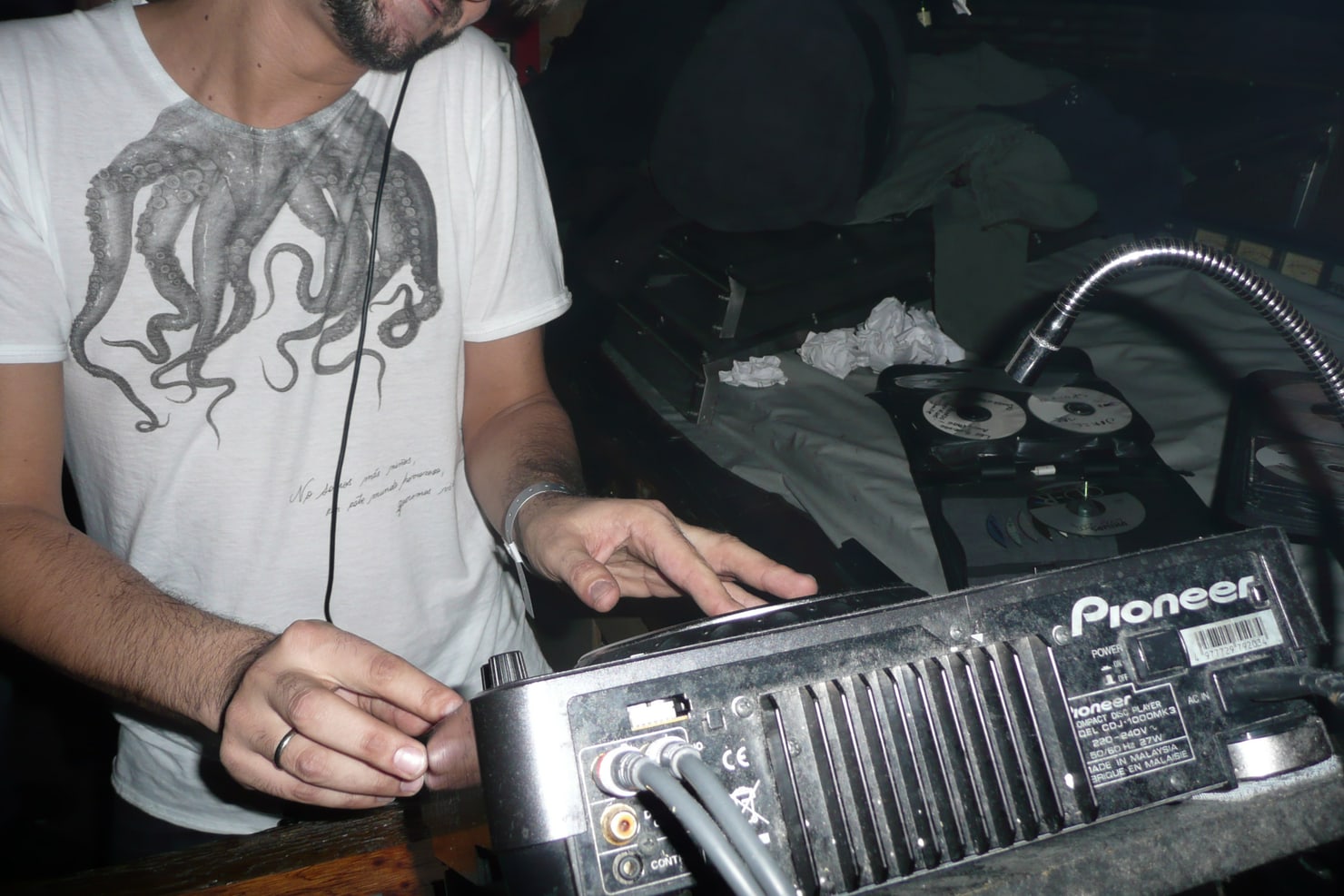
Walk into one of the most expensive rooms in dance music in 2026 and the first thing you notice is what is missing. There is no enormous drop you can see coming from a mile off, no vocal hook engineered for a phone screen, no pyro on the one. Instead there is a long, patient, rolling groove that barely changes for ten minutes at a time, and a room that has agreed, collectively, that this is the point. Minimal house, the most understated sound in the building, has quietly become the soundtrack of the most premium clubbing on the planet. This is a working DJ and producer's read on why the quietest music in the club became its most exclusive: what "expensive clubbing" actually sounds like in 2026, why restraint reads as luxury, the artists driving it, and the honest case against the whole idea. Facts and figures below were checked against current sources in late July 2026.
Minimal house in 2026 at a glance
- The sound: stripped-back, groove-led house, usually around 125 to 132 BPM, built on swing and sub-bass rather than breakdowns and drops. Fans have taken to calling its glossy, popular 2026 form "pumpin' house".
- The shift: premium clubbing is moving from ostentatious wealth display towards a curatorial model, access, atmosphere and no-phones immersion, and minimal house is its soundtrack.
- The money: the rooms it fills run real numbers, VIP tables from around €1,000 to €10,000 at Hï and up to €15,000 at Pacha on a big night, with bottles starting near €450.
- The data: SoundCloud's 2026 Music Intelligence Report clocked minimal tech house up 19% in the US over the past year, with UK scenes a central driver.
- The flag-bearers: Chris Stussy, East End Dubs, the FUSE London camp (Enzo Siragusa, Archie Hamilton, Seb Zito), PIV's Prunk and Luuk van Dijk, ANOTR, Toman, Rossi., Max Dean and Josh Baker.
- The roots: a real lineage, from Berlin microhouse and Romanian minimal to today's groove-led revival.
What "expensive clubbing" actually sounds like
For thirty years, expensive clubbing had an obvious soundtrack and an obvious look. The money was loud. It meant bottle service and sparklers, a headline name you had heard on the radio, a big room, a bigger drop and a VIP table priced from a few thousand euros up. The sound matched the spend: built for peaks, engineered for the moment everyone films at once.
In 2026 the most exclusive end of the market sounds completely different, because exclusivity itself has changed. Premium nightlife has shifted from an ostentatious model to a curatorial one. As the people who study members' clubs put it, status is no longer about demonstrating wealth, it is about access to the right environment, the right time and a bit of peace. The club becomes a filter that separates noise from conversation. Phone-free floors, signal-blocking and a door that cares more about who you are than what you will spend are the new signals of a serious room.
Minimal house is the sound of that shift. It is music that refuses to shout. It does not hand you an obvious moment to scream at, which is exactly why it works in a room that has decided screaming is for somewhere cheaper. The flex is the restraint. If big-room house is a logo across the chest, minimal house is the unbranded coat that costs more than the car. You are not paying for the drop. You are paying for the taste it takes to enjoy a record that never drops at all.
The economics of an expensive room
It is worth being concrete about the money, because the prices are real and they tell the story. The premium rooms where this sound now lives are some of the most costly nights in clubbing. At Hï Ibiza, VIP tables run from around €1,000 for a small balcony spot up to €10,000 for the best balcony tier, with the average table around €4,000 and a per-person figure that lands near €350. At Pacha, which hosted Chris Stussy's two USS Tuesdays this season, tables span roughly €800 to €5,000 on a normal night and climb past €15,000 for DJ-booth access on the busiest dates, with bottles starting around €450.
Hold those numbers against the music and the contradiction is the whole point. The sound being played at those tables descends from a scene that prized cheap rent, vinyl-only releases and rooms with no VIP area at all. Stripped-back house was built as the opposite of bottle service. In 2026 it is the thing bottle service pays to hear. That is not hypocrisy so much as a familiar pattern: the underground becomes the luxury once the people with money decide that taste, not volume, is the status symbol worth buying. The price tag has simply moved from the loudest sound in the room to the most knowing one.
Why minimal house fits the most expensive rooms
There is a craft reason this sound suits premium rooms, and it is worth being precise about, because "minimal" gets used lazily. Minimal house in 2026 is not empty. It usually sits around 125 to 132 BPM. On paper that is quicker than big-room house, yet it feels slower in the body, because the momentum is carried by shuffle and sub-bass instead of by build-ups and drops. There is no obvious drop to wait for. A good minimal set works like pressure applied evenly over six hours. Big-room house gives you six minutes of fireworks and starts again.
That structure demands two things a premium room can supply and a festival stage cannot: a serious sound system and a crowd willing to commit. Give it twenty minutes and it will bore you. The reward is cumulative, and it is only paid to people who commit. It only makes sense if you stay, and staying is a kind of luxury, time, attention and a floor full of people who all chose the same thing. This is the same fault line we wrote about in London's split between small rooms and festival-scale spectacle: scale and intimacy are different products, and minimal house is built for the intimate, expensive end.
It is also DJ music in the truest sense. With no vocal to hide behind and no drop to coast into, the mixing, the track selection and the read of the room are exposed. A minimal set is hard to fake. That difficulty is part of the prestige, the same way a tasting menu signals a kitchen that has nothing to hide.
The no-phones room: restraint beyond the music
The restraint does not stop at the sound. It now governs the room itself, through the fastest-spreading rule in modern nightlife: no phones on the floor. What was confined to a handful of underground clubs a decade ago has gone mainstream. Berghain, which opened in Berlin in 2004, helped write the template, with staff placing stickers over every guest's camera and ejecting anyone caught filming. Today an estimated 90% of Berlin venues enforce strict phone bans, fabric in London frames its no-filming policy as a way to let clubbers "focus on what matters, the music," and Chris Stussy's USS makes a phone-free floor central to the concept. The lockable Yondr pouch, now used across more than 10,000 events, has turned the idea into an industry.
This matters to the story because the no-phones room and minimal house are the same instinct in two forms. Both strip away the obvious dopamine, the drop, the selfie, the clip for later, and replace it with presence. A room that asks you to put your phone away and then plays music with no moment to film is making a single, coherent demand: be here, properly, or do not bother. In a culture built on documentation, that demand is rare, and rarity is the raw material of luxury. The phone ban is not a gimmick bolted onto the night. It is the visual version of the same restraint you can hear in the music.
A sound with serious roots: microhouse, Berlin and Romania
The mistake is to treat minimal house as a 2026 invention. It is the latest chapter of a lineage with real credibility, and that history is a large part of why it reads as tasteful rather than thin.
The modern strand starts in Berlin. In the late 1990s, drawn by cheap rent and liberal politics, a wave of producers took over the clubs of the Mitte district with a blippy, stripped-back sound, the Perlon label, founded by Zip and Markus Nikolai and later rooted in Berlin, among them. The Chilean-German producer Ricardo Villalobos moved to the city in 1999, released on Perlon and Playhouse, and in 2003 made Alcachofa, a record the critic Philip Sherburne placed at the centre of a sound he named microhouse: house reduced almost to its molecules, and somehow more hypnotic for it. That austere, patient aesthetic proved a dancefloor could be moved by almost nothing.
The torch then passed to Romania. Pioneers like Rhadoo, Raresh and Petre Inspirescu built an even more hypnotic, stripped-back sound through the 2000s, and in 2007 their [a:rpia:r] label and the Sunwaves festival turned Romanian minimal into a global underground religion. That institution is itself on the move: after 18 years, Sunwaves has left Mamaia, and its next edition, SW38, runs from 3 to 7 September 2026 at Las Salinas in Roquetas de Mar, Spain, a sign that even Romanian minimal's home fixture now travels to where the market is. That world prized exactly what 2026's premium rooms now pay for: patience, subtlety, marathon sets and a near-religious focus on groove over spectacle. So when a Pacha crowd stands still for a six-hour set with no obvious peaks, they are not following a fad. They are buying into a thirty-year argument that less can be the most demanding, and most rewarding, thing a dancefloor can do.
Pumpin' house: minimal's glossy 2026 face
The version winning in 2026 is not the austere microhouse of the Berlin or Bucharest purists. It is warmer, rolling and more immediate, and fans have even coined a nickname for it: "pumpin' house," after Chris Stussy's track "Pumpin'", released as his Across Boundaries project with Locklead on his Up The Stuss label. The name has come to describe the whole glossy, sub-heavy, hazy strain of minimal that fills the big rooms, deep enough to keep its underground credibility, but bouncy and tuneful enough to hold thousands of people who did not grow up on Perlon white labels.
This is the crucial move that made minimal expensive. The purist sound was always too demanding for a superclub. Pumpin' house keeps the restraint, no big drops, no obvious hooks, but adds enough swing and momentum to work on a Tuesday at Pacha rather than only at six in the morning in a 200-capacity basement. It is minimal house with the rough edges polished, the underground sound rebuilt for the premium room. Purists grumble that it is minimal made safe. They are not entirely wrong. But it is also the bridge that carried a basement aesthetic into the most expensive clubs in the world.
The artists shaping minimal house in 2026
Chris Stussy is the emblem. Real name Niels Christian Steenbergen, he was a youth footballer in the Netherlands until his club folded, turning him fully towards music and a first residency in Leiden. He shaped his signature in the crowds of Amsterdam rooms like Studio 80, fusing minimal textures with nineties classic house, broke through with tracks like "All Night Long", "Desire" and "Pumpin'", and founded his Up The Stuss label in 2020. His USS concept, long, distraction-free, no-phones sets, carried that stripped-back sound from a small London warehouse into Pacha in little over a year, and in 2026 he released his debut album, Lost, Found & Forgotten.... He is the proof that this sound can fill premium rooms without compromise.
London is the other engine. Rossi., real name Ross McCormack, has been called the new sound of London minimal house, and his Boiler Room debut in the capital in May 2026 played like a coming-out party for the scene. The FUSE London camp, Enzo Siragusa and his residents Archie Hamilton and Seb Zito, has spent more than a decade turning the city's underground into a globally respected minimal and deep-tech sound. East End Dubs carries the same London DNA into superclub rooms, his Eastenderz party holding Tuesdays at Hï Ibiza for nineteen weeks this season, from June to October 2026. Max Dean anchors the floor underneath them.
The sound has a strong Amsterdam axis too. PIV Records, the label Prunk founded in 2015, and artists like Luuk van Dijk and Marsolo blend classic New York and Chicago warmth with modern control, while the duo ANOTR have channelled the city's underground into one of the genre's biggest crossover sounds. Toman, a fixture of the Solid Grooves world, is among the producers pushing the rolling deep-tech end. And the man doing the most to export all of it is from Manchester: Josh Baker, who, according to streaming data, has been central to introducing minimal tech house to a new generation on both sides of the Atlantic. It is not a coincidence that these are the same names taking over the island, a story we told in full in the London-to-Ibiza house pipeline.
London, Amsterdam, Manchester and Ibiza: the geography of restraint
Minimal house's map tells you a lot about why it became expensive. Its capitals are not the EDM heartlands. They are the cities with the deepest club cultures and the most discerning crowds. London supplies the volume of producers and the warehouse infrastructure. Amsterdam supplies the groove-led, jazz-touched warmth through PIV, ANOTR and the wider Dutch scene. Manchester supplies the festival and label ecosystem that scales artists up. And Ibiza, specifically its premium rooms rather than its arena clubs, is where all of it gets monetised at the top of the market.
That is the route the sound now travels: refine it in a London or Amsterdam basement, road-test it in Manchester, and cash it in on an Ibiza Tuesday at Pacha or a Hï Club Room. Each city adds something, and the finished product is a sound that feels both underground and luxurious at once, which is a very hard trick to pull off and a very easy one to charge for.
The numbers: minimal's quiet, steady climb
The temptation with a piece like this is to overclaim, so here is the honest data. Minimal house is not exploding the way EDM or Afro house once did. It is climbing steadily and deliberately, which is entirely in character. SoundCloud's 2026 Music Intelligence Report logged minimal tech house streams up 19% in the US over the past year, with the report framing it as steady rather than rapid growth. In the UK, hits from the minimal and UK garage worlds reached the year's top-ten tracks, and the scenes that grew at home are now the ones driving the sound's surge in America.
That profile, modest but durable growth, led by the UK, exported across the Atlantic, is exactly what you would expect from a sound whose entire appeal is restraint. It is not built for a viral spike. It is built to outlast one.
Why restraint became luxury
Step back and the deeper reason is cultural, and it reaches well beyond music. Across fashion, design and hospitality, 2026 belongs to quiet luxury: the unbranded, the understated, the expensive thing that does not announce itself. When wealth became visible to everyone, broadcast, photographed and tracked, the people at the top started to prize invisibility instead, signalling sideways to the few who recognise the reference rather than down to the crowd. The loudest signal of status is now the refusal to signal at all.
Minimal house is the dancefloor version of that idea. In a culture exhausted by maximalism and constant documentation, a no-phones room playing music with no obvious hooks is the ultimate flex, because it asks for the one thing money cannot fake: the patience and the taste to enjoy it. On a good night the appeal is real and not cynical. Minimal house offers something the spectacle economy genuinely cannot, a long, shared, undramatic groove that rewards everyone who stays. In 2026, that turned out to be the most expensive feeling in the club.
The honest case against it
This piece would not be worth much without the other side, so here it is. Minimal house is not "better" than big-room house, and plenty of smart people find it insufferable. The standard charge is that the stripped-back, groove-led sound is samey and soulless, "house without the soul, techno without the mechanistic rigour," as one well-aimed critique of tech house put it, and that the snobbery swirling around this end of dance music feeds what the same essay called a "sneering, yellow-toothed elitism" that does club culture more harm than good. There is truth in that. A sound that rewards only the committed, in a room that filters by access and price, is also a polite machine for keeping people out, and the line between curation and gatekeeping is thin.
The money makes it worse, not better. There is something genuinely absurd about an aesthetic born from cheap rent and vinyl-only labels ending up as the soundtrack to a €10,000 table. "Expensive clubbing" is a cultural observation, not a compliment, and the quiet-luxury framing it rides on has its own critics, who note that "understated" taste is often just a more exclusive way of pricing people out. None of this means the music is bad. On a sweaty, cheap, phone-free night it can be the best thing in clubbing. But the same restraint that makes a room feel special can tip into snobbery, and the honest version of this story holds both at once. The money in dance music still overwhelmingly belongs to festival EDM and pop-house headliners, and that is not changing soon. Treat all of the above as a read on a real cultural shift, not a verdict on which music is worth more. For the wider map, see the best Ibiza parties for house music in 2026 and the best London clubs for electronic music.
FAQ
What is minimal house?
Minimal house is a stripped-back, groove-led style of house music, usually around 125 to 132 BPM, built on swing, percussion and sub-bass rather than big breakdowns and drops. It rewards long, committed listening rather than instant peaks, which is why it suits long DJ sets and serious sound systems.
What is pumpin' house?
"Pumpin' house" is a fan nickname for the glossy, rolling, sub-heavy form of minimal house that dominates the big rooms in 2026. The name comes from Chris Stussy's track "Pumpin'" on his Up The Stuss label. It keeps minimal's restraint, no big drops or obvious hooks, but adds enough bounce and momentum to fill a superclub.
Why is minimal house associated with expensive clubbing?
Because premium clubbing in 2026 shifted from showing off wealth towards a curatorial model based on access, atmosphere and no-phones immersion. Minimal house, which refuses obvious hooks and rewards patience, became the soundtrack of that "quiet luxury" idea, where the flex is restraint rather than spectacle. It now fills rooms with VIP tables running into five figures.
Who are the best minimal house DJs in 2026?
Leading names include Chris Stussy, East End Dubs, the FUSE London artists Enzo Siragusa, Archie Hamilton and Seb Zito, PIV's Prunk and Luuk van Dijk, ANOTR and Toman from the Amsterdam and deep-tech side, plus rising British names like Rossi. and Max Dean, and Manchester's Josh Baker, who has helped export the sound to the US.
Where did minimal house come from?
It descends from the Berlin microhouse of the early 2000s, built around the Perlon label and Ricardo Villalobos's 2003 album Alcachofa, and the Romanian minimal scene of artists like Rhadoo, Raresh and Petre Inspirescu, with the [a:rpia:r] label and Sunwaves festival from 2007. The 2026 wave is a glossier, more club-ready continuation of that lineage.
Why do so many clubs ban phones now?
Because a phone-free floor protects privacy, encourages people to be present and adds a sense of exclusivity. The idea spread from Berlin clubs like Berghain, where around 90% of venues now enforce bans, to London's fabric and to no-phones concepts like Chris Stussy's USS, helped by lockable Yondr pouches now used across more than 10,000 events.
Is minimal house actually growing?
Yes, steadily rather than explosively. SoundCloud's 2026 Music Intelligence Report recorded minimal tech house streams up 19% in the US over the past year, with UK scenes driving the transatlantic growth, and minimal and UK garage tracks reaching the UK's top ten.
Sources
- SoundCloud 2026 Music Intelligence Report (minimal tech house growth, US and UK figures); Mixmag and Decoded Magazine coverage of the report
- Ibiza VIP and bottle-service price guides for Pacha and Hï Ibiza 2026 (Tickets Ibiza, Try Ibiza, Club Bookers)
- Coverage of premium and members' club culture in 2026 (curatorial elitism); Dazed, Mixmag and Yondr on no-phone policies at Berghain, fabric and beyond
- DJ Mag and Wikipedia on Chris Stussy (Niels Steenbergen), "All Night Long", "Pumpin'" and the Up The Stuss label; background on microhouse, Perlon, Ricardo Villalobos's Alcachofa, Romanian minimal, [a:rpia:r] and Sunwaves
- VICE's tech-house essay and minimalism critiques for the case against; artist coverage of Rossi., East End Dubs, ANOTR, Toman, PIV Records and Josh Baker
This guide is part of House of MNEEMO's ongoing coverage of the electronic and club music scene, written by London-based DJ and producer MNEEMO, with millions of streams to his name and a party series running through some of London's best clubs.