The Best Manchester Clubs in 2026
The best Manchester clubs in 2026, from the 10,000-capacity Warehouse Project to intimate rooms like Hidden, Soup and XLR, sorted by what each does best.
Manchester is in the middle of its best clubbing run since the 1990s, and also losing one of its most beloved rooms. Both things are true at once, and together they tell you everything about the city's nightlife in 2026. From a 10,000-capacity former railway depot to a 200-capacity basement room in Withington, the spread of quality is extraordinary, but the squeeze on mid-sized independent venues is real. Written from behind the decks, this is a guide to the best Manchester clubs in 2026, sorted by what each one actually does best, with an honest word on what the scene needs to protect. Details were checked against current sources in July 2026; programming changes constantly, so confirm before you travel.
The best Manchester clubs in 2026 at a glance
- The giant: Depot Mayfield, home of the Warehouse Project and the UK's biggest club night.
- The underground engine room: Hidden, raw and techno-leaning under the railway arches.
- The purist's pick: Amber's, a strict no-phones, Berlin-style room with unannounced lineups.
- The small rooms that matter: XLR, Soup, Eastern Bloc Records and Stage & Radio.
- Live-into-club: Band on the Wall, YES and Freight Island.
- The comeback: Sankeys, reopened 2026 on Sidney Street, 500 capacity, Saturdays, back from its summer break on 26 September.
- The award winner: The Loft, 200 capacity off Oldham Road, DJ Mag's 2025 best UK club.
- The one the city is losing: The White Hotel, the bold Salford institution, set to close in January 2027.
Best for festival scale: Depot Mayfield and the Warehouse Project
If you want the big night, nothing in the North touches this room. Walking into it after a week of Manchester's basements resets your sense of scale: the ceiling disappears, the sound arrives in your chest before your ears, and ten thousand people somehow read as a single crowd. It is the permanent home of the Warehouse Project, whose twentieth-anniversary season runs September to New Year's Eve and books the kind of names most cities only hear at festivals. We have written up the full lineup, dates and ticket mechanics separately, so treat this entry as the honest caveat instead: it is not somewhere you drop into on a Friday whim. You buy a ticket weeks out, you build the night around it, and you accept the queues and the cloakroom as the price of the spectacle. Judged as an event rather than a club, it is worth every bit of that.
The other big rooms: Aviva Studios, Albert Hall and New Century
Depot Mayfield is not the city's only large room, and knowing the others stops you assuming Manchester goes quiet outside the September to New Year window. Aviva Studios, Factory International's home since 2023, holds up to 5,000 standing in a warehouse 21 metres high, and takes club-format nights alongside the art: Homobloc and Homoelectric took over its Festival Square for a night in July 2025. Albert Hall, 1,800 capacity at 27 Peter Street, is a restored Grade II listed chapel with the best ceiling in the city to play under. New Century, on Corporation Street, is a preserved 1960s dancehall holding 900 on a sprung floor. Out in Old Trafford, the 3,500-capacity O2 Victoria Warehouse takes the harder end. None run weekly; all reward a calendar alert.
Best for raw underground energy: Hidden
For the proper underground experience, Hidden is the city's engine room. Tucked inside Downtex Mill, a former textiles factory on Mary Street just north of the city centre, and running since 2015, it spreads across a main warehouse space, a darker back room and an outdoor terrace, with a punchy Void Acoustics system and a capacity around 650. The programming leans hard into techno, house and electro, with heavy jungle and drum and bass nights too, mixing big international names with the local talent that defines the city's sound. If you want sweat, bass weight and a credible crowd, Hidden delivers it more reliably than anywhere. Practically: 16-18 Mary Street, M3 1NH, listed hours of 11pm to 4am on Fridays and Saturdays only, home to Homoelectric since 2016, and named best club at DJ Mag's Best of British awards in 2023.
Best for the no-phones purist: Amber's
Amber's has quickly become one of the most exciting rooms in the city centre by doing things the old-fashioned way. It operates a strict, Berlin-style no-phones policy and keeps its lineups unannounced, which keeps the focus entirely on the music and the floor. Enforcement has only got stricter in 2026: anyone caught filming is now asked to leave on the spot, with no second chances. It is the Manchester room for people who want presence over documentation, part of the same wider move towards phone-free clubbing happening across the scene. It sits at 1 Circle Square, Symphony Park, M1 7FS, and holds 1,000, which makes it comfortably the biggest room in Manchester running that policy.
The comeback: Sankeys is trading again, 500 capacity, Saturdays
The biggest change to the Manchester map in years is that Sankeys is open again. After nine years away it relaunched on 30 and 31 January 2026 in a basement on Sidney Street, off Oxford Road: 500 capacity, a chill-out second room and the LED matrix grid people remember from Ancoats. It runs Saturdays, weekly from 7 February, with Tribal Sessions restored as a monthly residency and a 6am licence. DJ Mag quoted creative director David Vincent saying there would be "no VIP or phones allowed on the dancefloor" and that "everyone is a VIP". The opening season sold out. One warning that matters if you are reading this in August: the club shut after its 27 June party for a summer break to retune the room and the sound, and reopens on Saturday 26 September. At 500 it is far smaller than the old Ancoats room, so buy in advance. If you learned electronic music at the old Sankeys, as Josh Baker did, the new one is smaller and better for it.
The UK's best club, by DJ Mag's count: The Loft
If you have one night and want to be where the heads are, it is The Loft: a 200-capacity converted industrial unit at Unit 1, New Street, M40 8AW, off Oldham Road, open since 2021 with a custom Funktion-One rig and bookings running from new-school tech house to older, deeper records. It won best club in the UK at DJ Mag's 2025 Best of British awards, beating, as Manchester's Finest reported, fellow Manchester room Amber's. The award misses the useful part: it is a tram ride out rather than a stumble from the Northern Quarter, it does not open every weekend, and the good nights sell out on announcement.
The small rooms that matter: XLR, Soup, Eastern Bloc and Stage & Radio
The health of any scene lives in its small rooms, and Manchester's are thriving. XLR, an independent 200-capacity club in Withington, runs a weekly programme of headline DJs, disco and grassroots showcases on a high-powered club sound system, the kind of room where careers are built. It also made national headlines as the UK's first fully licensed bring-your-own-booze nightclub, an affordability experiment that fits its grassroots mission perfectly. Soup, the Northern Quarter space formerly known as Soup Kitchen, programmes with a community-first focus on local talent plus cult bookings from further afield. Eastern Bloc Records doubles as a record shop and an intimate, low-ceiling venue with crisp sound, and Stage & Radio, a space with roots back to 1940s modern jazz, reopened in 2016 with a focus on underground dance. Stage & Radio is itself fighting plans for new-build flats next door, a live reminder of how fragile these rooms are even when the council insists the venue is safe. The numbers matter when you plan: XLR is at 455 Wilmslow Road, M20 4AN, holds 200 and closes at 2am, early enough to catch you out if you have travelled south; Soup holds 200 at 31-33 Spear Street, M1 1DF, running midday to 4am on Fridays and Saturdays; Stage & Radio is smallest at 140, at 43 Port Street, M1 2EQ, open 2pm to 4am daily.
The mid-sized rooms that carry the rest of the week
Between the 200-capacity basements and the 10,000-capacity depot sits the layer that keeps a city's DJs and engineers in work. Joshua Brooks at 106 Princess Street is the one to know: a bar, a terrace and the basement club, 450 capacity, a Void system downstairs, open midday to 3am or 4am, refurbished in 2021 and a twice winner of the best venue award. It books properly for the size, with Metalheadz taking it on 21 August 2026 for Goldie back to back with Doc Scott. Gorilla, 600 capacity in a railway arch at 54-56 Whitworth Street West, and the Deaf Institute, 300 capacity at 135 Grosvenor Street, were both marked for closure in July 2020 by their then owner Mission Mars, which still runs Albert Hall, and were bought within the week by Tokyo Industries. Club Academy, 650 under the students' union on Oxford Road, is where most undergraduates get their first properly sweaty room, and Cruz 101 in the Gay Village runs two floors, the downstairs SUB the more underground.
Live-into-club: Band on the Wall, YES and Freight Island
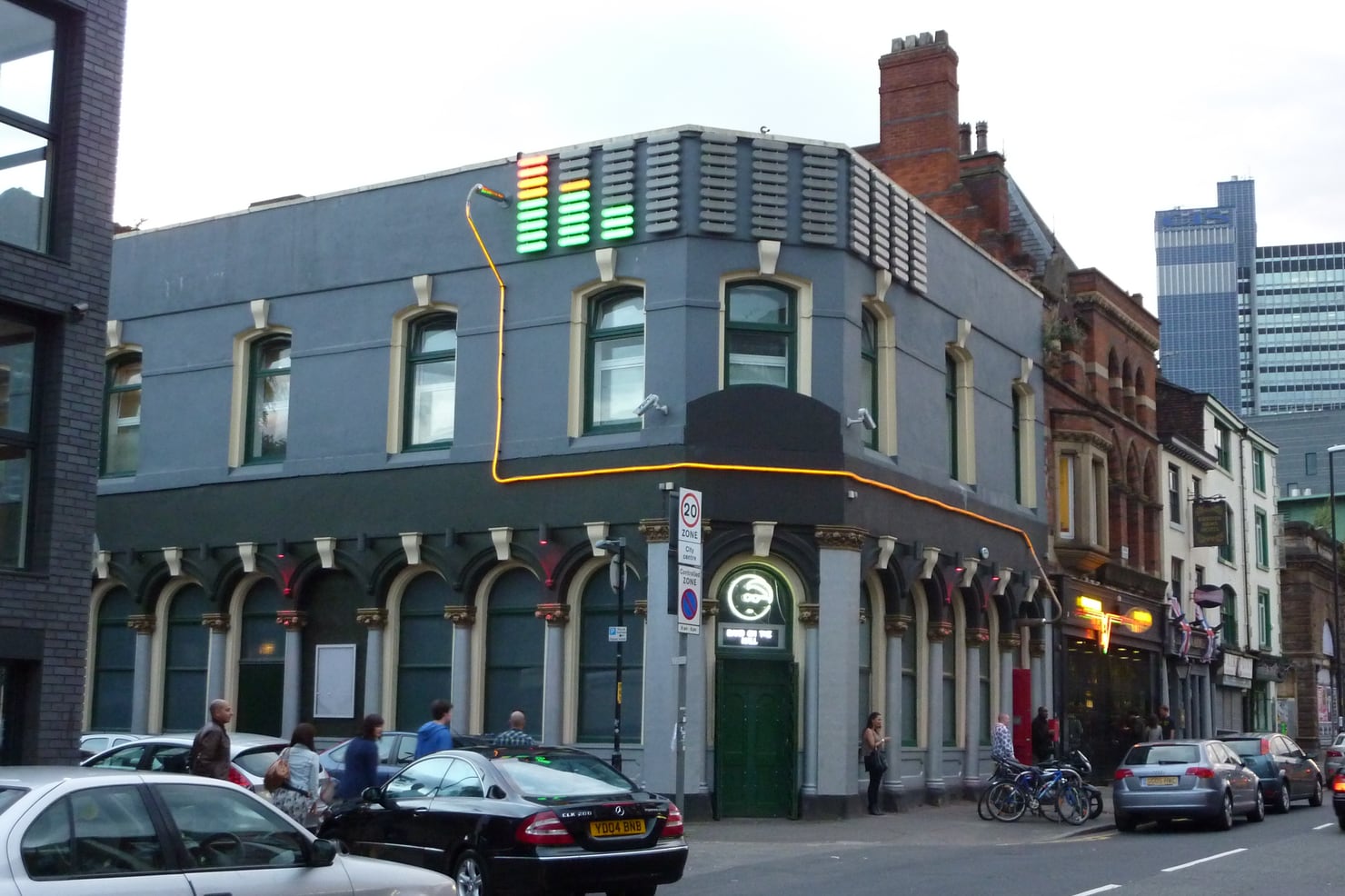
Manchester also does the blur between gig and club night brilliantly. Band on the Wall, the award-winning venue on Swan Street, runs a global programme of live music and DJ-led club nights with the bar open to all. YES offers an inclusive, diverse lineup across its rooms, including its famous all-pink gig space, and Freight Island, a sprawling food-and-drink event space, hosts regular DJ sets and indie nights, many of them free. They are perfect for a night that starts with a band and ends on a dancefloor. Band on the Wall holds 520 at 25 Swan Street, running to 2am Wednesday to Friday and midday to 3am on Saturday. YES, at 38 Charles Street, is two rooms: the 250-capacity Pink Room and a 60-capacity basement. Freight Island holds 1,300 at 11 Baring Street, metres from Depot Mayfield, the obvious daytime pairing with a Warehouse Project ticket.
Manchester club nights: what runs on which night
Manchester is not a seven-night clubbing city, and planning around that is the difference between a great trip and an expensive Tuesday. Here is the shape of the week, on venue-published hours checked in July 2026.
- Monday and Tuesday: effectively dark. Band on the Wall trades to midnight for gigs; 42nd Street is shut on Mondays and open 11pm to 3am on Tuesdays.
- Wednesday: the first real option. Soup 4pm to midnight, Band on the Wall to 2am, the Deaf Institute into its Wednesday to Sunday week.
- Thursday: student-driven, and in term time the first genuinely busy night. 42nd Street 11pm to 3am, Joshua Brooks running, Cruz 101 10.30pm to 5am, night buses on.
- Friday: the underground night. Hidden 11pm to 4am, Soup to 4am, Band on the Wall to 2am, Cruz 101 to 6am, and from mid-September the Warehouse Project takes the Friday out of everyone else's diary.
- Saturday: the heaviest night by a distance, and the only one where you are choosing between good options. Sankeys runs Saturdays in season, Hidden and Amber's are open, Band on the Wall midday to 3am, Cruz 101 to 6am.
- Sunday: thin but not empty. Cruz 101 lists 10.30pm to 5am; Freight Island is the daytime option.
After-hours Manchester: late licences, closing times and getting home
Manchester's honest weakness, set against Berlin or even London, is the terminal hour. The council's licensing policy for 2024 to 2029 treats the late-night economy as trading from midnight to 4am or later, and four is where the serious rooms stop: Hidden, Soup and Stage & Radio all publish 4am closes, Joshua Brooks trades to 3am or 4am, Depot Mayfield finishes at 4am, XLR shuts at 2am. Plan on the music stopping at four.
Past four the map narrows to the Gay Village. Cruz 101's published hours are the latest you can rely on: 10.30pm to 5am on Thursday and Sunday, and 10.30pm to 6am on Friday and Saturday. Sankeys holds a 6am licence too, which counts again once its season restarts in September. Anything later is private and unlicensed, and we are not going to point you at it.
Then the part no club guide prints. Greater Manchester's good night out guidance is blunt: trams run until midnight, and until 1am on Fridays and Saturdays, so the Metrolink is finished before almost every club here closes. Night buses run Thursday to Saturday; otherwise budget for a taxi, and if you are the one playing, build the cab into the fee.
The one the city is losing: remembering The White Hotel
No honest 2026 guide can pretend everything is fine, because Manchester is losing one of its greatest rooms. The White Hotel, the rough-and-ready Salford venue with a fierce reputation for forward-thinking programming across house, techno, gqom, kuduro and ambient, is set to close in January 2027, with its founders citing chronic flooding and a council redevelopment that will turn the site into a wetland park, and a wish to "go out on our own terms" rather than become a museum. For years it was the city's boldest underground space, the room that took the most risks, and its loss is a serious blow. It is also a warning. The White Hotel was exactly the kind of mid-sized, independent, artistically fearless venue that is hardest to keep alive, and its closure underlines that Manchester's clubbing boom is not evenly shared. If you have never been, you have until January, and the closing run has been booked accordingly, with Zenker Brothers, Eris Drew and Octo Octa, Mama Snake and dBridge among the confirmed names.
The venues Manchester has already lost, and what that costs
Read on its own, the White Hotel's closure looks like bad luck. Lined up against the rest it is a pattern. The Haçienda opened on 21 May 1982, played its last night on 28 June 1997 and was demolished in 2002; the site is flats trading under the club's name. Sound Control shut on 16 December 2017 and was knocked down for Artisan Heights, a 95-metre student tower with 603 bedrooms finished in 2020 on the same New Wakefield Street plot. Antwerp Mansion, the 1842 house in Rusholme that had run club nights since 2011, was ordered to close in 2018 over permissions it had never held. Sankeys left Ancoats in 2017 and took nine years to return. And South, the South King Street basement opened in 1995 by former Haçienda promotions manager Paul Cons, closed in June 2022 after 27 years, boxed in by new flats and noise abatement notices, with a final night played by resident Clint Boon.
The causes are boringly consistent: land value, residential development next door, and licensing conditions that follow the flats rather than the other way round. The White Hotel fits exactly. Its site is going under Copper Park, a 60-acre wetland along the Irwell designed to take flood risk off 7,000 planned homes. Speaking to Salford Now, the DJ Kevin Holland called it "the Hacienda of my generation", while BBC Radio 1's Martha Pazienti Caidan told the same outlet it "felt more along the lines of a house party with a massive sound system". Neither is a business case that survives a flood map.
One piece of policy is worth knowing. In autumn 2025 Manchester City Council opened a £245,000 grassroots music venue fund, paid for from the new national £1 levy on tickets for events of 5,000 capacity and above; DJ Mag reported the pot was fed by major shows including five sold-out Oasis nights at Heaton Park and dates at Co-op Live, with grants capped at £20,000 a venue. It is not a rescue package. It is a city accepting that the arena at one end owes something to the 200-capacity basement at the other, which is exactly our argument about club closures in London.
How to choose your Manchester night
Pick by scale and sound. For a once-in-a-season spectacle with a global headliner, it is Depot Mayfield and the Warehouse Project. For raw, credible techno and house most weekends, Hidden. For a phone-free, purist floor, Amber's. For supporting the grassroots and hearing tomorrow's headliners first, XLR, Soup, Eastern Bloc and Stage & Radio. For a live-music-into-DJ night, Band on the Wall or YES. Match the room to the mood and Manchester rarely disappoints.
Why Manchester is thriving, and what it must protect
Step back and Manchester's 2026 scene looks like a barbell: enormous at one end, with Depot Mayfield and the Warehouse Project pulling global attention, and vital at the other, with a deep bench of small independent rooms. The quality of programming across the city, house, techno, jazz and everything between, really is as strong as it has been since the 90s. The danger is in the middle, where the beloved, medium-sized underground venues like The White Hotel are the ones closing. There is renewal too, though: the legendary Sankeys reopened in 2026 in a new 500-capacity home off Oxford Road, with a no-VIP, no-phones dancefloor, proof that for every room Manchester loses it tends to build another.
It is the same tension we have written about in London, between the festival-scale spectacle and the small-room underground, and the lesson is identical: enjoy the giants, but spend your money on the grassroots too, because that is where the next generation of artists, and the soul of a music city, actually lives. Manchester's future depends on it, just as the city's ecosystem helped shape artists like Josh Baker before Ibiza came calling.
FAQ
What is the best club in Manchester in 2026?
It depends what you want. For festival-scale events, Depot Mayfield and the Warehouse Project are unmatched; for raw underground techno and house, Hidden; for a no-phones purist night, Amber's; and for grassroots discovery, small rooms like XLR, Soup and Eastern Bloc.
Which venue hosts the Warehouse Project?
At Depot Mayfield, the converted rail depot five minutes on foot from Piccadilly station, which holds around 10,000. Its main season runs from September to New Year's Eve.
Is The White Hotel still open?
The White Hotel, the celebrated underground venue in Salford, is set to close in January 2027, with its founders citing flooding and a redevelopment of the site into a park. It is remembered as one of the city's boldest and most forward-thinking rooms. The legendary Sankeys, meanwhile, reopened in 2026 in a new Oxford Road home.
What are the best small clubs in Manchester?
XLR in Withington, Soup in the Northern Quarter, Eastern Bloc Records and Stage & Radio are among the best intimate, independent rooms, all with strong underground programming.
Which Manchester club has a no-phones policy?
Amber's operates a strict, Berlin-style no-phones policy and keeps its lineups unannounced, keeping the focus on the music.
Is Manchester good for electronic music in 2026?
Yes. Many regard the city's current programming as the best since the 1990s, spanning everything from 10,000-capacity events to intimate underground rooms, though some treasured mid-sized venues have struggled.
What time do Manchester clubs close?
Most serious rooms stop at 4am: Hidden, Soup and Stage & Radio all publish 4am closes, Joshua Brooks runs to 3am or 4am, Depot Mayfield finishes at 4am, XLR closes at 2am. The latest published hours belong to Cruz 101, which runs to 6am on Friday and Saturday.
Is Sankeys open again in Manchester?
Yes. It reopened on 30 and 31 January 2026 in a 500-capacity basement on Sidney Street, off Oxford Road, running Saturdays with Tribal Sessions monthly and a no-phones, no-VIP dancefloor. It closed after its 27 June party for a summer break and reopens on Saturday 26 September 2026.
Which Manchester clubs are open midweek?
Soup and Band on the Wall trade on Wednesdays, 42nd Street opens 11pm to 3am on Tuesdays and Thursdays but is shut on Wednesdays, and Cruz 101 runs 10.30pm to 5am on Thursdays. Mondays are effectively dark.
How do you get home after a Manchester club night?
Trams run until midnight, and until 1am on Fridays and Saturdays, so the Metrolink is finished before nearly every club in this guide closes. Night buses run Thursday to Saturday; otherwise budget for a taxi.
Sources
- Resident Advisor, Skiddle, MCR and Manchester's Finest 2026 guides to the best clubs in Manchester
- The White Hotel coverage in Resident Advisor, NME and Salford Now on its programming and January 2027 closure (flooding and redevelopment); The Manc on the 2026 reopening of Sankeys in its new Oxford Road home
- Venue information on Depot Mayfield, Hidden, Amber's, XLR, Soup, Eastern Bloc Records, Stage & Radio, Band on the Wall, YES and Freight Island
- The Warehouse Project official channels for Depot Mayfield capacity and season details
- Skiddle venue listings for published addresses, capacities and hours across Hidden, Joshua Brooks, Soup, XLR, Stage & Radio, Band on the Wall, YES, Gorilla, The Deaf Institute, Albert Hall, Club Academy, New Century, Freight Island and Cruz 101
- DJ Mag on Sankeys' 2026 return, Hidden's Best of British win in 2023, The Loft's Best of British win in 2025 and the £245,000 grassroots fund; Skiddle on Sankeys' summer break and September reopening; Salford Now on The White Hotel and Copper Park; BBC, Mixmag and the Morning Advertiser on Gorilla and the Deaf Institute; coverage of the Haçienda, Sound Control, Antwerp Mansion and South; Manchester City Council Statement of Licensing Policy 2024 to 2029 and Greater Manchester good night out guidance
This guide is part of House of MNEEMO's ongoing coverage of the electronic and club music scene, written by London-based DJ and producer MNEEMO, with millions of streams to his name and a party series running through some of London's best clubs.