Four Tet's Real Name: Kieran Hebden, Explained
Four Tet's real name is Kieran Hebden, born September 1977 in Putney. The full story behind KH, Fridge, the Domino case and the 2026 alias.
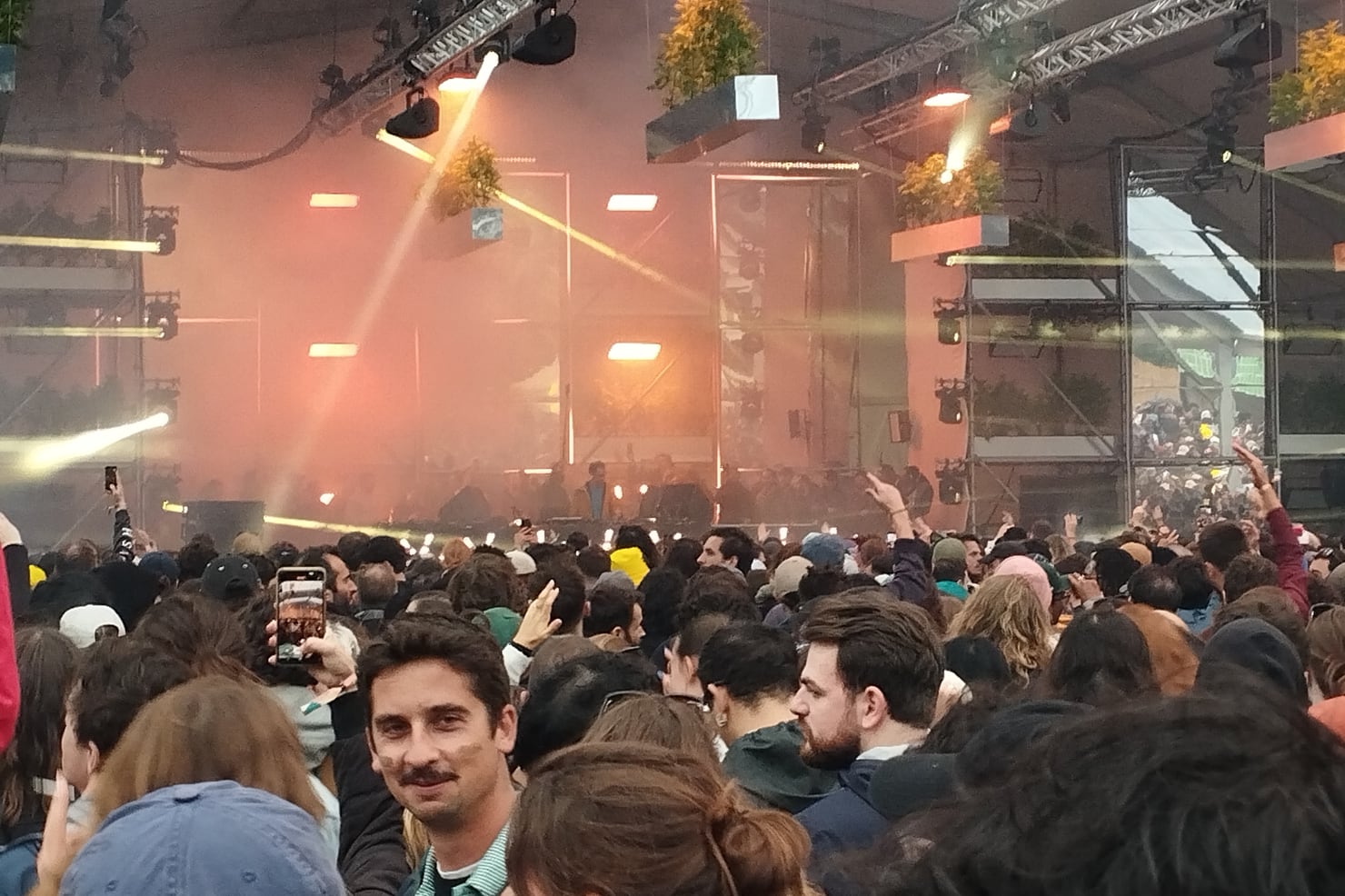
Four Tet's real name is Kieran Hebden, an English electronic musician, producer and DJ born in September 1977 in Putney, south-west London. His full name is usually given as Kieran Miles David Hebden. If you arrived here confused by the sheer number of names attached to one artist, that is fair enough. Four Tet, Kieran Hebden, KH, Fridge, and the Wingdings-style symbol alias behind a surprise album in July 2026 all lead back to the same lifelong Londoner. This is a working DJ and producer's guide to who he actually is, where the name came from, and why one of Britain's most quietly influential electronic artists still matters in 2026.
Four Tet at a glance
- Real name: Kieran Hebden, full name usually given as Kieran Miles David Hebden.
- Born: September 1977, in Putney, south-west London. The exact day is not reliably documented, and he was not born in 1978.
- Age in 2026: 49 after his birthday in September 2026, 48 before it.
- Background: a South-African-born Indian mother and a British father who lectured in sociology.
- School: Elliott School in Putney, the same school later linked to Burial, Hot Chip and The xx.
- First band: Fridge, formed as a teenager with schoolmates Adem Ilhan and Sam Jeffers.
- Solo debut: Dialogue, released in 1999.
- Aliases: KH is his club and festival-facing name; a symbol-font alias, usually called "Wingdings", has been in use since 2018 and released a surprise album on Text Records on 3 July 2026.
- Labels: early breakthroughs on Domino Recording Company, most recent work on his own Text Records.
- Latest album: Three, released 15 March 2024 on Text Records, his twelfth studio album.
- Big moment: closing the main stage at Coachella 2023 with Skrillex and Fred again..
- Genre arc: from folktronica to full dancefloor house and festival main stages.
What is Four Tet's real name?
Four Tet is the stage name of Kieran Hebden. He is an English electronic musician, producer and DJ, and his full name is usually given as Kieran Miles David Hebden. That is the short answer most people arrive looking for, but it is where most pages stop. The more useful question is why a single artist ended up with a cluster of names, because untangling that tells you almost everything about how Hebden built his career.
Four Tet is the main project, the one under which he has released twelve studio albums. Kieran Hebden is the person, the name that appears on production credits and in interviews. KH is the alias he reaches for when he wants to make undiluted club and festival music. Fridge was the band he started as a teenager. And on 3 July 2026 he added another layer by releasing a surprise album on Text Records under the symbol-font alias he first used for tracks in 2018, usually referred to as "Wingdings", so fans had to decode it. One person, several masks, each one used deliberately, and it fits neatly alongside our other real name profiles like Chris Stussy (now Chris Stassy).
How old is Four Tet, and where is he from?
Kieran Hebden was born in September 1977 in Putney, south-west London, which makes him 49 once his September birthday has passed in 2026, and 48 before it. It is worth being precise, because a lot of the pages that rank for his name are not. Some celebrity-bio scrapers list a specific birth day, and the reported days do not agree with one another, so treat any exact date you see elsewhere with caution. The reliable sources give the month and year, September 1977, and nothing more granular. Just as importantly, he was not born in 1978, a figure that floats around online and does not hold up against any dependable source.
He is a lifelong Londoner, and his upbringing matters to the music. His mother was an Indian woman born in South Africa, and his father was British and lectured in sociology. He attended Elliott School in Putney, an ordinary state comprehensive that has since acquired an almost mythic reputation in British electronic music, because it is also cited as the school that produced Burial, members of Hot Chip and The xx. A single London school quietly seeding several of the most distinctive acts in modern British electronic music says something about the city's underground. For the wider frame, we have written about London's club scene and the rooms that keep it alive.
Where does the name "Four Tet" come from?
This is the part where honesty serves you better than a tidy story. The most widely repeated explanation is that the name Four Tet derives from a 1971 album called 4 Tet by the Dutch jazz saxophonist Harry Verbeke. It fits Hebden's deep love of jazz, and Wikipedia gives it as the origin, citing the 2015 record-collecting book Dust & Grooves, which carries a chapter on Hebden. We have not been able to check that chapter or find Hebden saying it in an interview we could verify, so treat it as the best-documented explanation rather than a settled fact.
What is not in doubt is the feel of the name. Four Tet reads like something between a jazz combo and a mathematical unit, oddly perfect for an artist whose work has always sat where improvisation meets precision. Whatever its true root, the name has come to mean a very particular thing over twenty-five years: warm, sample-woven, rhythmically restless electronic music that refuses to sit still in one genre.
From Fridge to Four Tet: the London roots
Before Four Tet existed, there was Fridge. Hebden formed the band as a teenager with two Elliott School classmates, Adem Ilhan and Sam Jeffers, and they released their debut album Ceefax on Output Recordings in March 1997, when Hebden was around nineteen. While most people that age are still finding their feet, Hebden already had a record out on an independent label, playing restless, instrumental, post-rock-leaning music that pulled in electronics, live drums and a magpie's ear for texture.
Fridge is where the Four Tet method was really forged. The band worked with real instruments and studio experimentation rather than off a rigid template, and you can hear the DNA of everything Hebden did later in that early material: the interplay of human playing and machine editing, the willingness to let a track wander. When he stepped out on his own as Four Tet at the end of the decade, he carried a fully formed sensibility into a solo project, one grounded in the specific London lineage of the late-nineties underground, the story of the London underground that shaped a generation of electronic artists we keep returning to in our piece on Boiler Room and the London underground.
Folktronica to the dancefloor: Domino, Rounds and Text Records
Hebden's solo debut as Four Tet, Dialogue, arrived in 1999, but the records that made his name came next, on the Domino Recording Company. Pause landed in 2001, and then in 2003 came Rounds, the album that defined his early reputation and got critics reaching for a word they would attach to him for years: folktronica. It is a clumsy label, but it captured something real, a sound built from chopped samples, acoustic guitars, jazz drums and a homemade warmth that felt human where a lot of electronic music felt cold. Rounds is still the record many people mean when they say Four Tet.
What is striking in hindsight is how far he travelled from that starting point. Over the following two decades Hebden moved from the introspective, headphones-first sound of the Domino years toward outright dancefloor music: house rhythms, extended DJ-friendly structures, and eventually the festival main stage. He did it without ever quite abandoning the earlier palette, so the melodic warmth stayed even as the tempos and the rooms grew. Along the way he built his own label, Text Records, on which most of his recent work now appears, giving him the independence to release exactly what he wants, when he wants.
He is also a serial collaborator. He recorded and toured a celebrated run of improvised collaborations with the jazz drummer Steve Reid, work that put his love of live, in-the-moment playing front and centre. He has made records with Burial, and with Burial and Thom Yorke as a trio on two twelve-inch releases, and produced and worked with the Syrian wedding-music star Omar Souleyman and the singer Neneh Cherry. That restlessness is the through-line connecting the folktronica kid to the festival headliner, and it sits comfortably alongside the stories of other British electronic artists who refuse to stay in one lane.
KH and the other aliases: a name map
So, back to the tangle of names, because for a lot of readers this is the real source of confusion. Here is the map.
- Four Tet: the primary project and the name on the albums, from Dialogue through to Three. This is the artistic home base.
- Kieran Hebden: the man himself, and the name that shows up on production and remix credits, in interviews and on legal paperwork.
- KH: his club and festival-facing alias, used for direct, floor-focused singles. KH is where he lets the DJ instinct run free.
- Fridge: the teenage band with Adem Ilhan and Sam Jeffers, not an alias so much as the origin point.
- The Wingdings alias: a name written in decorative symbols, first used for tracks in 2018, and behind a surprise album released on Text Records on 3 July 2026, a puzzle for fans as much as a record.
The KH alias is the one most likely to trip people up, because it is genuinely just Kieran Hebden making rave tools. The 2019 single "Only Human", credited to both Four Tet and KH, samples Nelly Furtado's "Afraid," and the standout KH release "Looking At Your Pager," from May 2022, is built around a sample of the American girl group 3LW and became a set staple almost instantly. Speaking to The Fader, Hebden explained that the sample clearance only came through around five weeks before release. KH, in other words, is not a secret identity so much as a mode, the switch Hebden flips when he wants to make something that exists purely to work in a club.
The 2026 Wingdings album is a different game. Releasing a full record under an alias and a title written in decorative symbols, officially unpronounceable, so listeners had to decode the font before they could even say what they were hearing, is a very Hebden move: playful, a little mischievous, and built to reward the fans who pay closest attention.
The Skrillex and Fred again.. shows: MSG and Coachella 2023
For a huge new wave of fans, the name Four Tet first landed through a trio. In early 2023, Hebden joined Skrillex and his frequent collaborator Fred again.. for a run of shows that became genuine dance-music folklore. The centrepiece was a roughly five-hour set at Madison Square Garden on 18 February 2023, a show that reportedly sold out in around two minutes. The pop-ups were tied to Skrillex's album Quest for Fire, which came out the day before the MSG date, and the whole run had the feeling of something moving faster than the industry could keep up with.
Then came the moment that really cemented it. At Coachella 2023, after Frank Ocean withdrew from the second weekend, the festival was left with a vacant main-stage closing slot, listed simply as "TBA." Skrillex, Fred again.. and Four Tet took it and closed the main stage, an outcome almost unthinkable for three electronic acts a few years earlier, and they later shared the full set online. For Hebden specifically, it was the clearest possible sign of how far the folktronica producer had travelled, from bedroom sampler to one of three names closing the biggest festival in the world. He is far from the only producer who crossed from the studio to the festival main stage, but few did it with a back catalogue quite this eclectic behind them.
It is worth noting what Hebden brought to that trio, because it was not the drops. Where Skrillex brings maximalist energy and Fred again.. the everyman hook, Four Tet brings texture, patience and a DJ's deep crate, the ability to hold a room in a groove and let it breathe. That range is a large part of why the shows worked, and our look at the house sound of 2026 maps much of the same territory.
The Domino royalties case: the 50% streaming fight
Here is the part of the story that matters most to anyone who actually makes music for a living, and it is the part the celebrity-bio pages skip entirely. In 2021 it became public that Hebden was suing his old label, the Domino Recording Company, over historical royalties. The dispute centred on his 2001 contract and a deceptively simple question: should streams and downloads be treated as a licence, paid at roughly 50%, or as a sale, paid at the much lower rate of around 18%? Domino argued the contract entitled him to only 75% of 18% of the dealer price, a 13.5% rate, and said it had been paying the full 18% as a courtesy. He sought damages of up to £70,000. It sounds dry until you realise it goes to the heart of how much money artists on old contracts actually see from streaming.
In June 2022 the two sides settled. Hebden stated publicly that Domino had recognised his claim that streaming and downloads should be paid at 50%, applied going forward, and had agreed to backpay plus his legal costs. The reported backpay figure was £56,921.08, which should be treated as reported rather than confirmed, but the principle is the confirmed headline: a 50% rate on streams and downloads. For a lot of independent artists watching, it was a genuinely significant result, suggesting those old, unfavourable digital terms were not necessarily set in stone.
Two caveats are essential. First, this was a settlement, not a court judgment. No court ruled in Hebden's favour; the parties reached an agreement before it came to that. Second, and pointedly, Domino publicly stated that neither the courts nor the settlement terms had made any determination as to how streaming should be categorised or streaming income split. So while the case gave hope to musicians on legacy deals, it did not, on the label's own account, automatically change anything for anyone else. What it did do was put a spotlight on the streaming-royalty question at a moment when the whole industry was arguing about it, and it made Hebden an unlikely figurehead for artist rights, a reminder, as we explored in our piece on where electronic music is heading, that the business side of this scene is never far from the music.
Three (2024), the Grammys and where Four Tet is now
Hebden's most recent official studio album as Four Tet is Three, released on 15 March 2024 on his own Text Records. It is his twelfth studio album, eight tracks and around forty-five minutes, and it moves between reflective synth pieces and stripped-back dancefloor cuts in a way that felt like a summing-up of the whole project, the introspective and the functional held in one place. It drew positive reviews and turned up on year-end lists, pleasing both the longtime folktronica faithful and the newer festival crowd.
He kept moving through 2024. In September that year he released "In My Dreams" with Ellie Goulding, a collaboration that pushed him toward pop-adjacent territory without losing the Four Tet fingerprint. Then the establishment recognition arrived. At the 2025 Grammys, with nominations announced in November 2024, Three was nominated for Best Dance/Electronic Album and the track "Loved" for Best Dance/Electronic Recording. He did not win, but the nominations marked how far an underground artist had come into the mainstream fold.
Since then he has stayed thoroughly active. In September 2025 he released 41 Longfield Street Late '80s with the guitarist William Tyler. On 3 July 2026 he dropped that surprise Wingdings album, proof the appetite for a curveball has not dimmed. On 8 August 2026 he headlined his own day in Krankbrother's open-air run at Finsbury Park, and he is on the Eat Your Own Ears bill at The Warehouse Project on Saturday 21 November 2026, alongside Peggy Gou and Ben UFO. The picture is of an artist who is culturally live, not coasting on a legacy, a similar case to the feel-good electronic producers and the real-name explainers we cover elsewhere, an underground figure whose reach kept quietly widening.
Why the real name matters
The reason "four tet real name" is such a persistent search is that Kieran Hebden has spent twenty-five years being several things at once, and the names are the map to all of them. Knowing that Four Tet is Kieran Hebden is knowing that the folktronica classic Rounds, the club weapon "Looking At Your Pager," the Coachella main-stage moment and the streaming-royalty fight with Domino are all the work of one restless, London-rooted mind. He did it his way, on his own label, on his own terms, and the fact that so many people still have to look up his real name is a measure of how completely the Four Tet identity has taken on a life of its own.
FAQ
What is Four Tet's real name?
Four Tet is the stage name of the English electronic musician Kieran Hebden. His full name is usually given as Kieran Miles David Hebden. He is a producer and DJ as well as a recording artist, and he uses the name Four Tet for his main body of work, with Kieran Hebden appearing on production credits and in interviews.
How old is Four Tet, and when was he born?
Kieran Hebden was born in September 1977 in Putney, south-west London, which makes him 49 once his September birthday has passed in 2026, and 48 before it. Reliable sources give the month and year but not a firm exact day, and the various birth days listed on celebrity-bio sites do not agree with one another. He was not born in 1978, despite that figure appearing in some places online.
Where is Four Tet from?
He is from Putney in south-west London and has been a lifelong Londoner. He attended Elliott School in Putney, an ordinary state comprehensive that has become famous in British music circles for also being linked to Burial, members of Hot Chip and The xx. His mother was an Indian woman born in South Africa, and his father was British and lectured in sociology.
Is KH the same person as Four Tet?
Yes. KH is Kieran Hebden's club and festival-facing alias, the name he uses for direct, dancefloor-focused singles. Tracks released as KH include "Only Human," credited to both Four Tet and KH, which samples Nelly Furtado, and the widely played "Looking At Your Pager" from May 2022. It is the same artist, just a different mode.
What was Four Tet's band before he went solo?
Before going solo he was in Fridge, an experimental, post-rock-leaning trio he formed as a teenager with two Elliott School classmates, Adem Ilhan and Sam Jeffers. Their debut album Ceefax came out on Output Recordings in March 1997, when Hebden was around nineteen.
What is Four Tet's most recent album?
His most recent official studio album is Three, released on 15 March 2024 on his own Text Records. It is his twelfth studio album, running to eight tracks, and it moves between reflective synth pieces and stripped-back dancefloor cuts. On 3 July 2026 he also released a surprise album on Text Records under his symbol-font alias, usually referred to as "Wingdings".
What happened between Four Tet and Domino Records?
Hebden sued his former label Domino over streaming royalties from his 2001 contract, arguing that streams and downloads should be paid at 50% rather than the lower sale rate. In June 2022 the two sides settled, with Domino agreeing to a 50% rate going forward plus backpay and legal costs. Importantly, it was a settlement rather than a court ruling, and Domino said neither the courts nor the settlement terms had decided how streaming should be categorised.
Did Four Tet really close Coachella with Skrillex and Fred again..?
Yes. At Coachella 2023, after Frank Ocean withdrew from the second weekend, the trio of Skrillex, Fred again.. and Four Tet took the vacated main-stage closing slot, a landmark moment for dance music. They had earlier played a roughly five-hour set at Madison Square Garden on 18 February 2023, a show that reportedly sold out in around two minutes.
What genre is Four Tet?
He started out in what critics called folktronica, a sample-based, folk and jazz-tinged strand of electronica heard on early albums like Rounds. Over time he moved toward house and outright dancefloor electronic music, without abandoning the melodic warmth of the earlier work.
Does Four Tet have a Grammy?
He has been nominated but has not won as of 2026. At the 2025 Grammys his album Three was nominated for Best Dance/Electronic Album, and his track "Loved" was nominated for Best Dance/Electronic Recording. The nominations marked how far an artist rooted in the underground had come into mainstream recognition.
Sources
- Wikipedia on Four Tet, Three and Elliott School for biography basics, discography, the 3 July 2026 Wingdings album and Grammy nominations
- Pitchfork on the June 2022 Domino settlement, including Domino's statement; NME on the August 2021 claim
- The Fader on "Only Human" (1 March 2019) and its Four Tet and KH credit
- Variety's review of the Madison Square Garden show, 18 February 2023
- Krankbrother and The Warehouse Project listings for the 2026 Finsbury Park and 21 November dates
Facts in this piece were rechecked against current sources in September 2026. If something has moved since, that is the nature of a living scene.