Fred again.. in 2026: How the Voice-Note Producer Became Dance Music's Biggest Everyman
Fred again..'s real name is Fred Gibson, born 1993 in Balham. His parents, the Boiler Room set, the voice-note method, USB002 and the 2026 Grammy nominations.
Fred again.. built the most talked-about live phenomenon in dance music out of other people's voice notes, and then spent 2026 refusing to tell anyone where he would play next. In five years he went from a behind-the-scenes pop producer almost nobody could name to a headliner who fills Alexandra Palace on a few days' notice, turns an Instagram clip into a stadium singalong, and pulls Thomas Bangalter of Daft Punk out for a surprise back to back. He is also one of the most divisive figures in the scene: the everyman raver with a barrister father, an aristocratic family tree and Brian Eno as a teenage mentor. This is a working DJ and producer's complete guide to who Fred again.. actually is, how he makes his music, what the USB era did to the live model, and why his name starts an argument every time. His real name is Fred Gibson, and the facts below were checked against current sources in June 2026.
Fred again.. at a glance
- Real name: Frederick John Philip Gibson, known as Fred Gibson. Born 1993 in Balham, south London.
- The name: "Fred again.." reportedly comes from a line in the live-action Scooby-Doo film, "I'm Fred... again."
- Producer breakthrough: Brit Awards Producer of the Year in 2020, the youngest ever winner, after writing and producing most of Ed Sheeran's No.6 Collaborations Project.
- The method: building emotional dance tracks from voice notes and everyday samples, his Actual Life concept.
- The live legend: a 2022 Boiler Room set in London that went viral and turned him into a must-see live act.
- The supergroup: the "Pangbourne House Mafia" with Skrillex and Four Tet, who sold out Madison Square Garden and closed Coachella 2023.
- Awards: multiple Grammys, including Best Dance/Electronic Album for Actual Life 3.
- 2024 to 2026: the USB "infinite album", Ten Days, and the USB002 secret pop-up shows.
Who is Fred again..? From Brian Eno's living room to Ed Sheeran's hits
The Fred again.. story does not start in a club. It starts at a piano. Gibson studied classical piano as a child and was recording at home on a 16-track machine before most producers have heard of a DAW. The turn that changed everything came at 16, when he joined an a cappella group that met at Brian Eno's house, introduced by a friend who was Eno's neighbour. Eno became a mentor, and by 2014 Gibson was co-producing and co-writing on Eno and Karl Hyde's albums Someday World and High Life. That is an extraordinary apprenticeship for a teenager, and it shapes everything that followed.
Through the late 2010s, Gibson built a serious career as a writer and producer for hire. He worked on Roots Manuva's Bleeds, co-wrote Charli XCX's "After the Afterparty", and then produced or wrote twelve of the fifteen tracks on Ed Sheeran's 2019 No.6 Collaborations Project, one of the biggest pop records of its year. In 2020 that work won him the Brit Award for Producer of the Year, and he became the youngest person ever to take the title. At that point Fred Gibson was a hugely successful pop producer almost nobody had heard of. Fred again.. was about to change that.
Why is he called Fred again..?
It is the question every new fan asks, so here is the answer. The name is widely reported to come from the live-action Scooby-Doo film, in which the character Fred introduces himself with the line "I'm Fred... again." Gibson, already producing under his own first name, adopted "Fred again.." as the artist identity, and the two trailing dots became part of the branding, an ellipsis that suits a project built on unfinished, rolling, never-quite-closed music. There is no grand manifesto behind the punctuation. It is a small, slightly absurd detail that fits an artist who has always been happy to look uncool in service of feeling.
Actual Life: turning real life into a sound
The reinvention came with a simple, radical idea. In 2019 Gibson began Actual Life, a project built from samples of his own days: voice notes from friends, snatches of Instagram videos, overheard phrases, fragments of other people's emotion, looped and chopped into house and garage-leaning tracks. An early breakthrough, "Marea (We've Lost Dancing)" with The Blessed Madonna, turned a spoken reflection on missing the dancefloor into one of the defining tracks of the pandemic. The first Actual Life album, released in 2021, was a "collaborative diary" of that period, and it landed because it felt like eavesdropping on real feeling rather than watching a producer show off.
That is the engine of the whole Fred again.. phenomenon. He takes the most ordinary material, a friend's WhatsApp, a clip of a stranger singing, and engineers it into something that hits a festival field like a gospel chorus. The Actual Life records, and the Grammy-winning Actual Life 3, which reached number four in the UK, made the method famous, and singles like "Rumble" with Skrillex and Flowdan proved it could go heavy as well as tender.
How Fred again.. actually makes music
Because so many producers now chase this sound, it is worth being precise about the method, which is simpler and stranger than people assume. A track usually begins not with a synth or a beat but with a recording: a voice note, a snippet of conversation, a clip of someone singing on their phone, chosen for emotional content rather than technical quality. Gibson imports that audio into Ableton Live and slices it into small fragments, then pitches them up and down, reverses them, drenches them in reverb and delay, and rebuilds them into melodic and rhythmic parts. The "vocal chop", a human voice cut into a hook, is his signature, and half the emotional weight of a Fred again.. record lives in the fact that you are hearing a real person, slightly broken up, rather than a session singer.
His live show runs on the same logic. Rather than mixing finished records like a traditional DJ, he performs with live sampling and clip-launching in Ableton, triggering, looping and recombining stems, vocals and drums in real time, which is why his sets feel built in front of you rather than played back. It is also why other producers, up to and including Daft Punk's Thomas Bangalter, have singled out his setup for praise. The method is the message: a man assembling feeling out of fragments, live, with the joins left showing.
The Boiler Room set that broke him
If the production made him interesting, one live set made him famous. In 2022, Fred again.. played a Boiler Room in London that became one of the most watched electronic sets of the decade. Crammed into a small room with the crowd pressed against the booth, he debuted floor versions of "Delilah (pull me out of this)", "Danielle (smile on my face)" and "Kammy (like i do)", and the emotional charge of hearing those samples land in a sweaty room translated straight through the screen to millions of viewers.
The defining moment was an accident. An over-excited fan, arms flailing, knocked the music clean off the decks mid-track. Instead of the rock-star strop, Gibson grinned, hugged the mortified kid, re-cued the record and carried on. That ten-second clip did more for his reputation than any press campaign could, because it captured the whole appeal: joy, looseness, a complete absence of ego. "Delilah" itself is built from his friend Delilah Montagu singing her own song on Instagram, which is the Fred again.. method in one track. The set turned a studio producer into a live phenomenon overnight, and the Boiler Room platform's knack for minting careers rarely had a clearer example.
The Pangbourne House Mafia: Skrillex, Four Tet and the run that stopped the internet
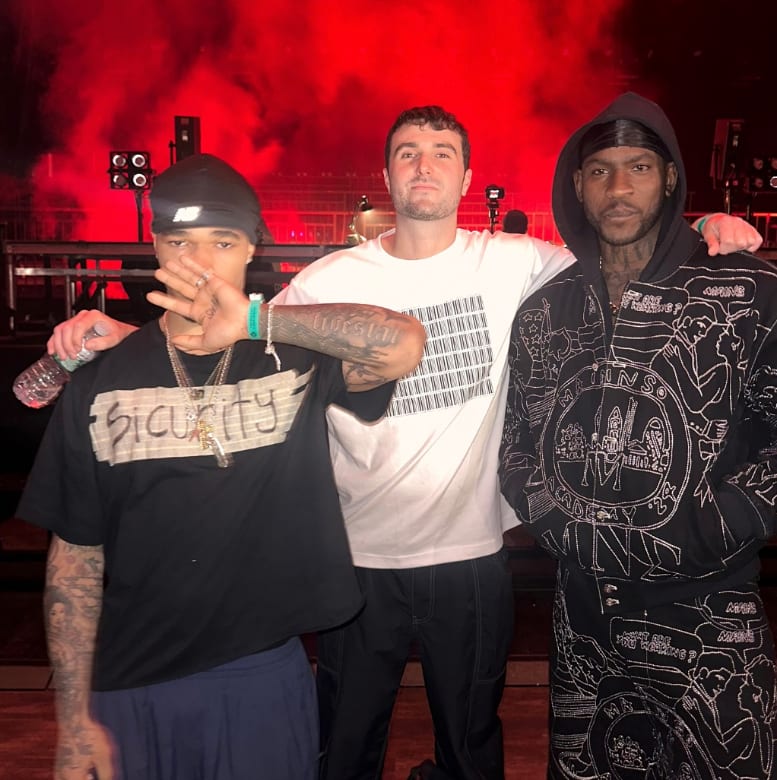
The next leap came with company. In early 2023, Fred again.. joined forces with Skrillex and Four Tet, three different generations of dance music, for a run of shows that briefly took over the conversation. The trio, nicknamed the "Pangbourne House Mafia" after early studio sessions in the English village of Pangbourne, sold out New York's Madison Square Garden in a matter of minutes and played a rapturous five-hour set there in February 2023. Then they closed Coachella, stepping into the Sunday headline slot after Frank Ocean withdrew from the festival's second weekend, and drew enormous crowds to impromptu appearances around New York, Times Square included.
It mattered because it scrambled the hierarchy. Here was a producer barely two years into his solo career, headlining the biggest stages in the world alongside a global superstar in Skrillex and one of dance music's most respected craftsmen in Four Tet, and more than holding his own. The run confirmed that Fred again.. was not a viral flash but a genuine main-stage act.
The USB era: the album that refuses to finish
By 2024 the album was too small a container for how he worked, so he broke it. In June 2024 he released USB, what he calls an "infinite album": a growing collection of club tracks with no fixed tracklist and no planned endpoint, to which he simply adds music as he makes it. The first drop alone gathered collaborators as far apart as Skrillex and Flowdan, Lil Yachty and Overmono, Future, Swedish House Mafia, Nia Archives and Rico Nasty. The same year he released Ten Days, a more reflective record of "ten songs about ten days" with features from Four Tet, Anderson .Paak, Sampha, The Japanese House and Emmylou Harris.
USB mattered because it matched the format to the man. Fred again.. has always treated music as a live, rolling diary rather than a set of finished products, and an album that never closes is the logical end of that. It also set up the project that would define his 2025 and 2026.
How Fred again.. rewrote the live show in 2026
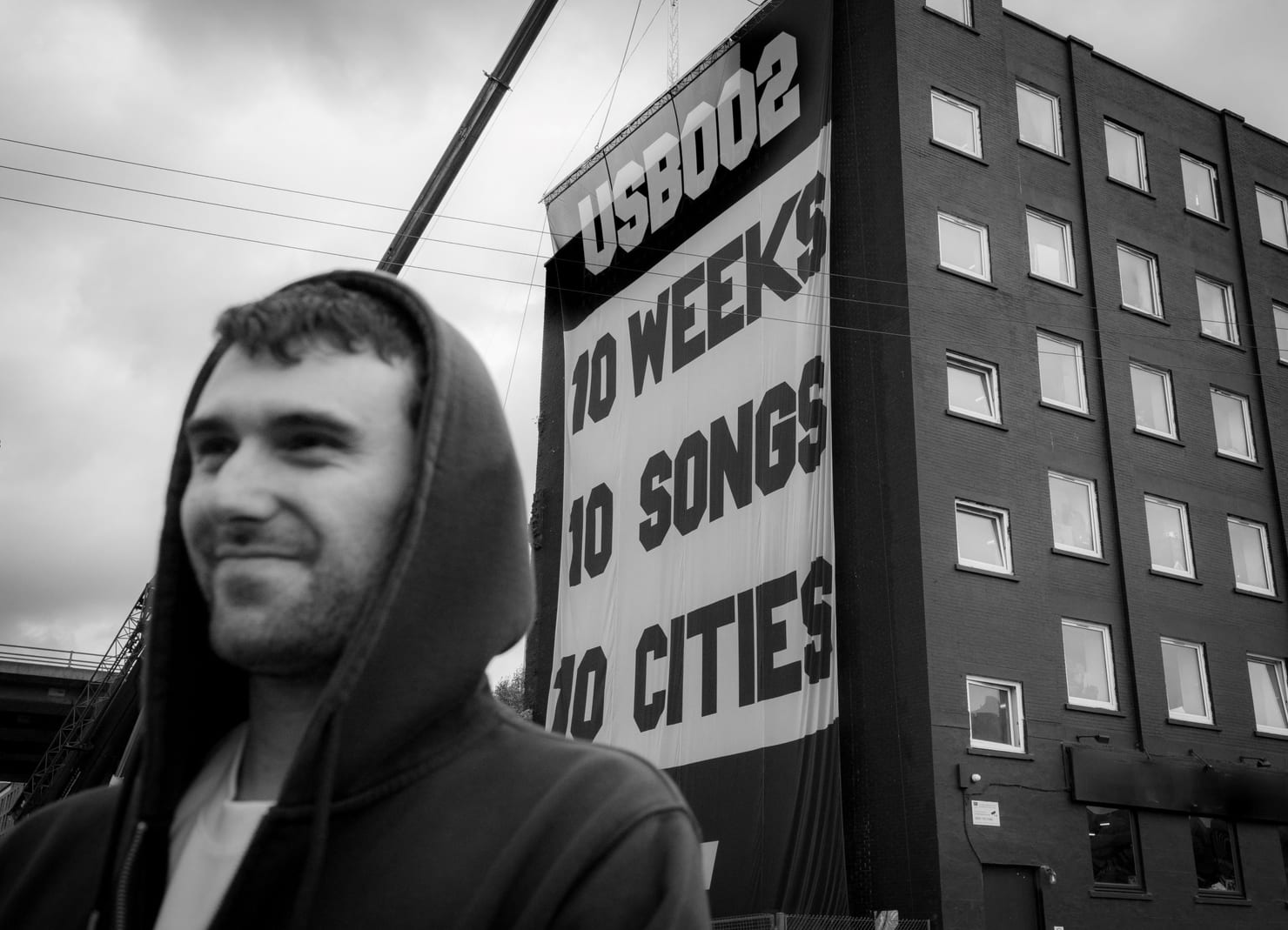
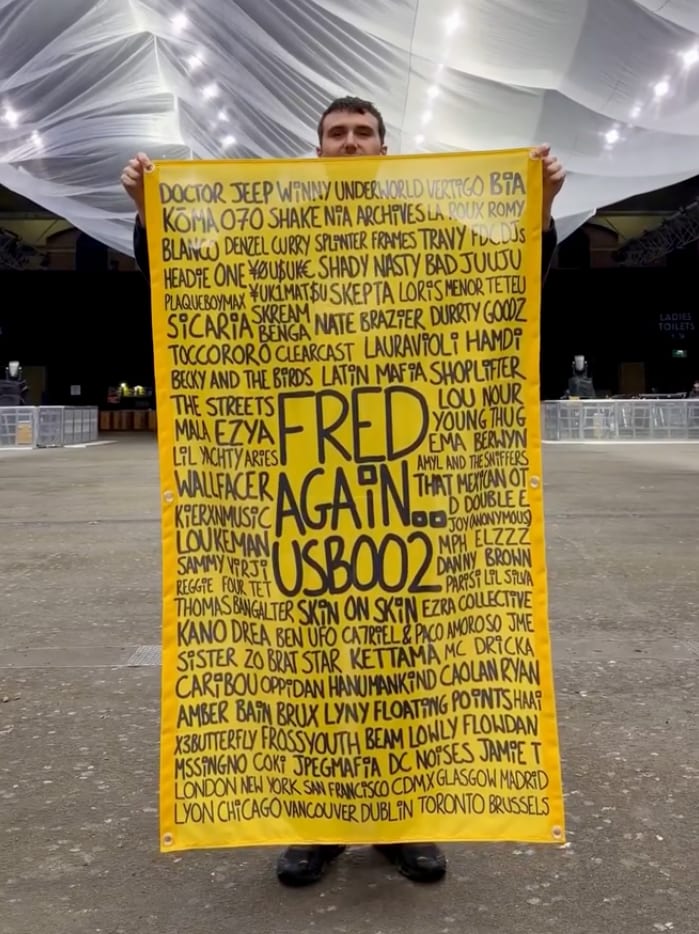
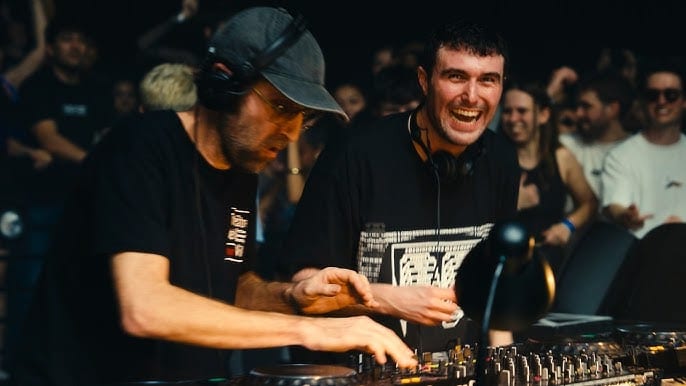
If USB reinvented the album, USB002 reinvented the tour. Launched in October 2025 as the sequel, the concept was ten tracks, ten shows, ten cities, ten weeks, with the locations kept secret and revealed only a few days before each date. Fans had to stay ready. The run moved through Glasgow, Brussels, Madrid, Lyon, Dublin, Toronto, Chicago, San Francisco and Mexico City, then extended into 2026 with a six-show New York residency at East End Studios across January and a four-night stand at London's Alexandra Palace in February.
The Alexandra Palace finale produced the moment of the era. On 27 February 2026, Fred again.. brought out Thomas Bangalter of Daft Punk for a surprise two-hour back to back stacked with Daft Punk mashups, the kind of booking that stops the internet for a day. It capped a model that quietly rewired how a dance act can tour: no fixed routing, no months of pre-sale, just scarcity, surprise and a fanbase trained to drop everything. In an era of festival-scale predictability, Fred again.. made not knowing where he would play the entire selling point. It is the live equivalent of the shift back towards intimacy and the unrepeatable night running across club culture, scaled up to one of the biggest names in the game.
2026: Ten Days, Victory Lap and the Grammys
The awards establishment has kept pace with the hype. At the 2026 Grammy Awards, Ten Days is nominated for Best Dance/Electronic Album, and "Victory Lap", his single with Skepta and PlaqueBoyMax, is up for Best Dance/Electronic Recording. The Skepta link is its own small sign of where UK music sits in 2026: the grime icon turned Ibiza house host and the voice-note everyman, on a record together, both chasing the same dance trophy.
The throughline of all of it, the Grammys, the secret shows, the Bangalter cameo, is that Fred again.. became a genuine crossover star without ever leaving dance music for pop. He brought the pop machine's polish into the club rather than the other way around, and that is rarer, and more interesting, than it sounds.
Essential Fred again.. tracks to start with
If you are coming to him fresh, a handful of records explain the appeal faster than any review. "Marea (We've Lost Dancing)" is the lockdown landmark and the clearest statement of the method. "Delilah (pull me out of this)" is the Boiler Room moment in recorded form. "Kyle (i found you)" and "Billie (Loving Arms)" are the tender, euphoric end of the Actual Life world. "Rumble", with Skrillex and Flowdan, is the heavy, sound-system end. "Adore U" with Obongjayar shows the pop instinct, and "Danielle (smile on my face)" and "Kammy (like i do)" are the festival singalongs. Start there and the whole Fred again.. project, the joy, the sampling, the emotional engineering, falls into place.
The industry-plant debate: an everyman with an elite CV
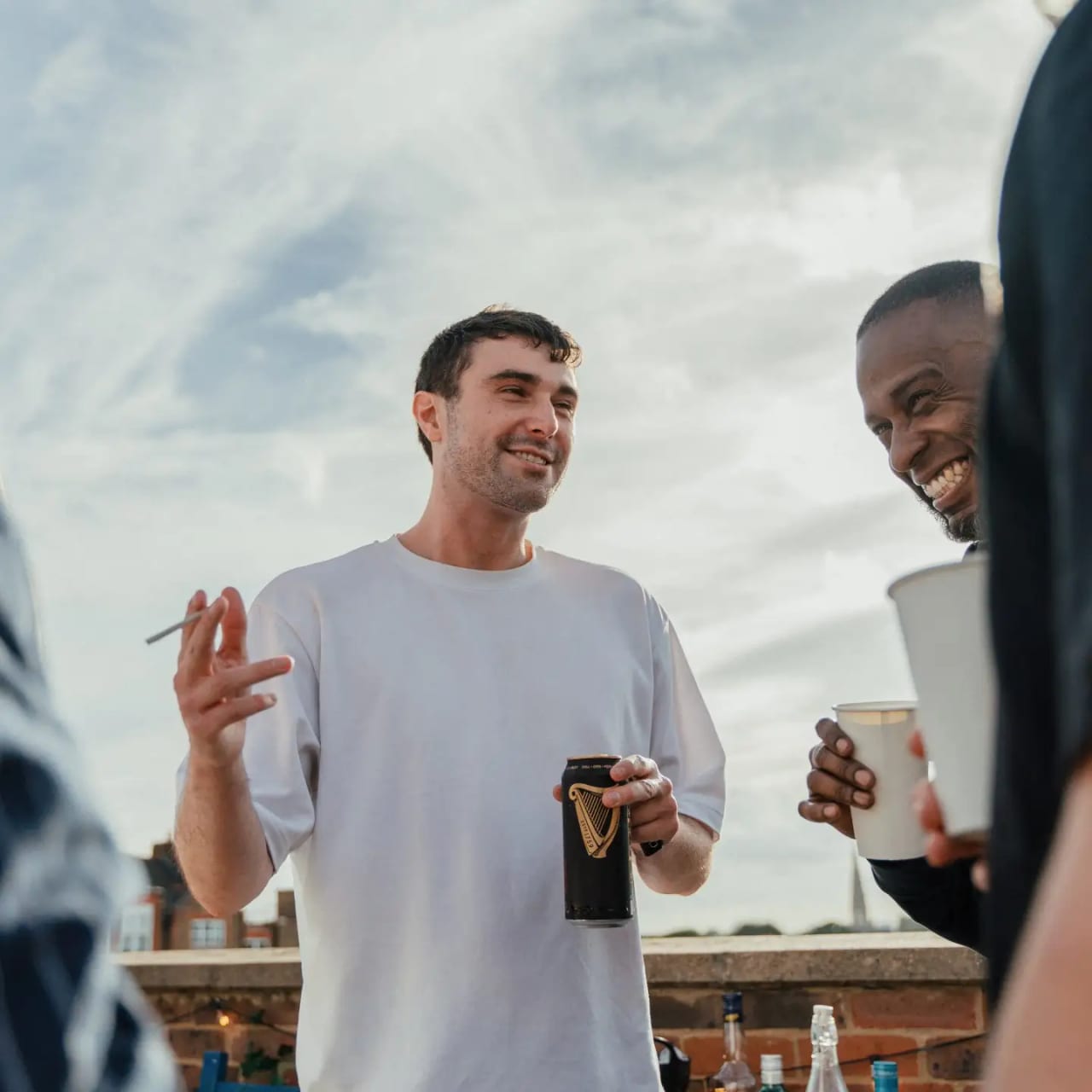
No piece about Fred again.. is honest without the argument that follows him everywhere, so here it is, both sides. The case against runs like this. For an artist whose appeal is built on raw, real, everyday emotion, his back story is conspicuously gilded: a barrister father, a maternal family tree that reportedly runs through several lines of the British aristocracy, classical training, and Brian Eno as a personal mentor from the age of 16. Add a pre-fame decade as a hit-maker for Ed Sheeran and a Brit Award before most people knew his name, and critics file him under "industry plant", the slur aimed at artists seen to have blown up too fast with too much help. The charge is that the "from the culture, for the culture" feeling of his music is, at best, complicated by where he actually comes from.
The defence is just as real. Talent and access are not the same thing, and plenty of well-connected people never make anything that moves a stadium to tears. Gibson put in a genuine decade of classical and production graft, he has never hidden the Eno relationship, and the emotional charge of the Actual Life records is not something a CV can fake. "Industry plant" has also become a lazy catch-all, often used to punish success rather than describe it. Where you land on this probably says as much about your politics as your ears. The honest position is that both things are true at once: Fred again.. is a real, gifted artist, and he is also a product of serious privilege, and the discomfort people feel is the gap between his image and his origins. We have written before about how authenticity and realness became the hardest currency in music, and Fred again.. is the purest test case going.
Why Fred again.. matters
Strip away the noise and Fred again.. matters because he redrew two maps at once. He showed that the most ordinary raw material, a voice note, a phone clip, a quiet day, can be built into music that connects at the largest scale, and he showed that the album and the tour, the two oldest containers in the business, can be reinvented into something rolling, infinite and unpredictable. Whatever you make of the back story, that is a real contribution, and it is why his name keeps coming up whenever people argue about where dance music is heading. He is, all at once, the genre's biggest everyman and the proof that "everyman" is always a construction. In 2026 he is the most interesting argument in dance music, and he is winning it on the dancefloor whether the internet likes it or not.
FAQ
What is Fred again..'s real name?
Frederick John Philip Gibson, known as Fred Gibson. He was born in 1993 in Balham, south London, and works as a producer, songwriter, singer and DJ under the name Fred again...
How old is Fred again.. and where is he from?
He was born in 1993 in Balham, south London, making him in his early thirties in 2026.
Why is he called Fred again..?
The name is widely reported to come from the live-action Scooby-Doo film, where the character Fred says "I'm Fred... again." Already producing under his own name, Gibson adopted "Fred again.." as his artist identity, with the two trailing dots as a stylistic touch.
How does Fred again.. make his music?
He builds tracks from real-world audio, voice notes, conversations and clips of people singing on their phones, imported into Ableton Live, sliced into fragments, pitched, reversed and effected, then rebuilt into hooks. The "vocal chop" is his signature, and he performs live by triggering and recombining these samples in real time rather than mixing finished records.
What was the Fred again.. Boiler Room set?
A 2022 set in London that went viral and became one of the most watched electronic performances of the decade, partly thanks to a moment when an over-excited fan knocked the music off the decks and Gibson simply laughed, hugged him and carried on. It turned him from a studio producer into a major live act.
Who are the Pangbourne House Mafia?
The nickname for Fred again.., Skrillex and Four Tet, after early studio sessions in Pangbourne, England. The trio sold out Madison Square Garden in minutes in February 2023 and closed Coachella that year.
What are USB and USB002?
USB, released in June 2024, is what Fred again.. calls an "infinite album", a collection of club tracks with no fixed tracklist that he keeps adding to. USB002 is its 2025 to 2026 sequel, tied to secret pop-up shows, ten shows in ten cities over ten weeks, with locations revealed only days in advance.
Did Fred again.. play with Daft Punk?
He played a surprise two-hour back to back with Thomas Bangalter of Daft Punk at London's Alexandra Palace on 27 February 2026, featuring Daft Punk mashups, during his USB002 residency.
What are Fred again..'s best songs?
Among his most loved tracks are "Marea (We've Lost Dancing)", "Delilah (pull me out of this)", "Kyle (i found you)", "Rumble" (with Skrillex and Flowdan), "Adore U" (with Obongjayar), "Danielle (smile on my face)" and "Billie (Loving Arms)".
Why do people call Fred again.. an industry plant?
Because his privileged background, a barrister father, aristocratic family connections and Brian Eno as a teenage mentor, plus an earlier career as a hit pop producer, sits awkwardly with the raw, everyday image of his music. Supporters argue his talent and the emotional impact of his work are genuine, and that "industry plant" is often an unfair label for fast success. Both readings have a point.
Who are Fred again..'s parents?
His father is Charles Gibson, a barrister, and his mother is Mary Ann Morgan. The family has aristocratic roots on his mother's side, and his maternal great-grandmother Ann Charteris was married to Ian Fleming, the creator of James Bond. Fred was educated at Marlborough College in Wiltshire.
Sources
- Wikipedia and Sound on Sound on Fred Gibson's biography, classical training, family background, Brian Eno mentorship and the origin of the name
- Mixmag and NME features and reviews on the Actual Life project, "Marea", USB, Ten Days and USB002, and his best tracks
- Boiler Room and setlist coverage of the viral 2022 London set; Billboard, Variety and DJ Mag on the Skrillex, Four Tet and Fred again.. Madison Square Garden and Coachella 2023 shows
- DJ Mag and Billboard on the USB002 secret-show tour, the New York and Alexandra Palace residencies, and the Thomas Bangalter back to back; gear coverage of his live Ableton setup
- Grammy 2026 nominations for Ten Days and "Victory Lap"; Loud And Quiet and wider music press on the "industry plant" and authenticity debate
This guide is part of House of MNEEMO's ongoing coverage of the electronic and club music scene, written by London-based DJ and producer MNEEMO, with millions of streams to his name and a party series running through some of London's best clubs.