Boiler Room: How a Webcam in East London Built a Global Underground Music Archive
Founded by Blaise Bellville in 2010 with a webcam taped to a wall, Boiler Room grew into dance music's biggest broadcaster. The full sixteen-year story.
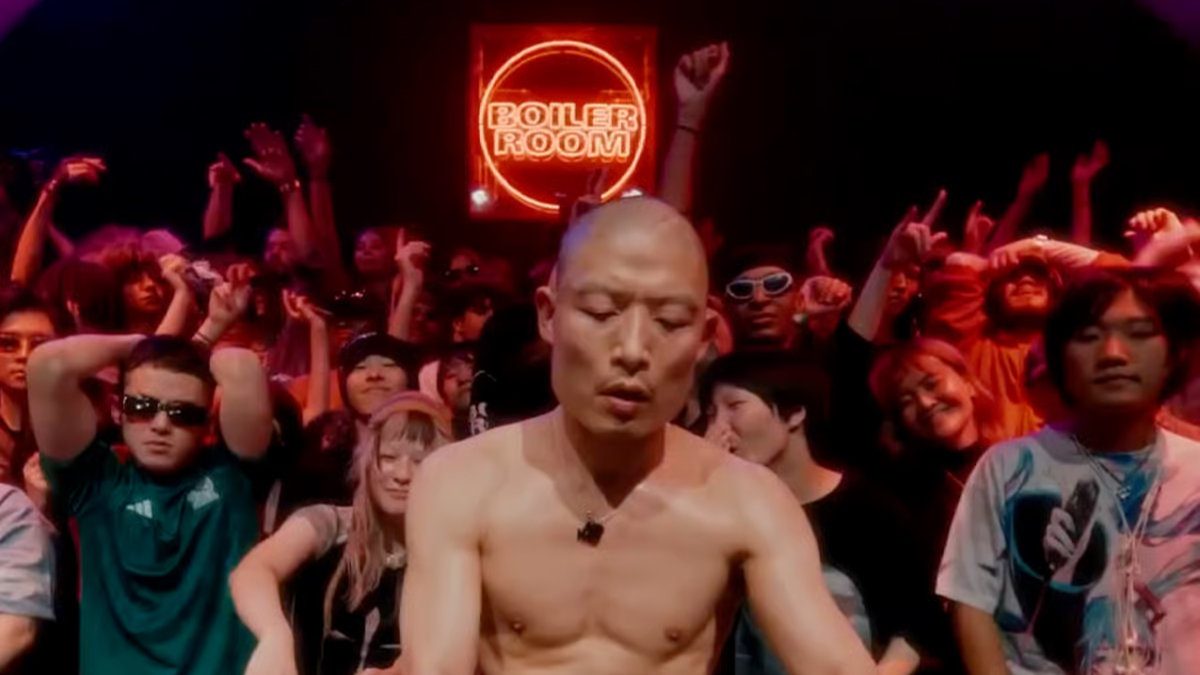
Inside Boiler Room's sixteen-year arc: from an East London broadcast experiment in 2010 to 5.16 million YouTube subscribers, 9,000+ artists across 300+ locations, the Solomun Tulum 74-million-view broadcast, the DICE and Superstruct/KKR acquisitions, founder Blaise Bellville's January 2026 departure, and why the format still creates real-world cultural pressure in 2026.
Editorial by House of MNEEMO
Boiler Room is the most culturally important underground electronic music platform ever created. This article is a deep-dive from inside the London scene the platform helped build. It is written from the perspective of an artist, producer and editor working in the same ecosystem Boiler Room documents, not from the perspective of an external critic. The article documents Boiler Room's sixteen-year arc with respect for the format, attention to the industry tensions that scale creates, and recognition of why a Boiler Room moment still matters for emerging electronic music artists in 2026.
Quick facts: Boiler Room in May 2026
- Founded: London, 2010 (first sessions widely dated to March of that year)
- Founder: Blaise Bellville
- Origin-session figures: Thristian Richards (Thristian bPm) and Femi Adeyemi
- Original format: Basic webcam, small East London room, live Ustream broadcast
- Official 2026 archive scale: 9,000+ artists across 300+ locations
- YouTube subscribers (May 2026): approximately 5.16 million
- Estimated total YouTube views: approximately 1.84 billion via third-party trackers
- Most-viewed full-set candidate: Solomun, Tulum, 2015, approximately 74 million YouTube views
- DICE acquisition: October 2021
- Superstruct Entertainment acquisition: January 2025
- Current ownership: Superstruct Entertainment, owned by KKR
- DICE role after sale: Official ticketing partner
- Founder departure: Blaise Bellville resigned December 2025 and left January 2026
- 2024 reported reach: 1 billion+ online views and 120 markets, according to IQ Magazine
Editorial by House of MNEEMO. Follow MNEEMO on Instagram · Spotify · YouTube.
Verification note
All platform-scale figures, ownership details and 2026 event references in this article were checked in May 2026. Early-origin details are based on Boiler Room's official history and consistent founder-era reporting; where exact first-broadcast details, addresses or production specifics remain unclear, this article avoids treating scene mythology as legal fact and flags ambiguity where it exists.
Quick answers
- Boiler Room started in London in 2010.
- It is not a club. It is a global broadcasting platform, event brand and cultural archive that uses different venues across the world.
- The name comes from its early East London origin, where the first broadcasts were filmed in a small boiler-room-style utility space.
- Its signature format is an intimate DJ set filmed with the crowd visible behind the artist, broadcast online.
- In 2026, Boiler Room operates as part of Superstruct Entertainment, with founder Blaise Bellville having departed in January 2026.
What is Boiler Room
Boiler Room is a global music broadcasting platform and live event brand that films DJ sets, live performances and underground music events in intimate rooms around the world. It started in London in 2010 and became known for its raw camera style, crowd-facing DJ booth and global archive of club culture.
The most important fact about Boiler Room is not how many subscribers the YouTube channel has, or which artist's broadcast crossed the most-viewed threshold. The most important fact is the camera angle.
By pointing the lens at the DJ with the crowd behind them, instead of pointing it at the stage from a polite distance, Boiler Room reversed the visual logic of how electronic music had previously been documented. The audience was no longer in the audience. The audience was on screen. Local rooms became globally legible. A Tuesday night warehouse session in Dalston became something a teenager in Lagos, São Paulo or Seoul could watch the next morning, with the same fish-eye webcam framing, the same low-light feel, the same shared knowledge that what they were seeing was supposed to feel like the inside of a small, sweaty, real-life room.
That decision, made in 2010 with a basic webcam pointed at a small East London room, is the most architecturally significant choice in twenty-first century electronic music broadcasting. Everything Boiler Room became, every subsequent broadcast across 300+ locations, every acquisition by ticketing platforms and live-events groups, every Solomun Tulum sunrise set and Charli XCX Brooklyn scarcity event, every Rossi. London debut where 800 people queue and several hundred do not get in, runs back to that single architectural decision about where to put the camera.
This article documents how the platform got from there to here, and where it sits in the 2026 electronic music ecosystem.
Origin: a webcam, a boiler room, and Platform magazine
In late 2009 and early 2010, Blaise Bellville was running an online culture magazine called Platform, covering London's underground music and youth scene. The post-2008 financial-crash landscape of London electronic music had reorganised what was possible: traditional clubs were under pressure, pirate radio was migrating into digital, and a cross-pollinated underground built around post-dubstep, UK funky, early bass music and the labels that orbited them was looking for a new transmission medium.
Bellville's idea was, on its face, unpretentious. He invited Thristian Richards (a DJ working under the name Thristian bPm, with affiliations to Soul Jazz and Gilles Peterson) and Femi Adeyemi (who would later go on to found NTS Radio) to record a live mixtape for Platform.
The physical location for that first session, often described in early profiles, was an unused boiler-room-style space connected to Bellville's Platform magazine operation in East London. A basic webcam was fixed to the wall. The audio was raw and unmastered. The stream went out on Ustream, the live-broadcasting platform that was, at that moment in 2010, the only realistic way to do this kind of thing without significant infrastructure.
The format that emerged from those logistical constraints was inverted by accident. The DJ stood against the wall, near the equipment. The webcam pointed back into the room. The audience, such as it was at that point, mostly Bellville's circle and Platform contributors, ended up behind the decks, on screen. That single framing decision, the DJ facing the camera with the crowd behind them, became the defining visual grammar of Boiler Room and, by extension, of how online underground electronic music has been visually consumed for the past sixteen years.
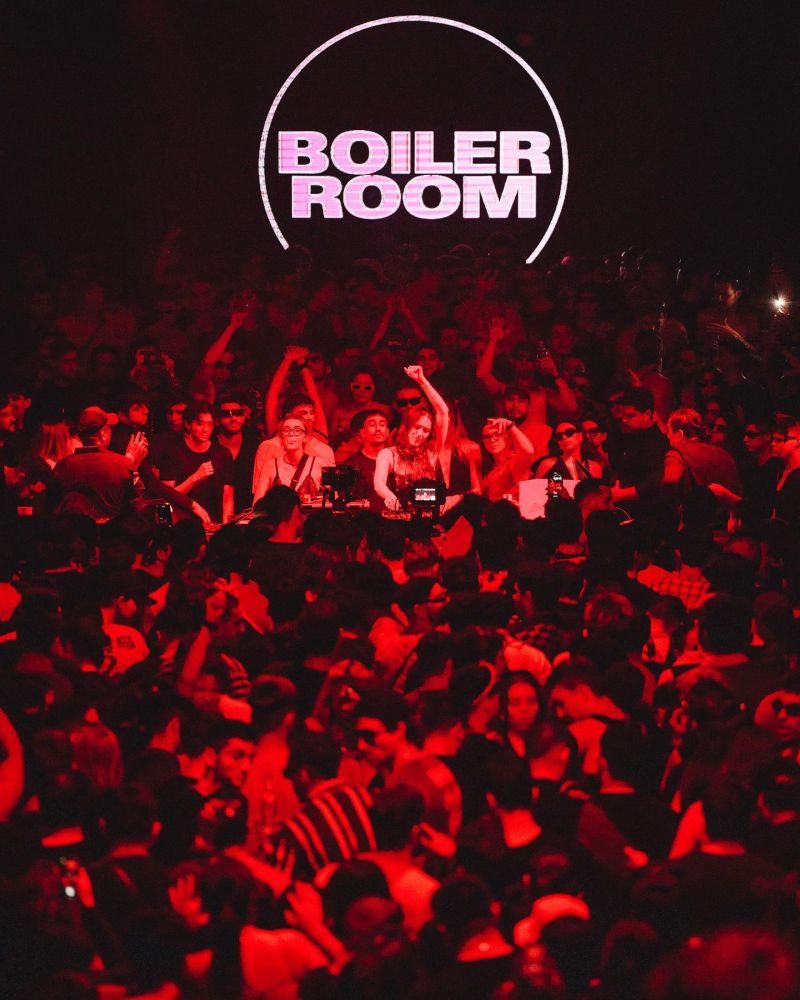
The early sessions broadcast from this setup were technically rough. The Ustream feed glitched. The audio was unbalanced. People in the background drank and smoked. Equipment occasionally got knocked over. Boiler Room's own current About page describes the original moment, with editorial economy, as starting in 2010 with weekly live broadcasts that "opened a keyhole to London's underground."
Early Boiler Room accounts widely cite Floating Points as appearing in the second-ever edition, with that recording famously lost. By the start of 2011, broadcasts were reportedly pulling tens of thousands of viewers, according to The Guardian's 2015 profile of Bellville. Within the first year, the platform's regular sessions were occasionally crashing the Ustream interface from sheer concurrent traffic.
In February 2011, Boiler Room signed its first brand partnership. The boiler-room-style space at Platform's office, in that sense, was already on its way out as the production model.
Why is it called Boiler Room
The name comes from its origin story. The first broadcasts were filmed in a small utility / boiler-room-style space in East London, connected to the office building of Bellville's Platform magazine. The rough, functional name became part of the identity: underground, unpolished, close to the source.
Outside music, a boiler room is usually a mechanical room where heating equipment is kept. In Boiler Room's case, the phrase became cultural shorthand for a small, hidden, raw space where underground music could be streamed directly to the internet.
Blaise Bellville and the philosophy of access
To understand Boiler Room's trajectory, the founder matters.
Blaise Bellville, born around 1985, came to Boiler Room from inside London's independent youth culture media world rather than from inside the electronic music industry proper. He ran Platform, the online magazine, which gave him a working understanding of what young audiences were paying attention to and which scenes were poorly documented. Before Boiler Room, by his own account in early interviews, he organised club nights part-time while editing Platform. Wired's 2015 profile noted him as a Londoner who was 30 at the time.
Bellville's clearest public articulation of why Boiler Room mattered, philosophically rather than commercially, came in a 2011 TimeOut London interview shortly after Boiler Room's first international broadcasts in Berlin. He framed the platform's value not as "we built a club" but as a format where "the DJs get to play music that they wouldn't normally play in a club, where they have to face the audience and make everyone dance."
His sharpest single quote about why this mattered for audiences came in the Wired 2015 profile. He argued that what Boiler Room loses in physical intimacy, it gains in geographic reach. The example he used: "a kid in Doncaster can access underground grime from London." That single line is the cleanest articulation of why the Boiler Room model matters in cultural-access terms, and it remains the strongest argument for why a generation of producers, selectors and scene-builders globally would otherwise have had no direct line into these rooms.
Bellville navigated the platform through a decade and a half of compounding scale: localised London underground through 2012, multi-city expansion through 2014, brand-partnership era and corporate scaling through 2018, pandemic pivot through 2020, DICE acquisition in 2021, Superstruct acquisition in January 2025, and finally his own resignation in December 2025. He officially left the company in January 2026. Resident Advisor reported on 19 January 2026 that a company spokesperson said Bellville had been "pivotal and highly influential in underground club culture."
The 2026 Boiler Room is no longer founder-led. That fact, on its own, defines this moment in the platform's history.
The first archive layer: 2010 to 2014
The first four years of Boiler Room operated as a kind of digital pirate radio with a camera. The curatorial logic was social: Bellville and the early team broadcast people from their immediate orbit, from the labels they trusted, from the London nights they were paying attention to. That orbit happened to be one of the most fertile periods of UK electronic music output in recent history.
The first-year programming orbit included sets and takeovers from a range of post-dubstep, UK bass and underground house figures, with label-driven takeovers from Young Turks, Hessle Audio (Ben UFO, Pearson Sound, Pangaea) and Livin' Proof. For the post-dubstep / UK bass moment that defined 2010-2013, Boiler Room functioned as the visual archive in real time. Disclosure, James Blake and SBTRKT all had significant early-career visibility through the platform during this period.
Several broadcasts from the 2012-2014 window remain culturally important enough to be worth naming individually:
Frankie Knuckles played a Boiler Room session in 2013 at a Brooklyn house party, broadcasting his deep cuts to a global audience roughly a year before his death in 2014. The set served as a living document of house music's lineage from its Chicago origins through New York and across the Atlantic.
Carl Cox played an Ibiza villa takeover in 2013, frequently cited by critics as one of the platform's most successful early moments because it proved the webcam format could absorb stadium-level legacy techno acts without losing its intimate core.
Richie Hawtin's Amsterdam set in 2012 became a reference text for a generation of minimal techno producers learning how to construct an extended-form set inside a small, attentive crowd.
Nicolás Jaar's New York session in 2013 demonstrated that the platform could host genuinely experimental, non-traditional DJ approaches, including Jaar's use of a laptop keyboard as a live synthesiser and integrated radio samples.
Kaytranada's Montreal session in 2013 became, by sheer YouTube view accumulation, one of the most-watched Boiler Room broadcasts ever, with reported view counts around 24 million by 2026. It is also one of the broadcasts most responsible for the "Boiler Room dancer" archetype entering meme culture, because the camera caught an unusually animated crowd as much as it caught the DJ.
Skepta and the wider Boy Better Know operation entered the Boiler Room orbit in this period as well, with the Konnichiwa album launch party that the platform helped arrange and globally broadcast in Tokyo on 5 May 2016 becoming one of the cleanest grime-globalisation moments of the decade.
By the end of this first archive layer, Boiler Room had moved beyond the original boiler-room-style space. It had established a longer-term East London studio footprint and was running thirty broadcasts a month to more than one million people worldwide, according to Wired's 2015 reporting.
The scale-up: 2014 to 2018
Between roughly 2014 and 2018, Boiler Room performed its most consequential operational transition. It went from being a London production with international guest broadcasts to being a multi-city, multi-continent franchise with permanent infrastructure in Berlin, Los Angeles, New York and São Paulo, and with rapidly expanding programming in Latin America, Africa and Asia. By 2018 the platform was executing broadcasts in dozens of countries.
Three categories of activity defined this era.
First, programming diversified. Skrillex performed in Shanghai in 2016, blending his dubstep roots with commercial EDM and hip-hop, a signal that Boiler Room could host mainstream-facing acts while keeping the underground framing. Honey Dijon's 2018 Sugar Mountain set in North Carolina became a definitive cultural moment for the platform, helping accelerate her from respected industry veteran to global fashion-and-music figure. Peggy Gou's set at Boiler Room x Dekmantel in Amsterdam in 2017, with current view counts around 2.8 million, became the inflection moment for her global breakout. The Blessed Madonna (then The Black Madonna) similarly received critical early visibility through the platform during this era.
Second, the business model formalised. Boiler Room signed long-term partnerships with major festivals (Sónar, Dekmantel, Dimensions, Nuits Sonores) positioning itself as the preferred digital broadcast partner for global electronic music programming. Lucrative brand partnerships with Ray-Ban Studios, Beats by Dre, Bacardi, Hennessy and Adidas Originals provided the corporate revenue base that pure YouTube/Vimeo streaming could not. The platform was learning how to scale without losing the visual identity that had made it work.
Third, the format spread geographically without breaking. The most important thing about Boiler Room's mid-2010s expansion is that the visual logic survived translation. A Boiler Room broadcast in Lagos, in Mexico City, in Tokyo, was instantly recognisable as a Boiler Room broadcast. The fixed camera, the crowd-behind-the-DJ framing, the low-light room feel: all of it travelled.
By the end of 2018, the platform launched its film and documentary arm, 4:3, branding it as a "Netflix for the underground" and committing to longer-form, non-DJ-set visual content covering subcultural film, performance, identity and marginalised voices. 4:3 produced documentaries including Palestine Underground, on the resilience of Palestinian local music scenes under political restriction, and Fleshback: Queer Raving in Manchester's Twilight Zone, a retrospective on Section 28 and queer club culture.
The pandemic pivot and the artist fee policy: 2019 to 2021
The 2019-2021 window contains some of the most consequential editorial and business decisions in Boiler Room's history, even though they happened in a period defined by the global live music industry being closed.
In 2019, Boiler Room launched its own owned festival operation, Boiler Room Festival, with a multi-day format in Peckham, London, that consolidated the disparate genres the platform had been documenting into one ticketed event. That festival arm would, by 2026, become the central live-events vehicle for the platform.
In March 2020, the pandemic stopped live music. Boiler Room responded with the "Streaming From Isolation" series, broadcasting artists including Peggy Gou, Honey Dijon and Ben Klock directly from their homes. The series functioned as both editorial continuity and as evidence that the Boiler Room camera-on-DJ format could survive being relocated entirely.
In June 2020, Boiler Room is reported to have introduced a universal artist fee policy for editorial shows, following long-running industry discussion of exposure-based performance culture. Commercial, ticketed and branded shows had already been paying industry-standard fees; the 2020 policy is widely cited as extending payment across editorial sessions as well.
In August 2020, Boiler Room announced a major archive partnership with Apple Music, making over 200 historical recordings from its first ten years available to Apple Music subscribers. In November 2020, the "An Hour With" DJ Mix series launched on Apple Music as a 10-part series starting with Hunee, SPFDJ and Carista, with later instalments featuring Ron Trent, Carista, VTSS, Juliana Huxtable, Ben UFO, SPFDJ and Bradley Zero. The Apple Music relationship gave Boiler Room a high-fidelity audio afterlife beyond YouTube and a royalty-distribution model that supported the platform's evolving relationship with the artists it broadcasts.
In July 2022, Fred again.. played his London Boiler Room session, the broadcast that would become one of the most consequential single sets of the platform's modern era and which is examined separately below.
In October 2021, the ticketing platform DICE acquired Boiler Room for an undisclosed sum, with the deal announced on 4 October 2021. DICE was, at the time of the acquisition, freshly funded with a $122 million Series C round. The post-acquisition Boiler Room board included Terry Weerasinghe, Blaise Bellville, Ibtisam Omer and Phil Hutcheon.
The DICE era: 2021 to January 2025
Under DICE ownership, Boiler Room stabilised its post-pandemic operations and integrated its broadcast reach with DICE's mobile-first ticketing infrastructure. Two broadcasts from this period are worth marking out in detail because they bookend the era.
Fred again.. London (29 July 2022) is the strongest single candidate for the most culturally consequential Boiler Room set of the modern era. The set blended garage, dubstep and emotionally weighted pop vocals with live MPC finger-drumming alongside CDJ work, redefining what a modern electronic live performance could look like inside the Boiler Room camera frame. The Guardian reported the set at 30 million views by 2024. Current 2026 estimates from social and trade snippets place it in the high-30-millions to nearly-50-million range, depending on the data source. Inside twelve months of the broadcast, Fred again.. had moved from respected producer to globally touring, Grammy-recognised live artist.
Charli XCX PARTYGIRL Brooklyn (2024) was the boundary case of the DICE era. Not classical underground electronic music, the event collapsed pop rollout, fashion media spectacle, club programming and Boiler Room scarcity into one moment. The event reportedly received 25,000 RSVPs, the largest number in Boiler Room's history, with only around 400 people admitted, according to GQ. It captured a turning point: at full scale, Boiler Room was no longer just where underground artists got broadcast. It was where major pop artists came to engage with underground cultural infrastructure for one night.
By 2024, IQ Magazine reported that Boiler Room events reached more than one billion online views in the calendar year and that the platform broadcast in 120 markets. The platform's 2024 World Tour expanded to 25 cities, including London, Mumbai, Manchester, Milan, New York, Seoul, Toronto, Sydney, Melbourne, Amsterdam, Auckland, Barcelona, Bogotá, Buenos Aires, Paris, Tokyo, Glasgow, São Paulo, Shanghai, Delhi, Lagos, Los Angeles, Chicago, Las Vegas and Miami.
This is the moment at which the next acquisition happened.
The Superstruct era: scale, independence and trust
In January 2025, DICE sold Boiler Room to Superstruct Entertainment, the live-events group later operating under KKR ownership. The deal placed Boiler Room inside a much larger festival and live-events infrastructure, with DICE remaining its official ticketing partner. Resident Advisor, Music Business Worldwide and Mixmag all covered the deal on the same day.
For a platform built on underground credibility, that kind of scale inevitably raises questions about independence, programming influence and the gap between scene values and shareholder values. Boiler Room responded by publicly emphasising editorial independence and reaffirming its commitments to the communities it documents, including in its widely-reported 2025 statement on Palestine programming and continued adherence to BDS and PACBI guidelines on artist booking.
That tension is the central challenge of Boiler Room's current era. Not whether it can return to being a webcam in a small East London room. It cannot, and it should not pretend to. The real question is whether it can keep using global infrastructure to support local scenes without sanding off the local energy that made the format matter in the first place.
Inside Boiler Room, the operational transition was significant. In December 2025, founder Blaise Bellville resigned. He officially departed the company in January 2026. The platform moved into the 2026 calendar year under interim leadership, with no permanent CEO publicly announced as of May 2026.
Yousuke Yukimatsu and the new viral Boiler Room era
One of the clearest signs that Boiler Room still has discovery power in the mid-2020s is Yousuke Yukimatsu. The Osaka-born Japanese selector had already built a serious reputation through experimental club sets, HÖR Berlin appearances, Berlin Atonal and his 2020 mix album Midnight Is Comin’, but his Boiler Room: Tokyo set pushed that reputation into a much wider global circuit.
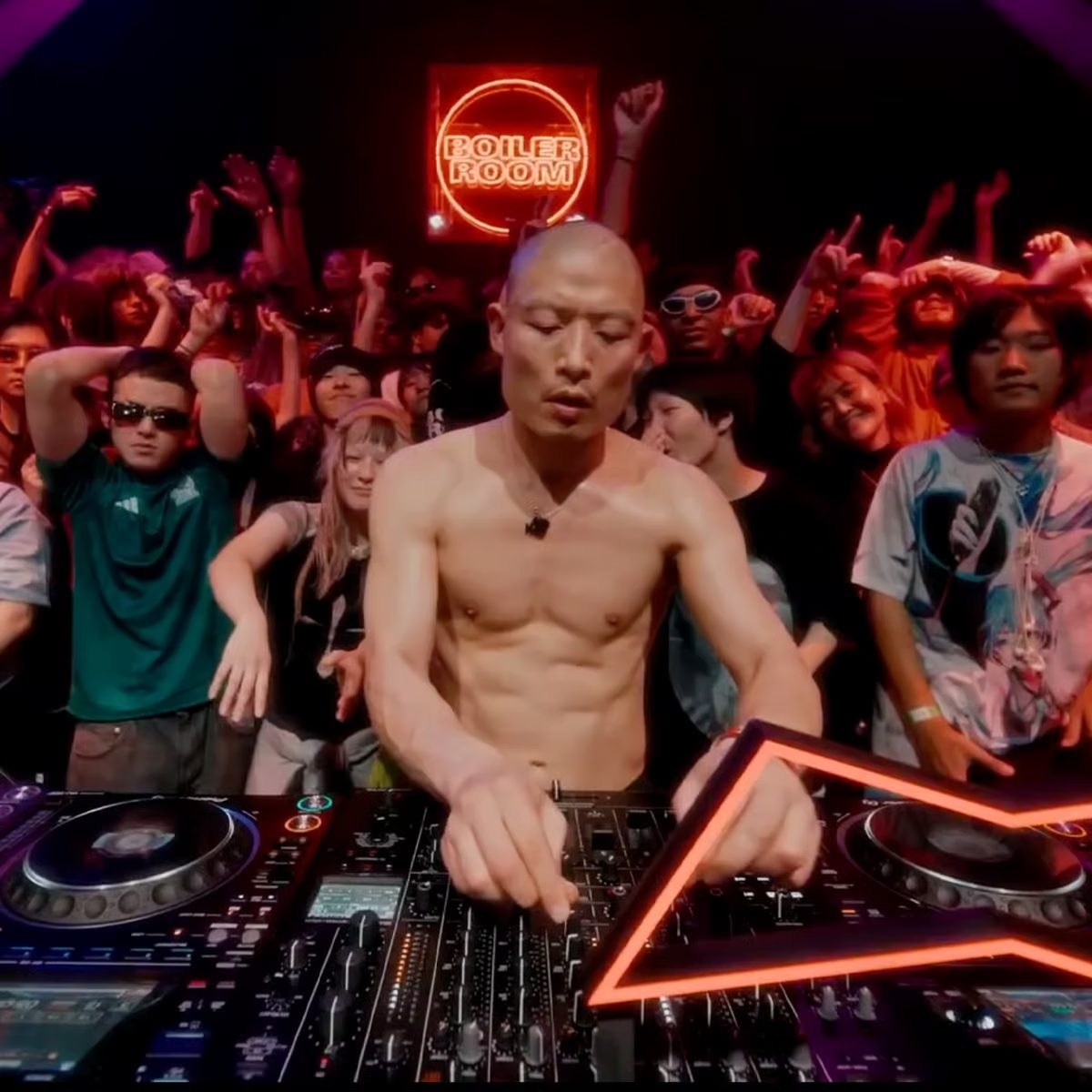
The set, recorded during Boiler Room’s Tokyo World Tour stop in November 2024 and published in early 2025, became one of the platform’s defining recent broadcasts: fast, unstable, physical, genre-destroying and visually magnetic. It did not work because it sounded like a safe headline DJ set. It worked because it reminded people that Boiler Room is still at its best when the camera catches an artist who feels impossible to domesticate.
Yukimatsu matters to the Boiler Room story because he proves the format is not only an archive of already-established legends. In the right room, with the right artist, Boiler Room can still turn a selector from a cult figure into a global reference point.
The most-viewed Boiler Room broadcast ever: Solomun, Tulum, 2015
By public YouTube view count, Solomun's 2015 Tulum set appears to be Boiler Room's most-viewed full broadcast, with approximately 74 million views as of May 2026. Set against a Tulum sunrise, the melodic deep house set established the visual and sonic template that would define the late-2010s scenic-techno-tourism aesthetic and indirectly seed the conditions for competitors like Cercle to build entire platforms around scenic location-led broadcasts.
The Solomun set is the cleanest single example of Boiler Room successfully scaling its intimate-room aesthetic into a high-net-worth scenic context without losing the camera grammar. The audience is still behind the DJ. The crowd is still on screen. The framing is still tight. The only thing that changed was the room.
That broadcast also captures something important about what Boiler Room's format does well at scale. A platform that built its identity on the unrepeatable intimacy of an East London room successfully translated that intimacy to a Mexican beachside resort, and the format still worked. The camera angle did the work. Sixteen years later, it still does.
Best Boiler Room sets: the legendary archive
The following is not a definitive ranking. It is a working editorial list of the broadcasts that this publication believes carry the most cultural weight in the Boiler Room archive, considered across view count, scene impact, artist trajectory change and meme/cultural footprint. View counts are reported per the most reliable secondary sources available at the time of writing and should be considered approximate.
- Solomun, Tulum (2015), approximately 74M views. Scale defining.
- Fred again.. London (29 July 2022), approximately 30M to 50M views depending on source. Career re-architecture.
- Kaytranada, Montreal (2013), approximately 24M views. Cross-genre house/hip-hop visibility, "Boiler Room dancer" meme origin.
- Charli XCX PARTYGIRL, Brooklyn (2024), 25,000 RSVPs (record), 400 admitted. Scarcity-economy moment.
- Chase & Status, London (2023), approximately 10M views (reported). UK drum and bass mainstream resurgence statement.
- Peggy Gou x Dekmantel, Amsterdam (2017), approximately 2.8M views. Breakout to global headline status.
- Carl Cox, Ibiza Villa (2013), broadly cited by critics as one of the platform's finest curatorial moments.
- Skepta, Tokyo (5 May 2016), Konnichiwa album launch party, globally broadcast. Grime-globalisation moment.
- Honey Dijon, Sugar Mountain (2018), Apple Music archive canonical. Chicago house lineage to global icon trajectory.
- Ben Klock, Berlin (early Berlin Boiler Room), Apple Music archive canonical. Berlin techno institutional anchor.
- Richie Hawtin, Amsterdam (2012), minimal techno reference text for a generation.
- Frankie Knuckles, Brooklyn (2013), final-year-of-life broadcast of the Godfather of House.
- Nicolás Jaar, New York (2013), experimental/non-traditional DJ performance proof of format.
- First-year Hessle Audio takeovers, London (2010-2011), defining UK bass / post-dubstep archive layer.
- DJ Boring, Boiler Room appearances (2016 onwards), Boiler Room amplified rather than created the "Winona" / lo-fi house moment, but the platform's nostalgic visual grammar shaped how the genre's identity was visually consumed.
Boiler Room and hip-hop: documented presence
Boiler Room's hip-hop and rap programming has been consistent throughout its history without ever displacing electronic music as the platform's centre of gravity. Wired's 2015 profile already described the platform's output as including LA hip-hop alongside its dance music programming. The first-year archive included Livin' Proof takeovers, tying it to UK hip-hop and rap-adjacent club culture from the beginning.
The cleanest individual hip-hop / grime milestone is the 2016 Skepta Konnichiwa launch in Tokyo. The album launch party was arranged and globally broadcast by Boiler Room on 5 May 2016, sitting Boiler Room directly inside grime's mainstream emergence moment. A separate 2018 DJ Maximum & Skepta Boiler Room x SYSTEM set further documented Skepta inside the Boiler Room/SYSTEM ecosystem.
The Charli XCX 2024 PARTYGIRL event extends this pattern in a different direction: a major pop artist using the Boiler Room intimate-club format as a deliberate aesthetic choice to anchor an album rollout. That is not strictly hip-hop, but it is the same underlying move, with pop and club culture borrowing each other's vocabulary.
Festivals, 4:3 and the move from broadcast to live events
Boiler Room's transition from a streaming-first platform into a major live-events operator happened across roughly six years.
Boiler Room Festival launched in 2019 in Peckham, London, with a multi-day, multi-genre format covering jazz, rap and dance. The festival arm grew through the DICE era and accelerated significantly after the 2025 Superstruct acquisition, which made Boiler Room a brand inside a portfolio of 80+ owned festivals.
By the 2026 calendar, Boiler Room's owned-event schedule reads less like a broadcast archive supplement and more like a competitive festival operation in its own right:
- Nottingham, 26 June 2026
- NYC Friday and Saturday, 10 and 11 July 2026
- London Friday and Saturday at Burgess Park, 31 July and 1 August 2026
- LA Teletech, 27 September 2026
The 2026 London Burgess Park lineup is the cleanest single document of how Boiler Room's editorial direction has scaled. The Friday programming at Burgess Park, listed on Resident Advisor under amapiano and Afro House categories, includes Basement Jaxx (live), Chris Stussy, Enzo Siragusa B2B PARAMIDA, Kitty Amor, Oscar Mbo, Thakzin B2B Vigro Deep. The Saturday programming features Yung Lean & Bladee, The Dare, Bassvictim, TDJ, 999999999, Clara Cuvé, Daria Kolosova. The split is deliberate: Friday for global house and Afro-leaning programming, Saturday for hard dance and rap-adjacent electronic.
Across the wider Boiler Room operation, sub-brands now include System events, the Hard Dance series catering to high-BPM techno and trance audiences, and the 4:3 film/documentary platform.
4:3 was launched in 2018, branded as a "Netflix for the underground," covering performance, identity, marginalised voices and anti-establishment youth culture. Its catalogue includes Palestine Underground and Fleshback: Queer Raving in Manchester's Twilight Zone. It functions as a critical archive for subcultural film, sitting alongside the live broadcast operation.
Where is Boiler Room located: the 2026 global footprint
Boiler Room started in London, but it is no longer tied to one physical room. It operates globally. Its official 2026 city index currently lists the following as active broadcast hubs:
London, New York, Berlin, Los Angeles, Amsterdam, Paris, Mexico City, São Paulo, Barcelona, Tokyo, Melbourne, Madrid, Toronto, Manchester, Bristol, Johannesburg, Chicago, Ibiza, Miami and Lisbon.
Recent 2026 broadcasts beyond the major Western hubs document the platform's continued investment in non-Western scene programming. Confirmed 2026 examples include Mumbai (D Double E, Special Request, Suggahunny, Raji Rags, Panjabi Hit Squad), Abidjan in partnership with Djaouli Entertainment (covering Coupé-Décalé), Sofia in partnership with Zabranena Muzika (Balkancore programming), Nottingham (UK drum and bass with Harriet Jaxxon and Lens), and major Asian dates in Tokyo and Seoul.
The editorial logic of the 2026 city programme is hyper-local globalism. The platform is simultaneously running large urban festivals in major markets and commissioning hyper-niche local-scene documentation in emerging markets, defending its foundational reputation as one of the most credible underground curators in the broadcast space.
Boiler Room London: why the city still matters
Boiler Room London refers to Boiler Room's London events and broadcasts. London is the birthplace of the platform and remains central to its identity, particularly through underground club events, intimate broadcasts and scene-specific showcases.
London is where the format was invented. It is also where the format continues to produce its sharpest moments. The platform's 2026 London calendar includes both massive scale (the 31 July to 1 August Burgess Park weekender) and intimate broadcast (the Rossi. London debut on 13 May 2026, examined below). That dual programming, festival-scale and club-scale running through the same city, is part of why London remains the cleanest case study for what Boiler Room does well.
For context on the wider London electronic music landscape Boiler Room operates inside, see our pieces on Best London Clubs 2026, the Drumsheds mega-club, the XOYO reopening interview with Kirk Allen, and the small rooms versus festivals thesis.
Why a Boiler Room moment still matters for artists in 2026
For artists operating inside the same London club ecosystem this publication covers, Boiler Room remains more than a media platform. It is a signal.
A Boiler Room set still means that a local room, a local sound and a local crowd have been judged worthy of global documentation. That is why the aspiration to play Boiler Room still carries weight for emerging and independent artists working in the genre territories the platform built its archive around. It is not just another filmed set. It is entry into a living archive that includes Carl Cox in Ibiza, Frankie Knuckles in Brooklyn, Peggy Gou at Dekmantel, Skepta in Tokyo, Fred again.. in London and Solomun at Tulum. The set sits alongside that company permanently, regardless of what view count it ultimately accumulates.
For an artist working inside underground house, tech house, minimal, garage, drum and bass, melodic techno, or any of the adjacent scenes that the platform has spent sixteen years documenting, that is still one of the strongest signals the culture can give. The format works because it is taken seriously by the people inside it. That seriousness is what gives a Boiler Room broadcast its weight.
The Rossi. London debut: what happened on 13 May 2026
On Wednesday 13 May 2026, Rossi., the London-based minimal-house DJ and producer Ross McCormack, made his debut Boiler Room broadcast in London. House of MNEEMO covered the event in detail in our Rossi. Boiler Room debut piece, including first-hand attendance.
The short version, for the purposes of this article, is that demand exceeded the venue's capacity. The queue formed before doors. The crowd around the venue was estimated, from first-hand observation, at roughly 800 people. The event went over capacity. Several hundred people did not get in. When Rossi. closed the night, the room reacted like a crowd that had come specifically for him, not like a crowd that had wandered into a Boiler Room because it was a Boiler Room.
The Rossi. moment matters here because it is the clearest current evidence that the Boiler Room intimate-club broadcast model, even sixteen years after the original East London session, still generates real-world cultural pressure. A free RSVP club night in an undisclosed London venue, with no headline-act marketing campaign, still produced an over-subscribed event for an artist coming up through the same small-room circuit the platform's first archive layer documented.
The format still works. That is the most important thing about Rossi.'s night, and it is the most important thing about Boiler Room in 2026.
The Boiler Room aesthetic and the dancer meme
The primary innovation of Boiler Room was architectural. By placing the DJ against the wall and pointing the lens at the crowd, the platform turned every viewer into a kind of participant. Viewers tuned in not just for the track IDs, but for the room: the sweat, the moments, the awkward sideways glances, the dancers who became famous for the way they danced.
The "Boiler Room dancer" archetype is one of the more durable internet artefacts the platform produced. The Kaytranada Montreal crowd, the various unnamed dancers across years of broadcasts, the moments that crossed over into memes: all of it is now part of how online culture remembers what club nights of the 2010s looked like.
The criticism of Boiler Room has always been understandable. Once a room knows it is being filmed, the room changes. People dance differently. Artists perform differently. Moments become clips. Clips become memes. Boiler Room inevitably changes the rooms it documents, but it also gives those rooms a level of global visibility that few underground scenes could access on their own. Without Boiler Room, many of these scenes would have left almost no visual record at all.
Boiler Room is also a curator of memory. The artists, rooms and scenes it chooses to document often become part of the global record of what 21st-century club culture was. That is a serious editorial responsibility and the platform has, over sixteen years, generally taken it seriously.
Boiler Room vs Cercle and where the platform sits in 2026
In 2026, Boiler Room's closest direct comparison is Cercle, the French outdoor-broadcast platform. The contrast is clarifying. Cercle puts the DJ in front of the Palais des Beaux-Arts de Lille, the Pyramids of Giza, an Alpine viewpoint, a glacier. Cercle is wide-shot, drone-cinematic, location-led. Boiler Room is close-shot, room-led, crowd-facing. The positioning is opposite by design. Both work. They are aimed at different parts of the same broad audience.
Against radio-led platforms (NTS Radio, Rinse FM), Boiler Room is more visual, more event-led, less continuous-listening-led. Against label-led platforms like Defected, Boiler Room is more scene-led and less catalogue-led. Against Mixmag Lab, Boiler Room has a deeper archive and stronger global mythology, while Mixmag Lab carries Mixmag's editorial weight in a tighter weekly broadcast format.
The competitive pressure on Boiler Room in 2026 is not really from any single rival platform. It is from the broader media environment. TikTok carries Boiler Room clips, recontextualises them, and turns set moments into 30-second consumables that the original broadcast did not design itself for. Spotify, Apple Music, YouTube and the wider DSP ecosystem now host significant DJ-mix content directly, and Boiler Room operates inside that ecosystem rather than alongside it. The Apple Music "An Hour With" series is the cleanest example of Boiler Room embedding inside DSP infrastructure rather than competing with it.
Internally, Boiler Room's strongest competitive asset remains its archive. 9,000+ artists. 300+ locations. Sixteen years. There is no other broadcast platform in electronic music with comparable accumulated mass. Replacing Boiler Room would not be a technical task. It would be an act of re-historicising a generation of underground music.
That is the actual reason the platform continues to matter, regardless of which holding company currently owns it.
What this article is not claiming
This article is based on a combination of source-verified research (Boiler Room's own About and event pages, Resident Advisor reporting, Music Business Worldwide, Wired, The Guardian, TimeOut London, IQ Magazine, Mixmag and trade press) and first-hand attendance at one 2026 Boiler Room event (Rossi.'s London debut on 13 May 2026, covered separately in our companion article).
Some facts widely repeated about Boiler Room's origin period are based on consistent secondary reporting rather than primary archive confirmation. These include the exact date of the first March 2010 broadcast, the specific physical address of the original space used for early Platform-magazine-connected broadcasts, the precise lineup of the first three sessions beyond Thristian Richards and the subsequent appearance by Floating Points (whose recording is widely cited as lost), and the exact specifications of the equipment used. Article treatment of these details follows the strongest available sourcing and flags ambiguity where it exists.
Founder credits in this article are limited to Blaise Bellville (founder), Thristian Richards and Femi Adeyemi (origin-session figures, with Adeyemi later founding NTS Radio). Other names sometimes circulating in secondary accounts as co-founders are not independently verified from primary sources and are therefore not listed as founders here.
YouTube subscriber and view figures are accurate at the time of writing in May 2026 and fluctuate continuously. The Solomun Tulum 2015 broadcast is identified as the strongest most-viewed candidate per public YouTube data, with view counts approximate. The Fred again.. London 2022 broadcast view count is reported across a range (30M to nearly 50M depending on source and date), reflecting genuine variation in available data.
The interim leadership structure of Boiler Room post-Bellville (December 2025 / January 2026) is described per secondary reporting (including Resident Advisor's coverage of Bellville's departure). Specific role assignments beyond the publicly reported facts of "founder/CEO has left, no permanent CEO publicly announced" are not independently verified in this article and are not stated as fact.
The Superstruct Entertainment / KKR ownership structure is reported per Resident Advisor, Music Business Worldwide and The Guardian. The article references Boiler Room's own public statements on editorial independence and BDS / PACBI compliance as the platform's stated position, not as third-party characterisation.
Specific artist-set view counts and chart positions reported here are subject to ongoing change on the underlying platforms and should be treated as accurate at the time of writing rather than as fixed historical figures.
FAQ
What is Boiler Room?
Boiler Room is a global music broadcasting platform and live event brand that films DJ sets, live performances and underground music events in intimate rooms around the world. It started in London in 2010 and became known for its raw camera style, crowd-facing DJ booth and global archive of club culture.
Why is it called Boiler Room?
The name comes from its origin story. The first broadcasts were filmed in a small utility / boiler-room-style space in East London, connected to the office building of founder Blaise Bellville's Platform magazine. The rough, functional name became part of the identity.
What happens at a Boiler Room party?
A Boiler Room party is usually an intimate DJ or live music event where the artist performs in the centre or front of a packed room while cameras film the set for online broadcast. The crowd is often visible behind or around the DJ, which is part of why Boiler Room sets feel different from normal festival or club recordings.
Why is Boiler Room so famous?
Because it turned local underground music scenes into globally visible culture. Its fixed-camera, crowd-facing format created a recognisable visual language that shaped how
electronic music is watched online.
Where is Boiler Room located?
Boiler Room started in London, but it is no longer tied to one physical room. It operates globally, with events and broadcasts across Europe, North America, Latin America, Africa and Asia. Its 2026 city index includes London, New York, Berlin, Los Angeles, Amsterdam, Paris, Mexico City, São Paulo, Barcelona, Tokyo, Melbourne, Madrid, Toronto, Manchester, Bristol, Johannesburg, Chicago, Ibiza, Miami and Lisbon.
Is Boiler Room a club?
No. Boiler Room is not a single club. It is a broadcasting platform, event brand and cultural archive. It uses different clubs, warehouses, rooftops, studios and temporary spaces depending on the city and event.
When was Boiler Room founded?
Boiler Room was founded in London in 2010, with the first sessions widely dated to March of that year, by Blaise Bellville. Thristian Richards and Femi Adeyemi appeared in the origin session.
Who founded Boiler Room?
Blaise Bellville is the founder. The first broadcast was a live mixtape recording for his online magazine Platform, with Thristian Richards (Thristian bPm) and Femi Adeyemi (who later founded NTS Radio).
Who owns Boiler Room in 2026?
Superstruct Entertainment, which acquired Boiler Room from DICE in January 2025. Superstruct is itself owned by the private equity firm KKR. DICE remains Boiler Room's official ticketing partner.
Did Blaise Bellville leave Boiler Room?
Yes. Bellville resigned in December 2025 and officially departed the company in January 2026. As of May 2026, no permanent successor has been publicly announced.
What is the most-viewed Boiler Room set ever?
Solomun's 2015 Tulum sunrise set appears to be the most-viewed full broadcast in the Boiler Room archive by public YouTube data, with approximately 74 million views as of May 2026.
What is Boiler Room's most culturally important modern set?
Strong arguments exist for several, but Fred again..'s London Boiler Room on 29 July 2022 is the strongest single candidate for the most career-altering modern set. The broadcast accelerated Fred again.. into stadium-level touring inside twelve months.
Is Boiler Room still relevant in 2026?
Yes. In 2026, Boiler Room remains one of the most influential platforms in electronic music, combining intimate club broadcasts, global touring events, festival-scale programming and a massive online archive of over 9,000 artists.
What is Boiler Room London?
Boiler Room London refers to Boiler Room's London events and broadcasts. London remains central to the brand because it is where Boiler Room began and where many of its key underground music moments have happened, including the recent Rossi. London debut on 13 May 2026.
What was Boiler Room 2025?
Boiler Room 2025 refers to the year of the Superstruct Entertainment acquisition. In January 2025, DICE sold Boiler Room to Superstruct (owned by KKR), marking a new corporate phase with bigger live-event infrastructure and festival-scale programming, while Boiler Room emphasised continued editorial independence.
How does Boiler Room compare to Cercle?
Cercle is wide-shot, location-cinematic, outdoor-led and built around monumental scenic settings. Boiler Room is close-shot, room-led, crowd-facing and built around the original intimate club aesthetic. They occupy opposite ends of the same broad broadcast format spectrum.
Do artists get paid to play Boiler Room?
Boiler Room is reported to have introduced a universal artist fee policy for editorial shows in June 2020, following long-running industry discussion of exposure-based performance culture. Commercial, ticketed and branded shows operate under industry-standard fee arrangements.
What is 4:3?
4:3 is Boiler Room's film and documentary platform, launched in 2018. It produces and hosts longer-form visual content covering performance, identity, marginalised voices and anti-establishment youth culture.
What is the Boiler Room Festival?
Boiler Room Festival launched in 2019 in Peckham, London, as a multi-day, multi-genre live event. The festival circuit has expanded significantly and the 2026 calendar includes major events in London (Burgess Park, 31 July and 1 August), New York (10-11 July), Los Angeles (27 September) and Nottingham (26 June).
Sources & further reading
- Boiler Room official: Boiler Room About page · Boiler Room cities · Boiler Room upcoming events · Boiler Room YouTube channel · Boiler Room SoundCloud
- Founder departure: Resident Advisor: Blaise Bellville leaves Boiler Room, January 2026
- Acquisitions: Music Business Worldwide: DICE sells Boiler Room to Superstruct, January 2025 · IQ Magazine: Superstruct acquires Boiler Room from DICE
- Origin and founder profile: Wired profile (2015) · The Guardian profile (2015) · TimeOut London interview (2011)
- Pro-Palestine response coverage: The Guardian 2025 reporting on Boiler Room's BDS / PACBI position
- Apple Music partnership: Boiler Room x Apple Music announcement coverage, August and November 2020
- Charli XCX PARTYGIRL Brooklyn 2024: GQ and V Magazine coverage
- Fred again.. London Boiler Room 2022: The Guardian 2024 view-count reporting
- Most-viewed set verification: Solomun Boiler Room Tulum 2015 on YouTube
- Rossi. London Boiler Room debut, 13 May 2026: House of MNEEMO first-hand coverage
- Related House of MNEEMO reading: Best London Clubs 2026 · Small rooms vs festivals · Rave Per Minute London · Josh Baker You&Me Manchester to Amnesia · MNEEMO XOYO Kirk Allen interview · Drumsheds 2026 · DnB Allstars deep-dive · Silva Bumpa: Sheffield UK garage producer
What is next for Boiler Room
The platform enters the second half of 2026 with three open questions, and the answers to all three will be visible inside twelve months.
First, who runs Boiler Room. As of May 2026 the company is operating under interim leadership with no permanent CEO publicly announced. Whoever takes the role will inherit the platform at a transition moment: scaled, archived, globally recognised, and still expected by the communities it documents to operate with editorial seriousness.
Second, how the balance between the festival arm and the broadcast archive evolves. The 2026 London Burgess Park weekender, the NYC summer dates, the LA Teletech date and the Nottingham programme suggest a festival operation comparable in scale to the original broadcast operation. How those two sides of the business support each other will define the next chapter.
Third, whether the broadcast archive itself retains its cultural authority as the wider media environment, TikTok, drone-cinematic competitors, short-form video, fragments electronic music attention. The archive remains the platform's strongest single asset. It is also the asset that requires the most continuous editorial care to keep meaningful.
Sixteen years after a basic webcam was pointed at a small East London room, Boiler Room still has something most music platforms never build: a recognisable cultural grammar. You know a Boiler Room set before the first transition lands. The room is close. The crowd is visible. The DJ is exposed. The local scene is being translated into a global record.
That is why Boiler Room still matters in 2026. Not because every broadcast is legendary, and not because every corporate chapter is simple. It matters because the format still has the power to make a room feel consequential. For underground electronic music, that is rare. For the artists who still want to earn their place inside that archive, it remains one of the strongest signals in the culture.
Written by London-based DJ and producer MNEEMO, millions of streams to his name and a party series running through some of London's best clubs. Listen to MNEEMO: Spotify · Instagram · YouTube
This article is part of House of MNEEMO's editorial coverage of the global electronic music ecosystem and the platforms that have shaped it. Related reading on mneemo.com: Rossi.'s Boiler Room debut, 13 May 2026 · DnB Allstars deep-dive · Best London Clubs 2026 · Small rooms vs festivals · Rave Per Minute London · MNEEMO XOYO Kirk Allen interview · Josh Baker, You&Me and the Manchester to Amnesia trajectory · Drumsheds 2026 · How Radar Records started in The Hague · Silva Bumpa: Sheffield UK garage producer.