Angelina Gorgaeva Builds the Picture. I Build the Sound.
Dance.Film.Performance names MNEEMO its sole music producer. What the Amsterdam workshop covered, the joint album, and DFP Barcelona on 3 October.
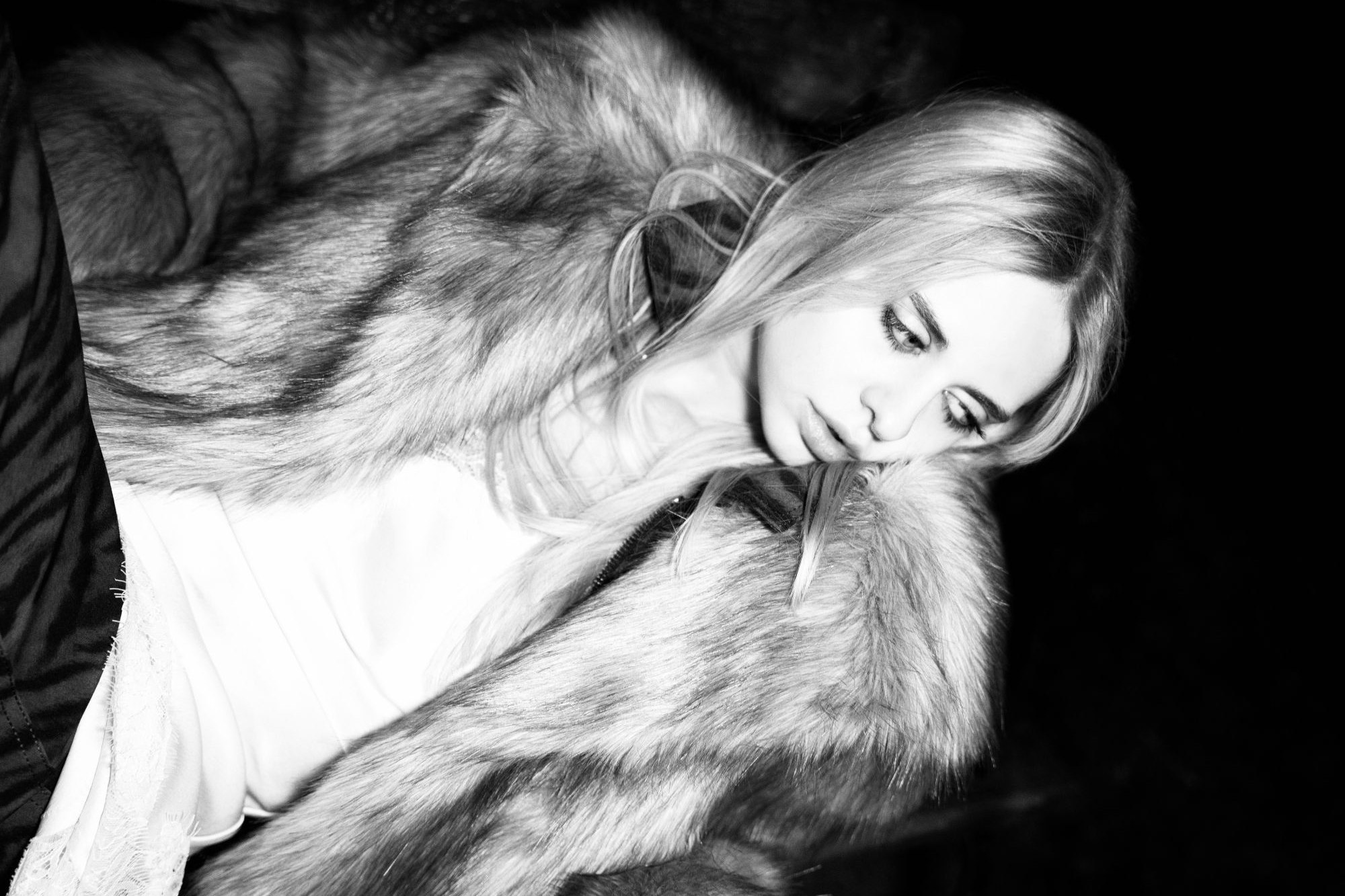
Every record I have made for a club is built on the same assumption: there is a floor, there are bodies on it, and the music's job is to move them. For the past months I have been writing music where that assumption does not hold. I now write the original music, sound design and sonic direction for Dance.Film.Performance, the London contemporary dance company and production agency, across their films, campaigns, performance work and the visual world around all of it. We are turning that into a record together. And on Saturday 5 September 2026 DFP took the physical half of the same practice to Amsterdam for an open workshop, and its next one is in Barcelona on Saturday 3 October.
The Amsterdam workshop at a glance
- What: a two-part contemporary dance workshop, technique, repertoire, improvisation and physical research
- When: Saturday 5 September 2026, 14:30 to 18:00. It has now taken place
- Where: CliffordStudio, Cliffordstraat 38, 1051 GV Amsterdam
- Led by: Angelina Gorgaeva, DFP founder, creative director, choreographer and producer, with DFP Associate Ekaterina Cheporova
- Price: €35, both parts included
- Audition: none. No application, no selection, no prior knowledge of the DFP Method needed
- Language: English
- Details: on the DFP workshop page
- Next workshop: Barcelona, Saturday 3 October 2026, 16:00 to 18:00, at Nunart, Carrer del Telègraf 67, €25, led by Angelina Gorgaeva (DFP Barcelona page)
What changes when the floor is not the point
There is a point where music for moving image stops being background and starts doing the work. It sets the pace. It decides how much air is in a room. It tells you how a body feels before that body has moved.
Most visual work is still scored the wrong way round. The film gets locked, somebody goes hunting through a library, finds something roughly the right length and roughly the right mood, and slides it underneath. It is efficient and it is why so much of it sounds like nothing.
With DFP the sound is planned at the same table as the choreography, the camera and the costume, and it exists while the choreography is still being made. A texture changes how somebody moves. A rhythmic decision changes an edit. Silence becomes a choreographic instruction rather than a gap to fill. Neither half follows the other because both are being built at once.
That has pushed me somewhere genuinely different in my own production. My normal working life is drums, bass pressure and records that have to survive a sound system, the speed garage and UK garage end of things, music engineered for exactly the small rooms I keep arguing for.
This asks for the opposite discipline. More space. More restraint. Darker synthesis. Long atmospheres, industrial texture, repetition that builds tension and then refuses to resolve it. A club record earns its keep with the drop. Here the drop is usually the wrong answer, because the body on screen is already doing that job and two things cannot both be the climax.
It is still electronic music. It is just built around bodies and images instead of a dancefloor, and learning to take things out rather than put things in has made me better at the club records too.
What Dance.Film.Performance actually is
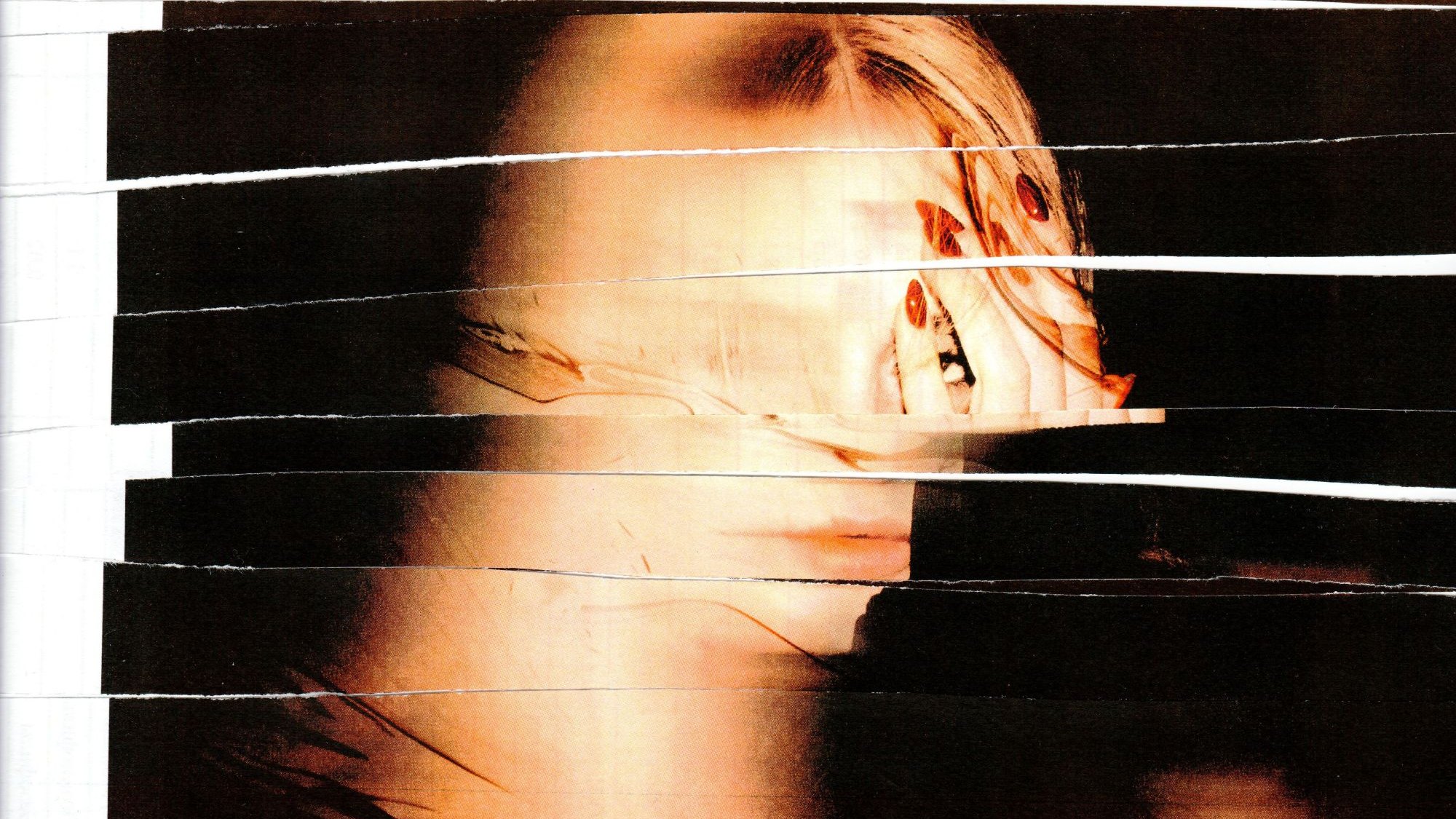
DFP describes itself as an award-winning contemporary dance company and production agency in London, integrating new media, visual arts and fashion. In practice it sits in an unusual place: half company, half production house, making live performance, film and original music for brands and for the stage.
The company was founded by Angelina Gorgaeva, who works as creative director, choreographer and producer across the output. Projects run end to end, from concept through choreography, casting, production and post, covering film, dance, fashion shows, live events and original music.
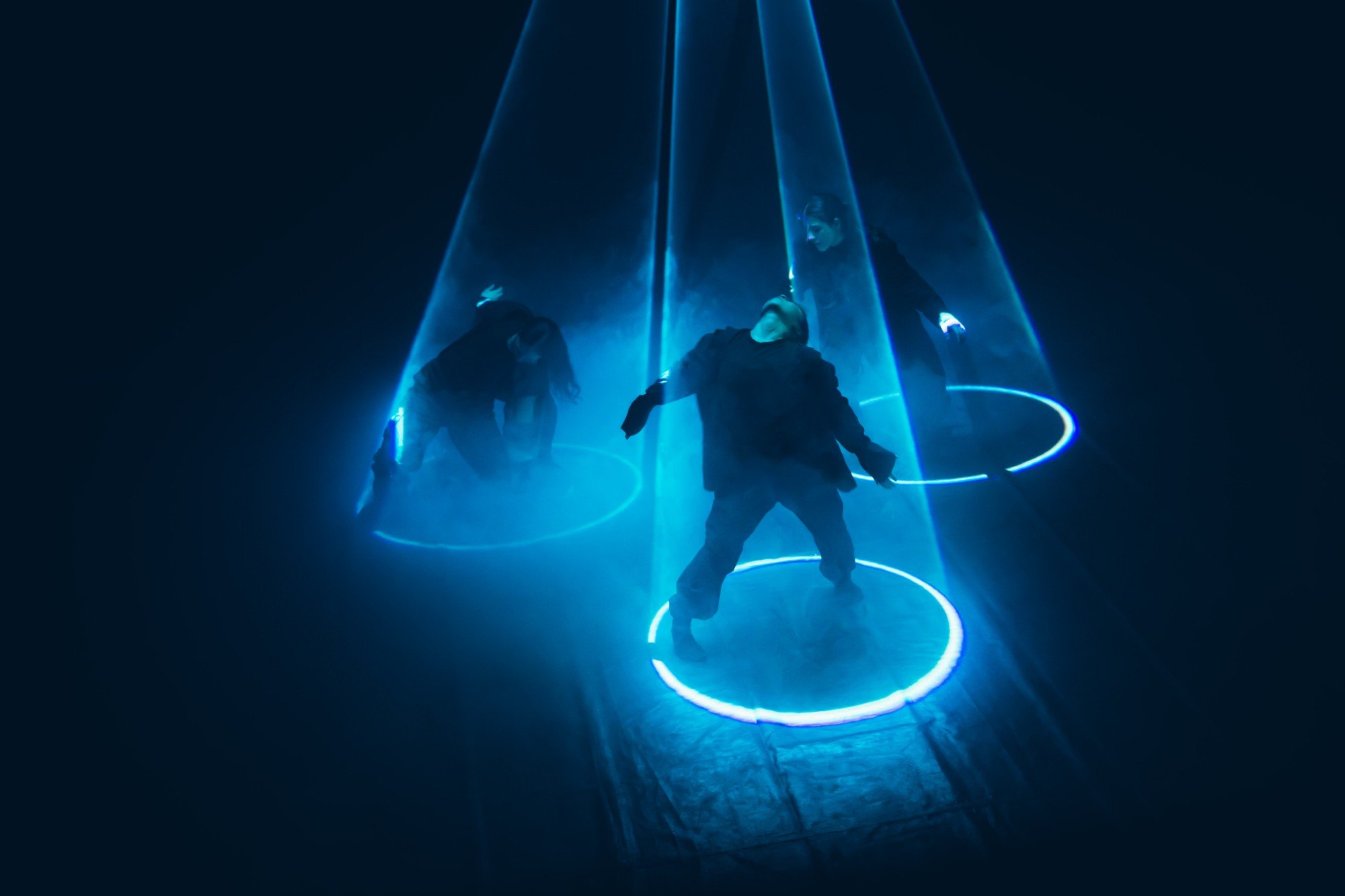
That last item is the one that matters for how this collaboration works. Original music is listed as part of what DFP produces, not as something bought in afterwards. It is why the scoring can start early enough to actually affect the movement, and why this piece is not a story about a company hiring a composer.
Angelina Gorgaeva, and why this works
None of this would be interesting without the person running it. Angelina Gorgaeva is the founder, creative director, choreographer and producer of Dance.Film.Performance, a graduate of London Contemporary Dance School and Trinity Laban, and she is one of the few people I have worked with who treats sound as a structural material rather than a finishing service.
Readers of this magazine have met her before. She directed the movement and performance for the House of MNEEMO x Neon Black takeover at Embassy Gardens, which was the first project we built together and where the argument for treating a DJ set as a performance rather than a booking got tested properly. Dance.Film.Performance also joined the bill for the Gallery Club night in July.
What she does that most choreographers do not is hold the whole pipeline. Concept, choreography, casting, camera, edit, and now the music, all decided inside one conversation instead of handed down a chain. It is why a texture I send at the sketch stage can end up changing a phrase, and why a movement decision can send me back to rewrite a section. That loop only exists because one person is holding both ends of it.
It is also the reason the Amsterdam workshop was worth the trip rather than being a nice afternoon. What was taught there is the practice these productions are actually made from, not a simplified version of it packaged for a class.
The album
All of that is now becoming a record. MNEEMO and Dance.Film.Performance are building a collaborative album of original contemporary electronic music, drawn from the same sonic world the productions are made in.
Atmospheric compositions, darker synthesis, cinematic space, distorted texture. Pieces that sit somewhere between a contemporary dance score, a soundtrack and standalone electronic music, without pretending to be a conventional artist album.
Some of it will feel like music. Some of it will feel more like a place. The point is that it does not exist separately from the visual work it came out of, which is a very different proposition from a soundtrack album assembled after the fact.
Dates when there are dates. I am not going to trail a release with a countdown before the record is finished.
Amsterdam: what happened in the room
Before any of the recorded work lands, there is a considerably more direct way into this world, and in September it went to the Netherlands.
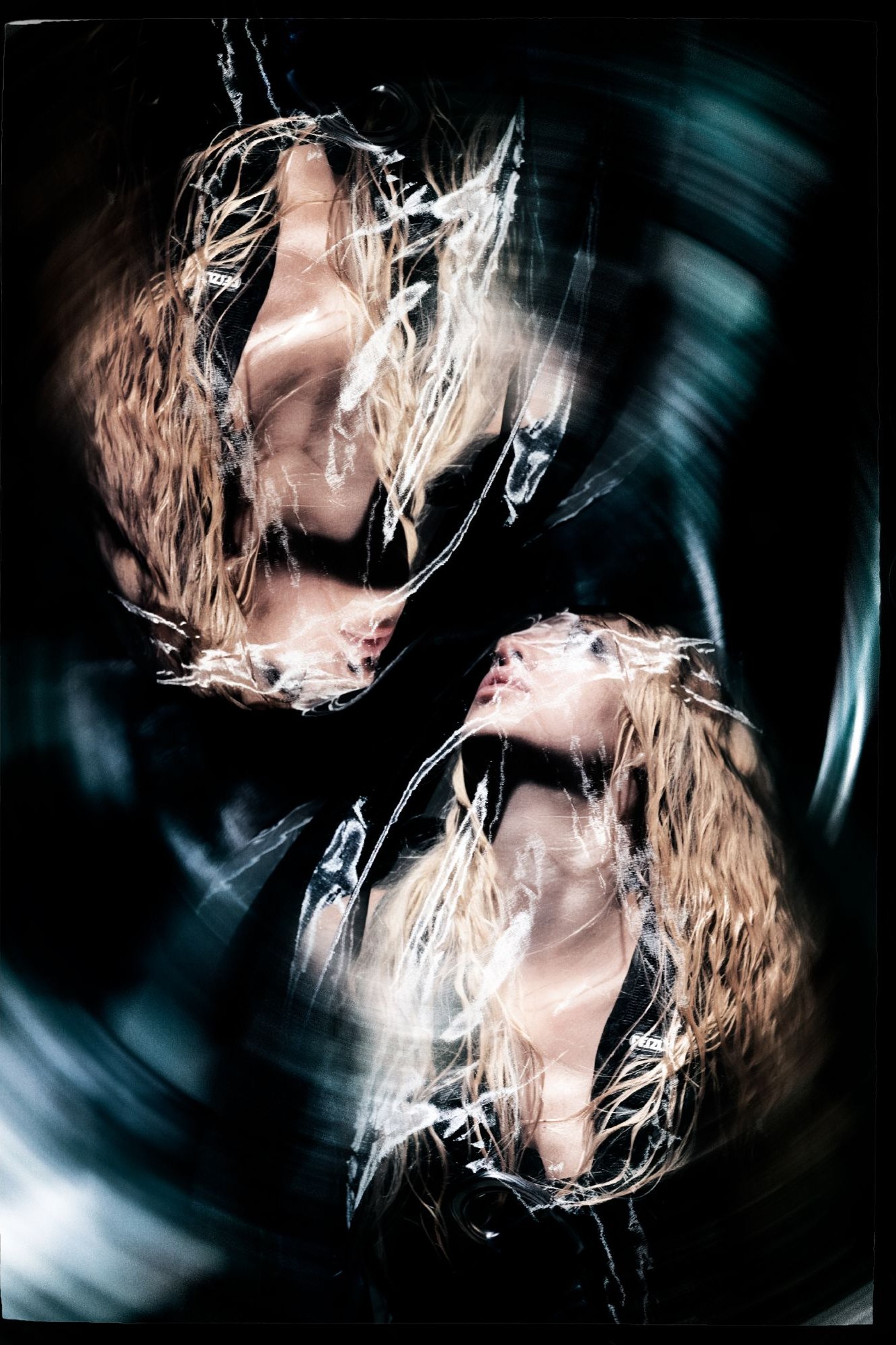
On Saturday 5 September 2026, DFP brought their professional practice to CliffordStudio in Amsterdam for three and a half hours, from 14:30 to 18:00. It was not structured like a drop-in class. The afternoon split into two parts with two different people running them.
Part one, with Angelina Gorgaeva, covered the DFP Method and choreography. It opened with contemporary technique, floorwork and guided improvisation, the material developed through the company's own training, choreographic research and productions, then moved into repertoire-based tasks working on dynamics and musicality.
That word musicality is the one I would underline, given what I do. Repertoire work is where you find out whether a dancer is counting the music or listening to it. Fixed choreography and individual interpretation pulling against each other is the same problem I have when scoring: how much do you specify, and how much do you leave for the body to answer.
Part two, with Ekaterina Cheporova, went into improvisation and physical research through two of her own methods. The Elevator Method works on mobility and joint articulation. 8 Levels of Focus works with perception, imagery and attention as the thing that generates movement rather than as decoration on top of it.
Both parts pushed toward expanding the physical limits of the body, which is a more honest description of the afternoon than a technique class would be. The technique was there. The technique was not the destination.
Who it was for, and what it cost
The session was aimed at professional and pre-professional dancers, dance students and movement artists interested in contemporary technique, improvisation, physical research and creative exploration.
There was no audition and no application. DFP were explicit about it: book a ticket and your place was confirmed, with no selection and no prior knowledge of the DFP Method required. The whole thing was taught in English.
Tickets were €35 and covered both parts, sent as a PDF by email, one per person, with all sales final. The next workshop is shorter and cheaper: two hours in Barcelona on Saturday 3 October 2026, 16:00 to 18:00, at Nunart, Carrer del Telègraf 67, for €25, led by Angelina Gorgaeva. DFP says the first release of tickets has sold out.
Why a music site is telling you about a dance workshop
Because the disciplines have stopped behaving like separate departments, and that is the actual story here.
Movement affects the camera. The camera affects the edit. The edit affects the sound. The sound affects the movement again. Once you have worked inside that loop it becomes very hard to go back to receiving a locked picture and being asked to decorate it.
It is the same instinct that runs through most of what this magazine argues about music. The rooms where the DJ is surrounded rather than elevated work because the feedback loop is short. The sound system culture that seeded British bass music was never a stage and an audience, it was a corner and a crowd occupying the same space. Scale separates the parts. Proximity fuses them.
A workshop is the smallest, most direct version of that. If your practice sits anywhere between contemporary dance, movement research and performance, the next room is in Barcelona on 3 October, where you can stand inside the thing rather than watch a showreel of it.
And there is a second door if you make films: DFP are taking submissions for edition two of their short film festival, running in London in November 2026, at £20 per film with a final deadline of 15 October and the Official Selection announced by early November.
FAQ
When and where was the DFP Amsterdam workshop?
Saturday 5 September 2026, 14:30 to 18:00, at CliffordStudio, Cliffordstraat 38, 1051 GV Amsterdam. It ran three and a half hours, split into two parts led by two different teachers.
How much were tickets and what did they include?
€35, covering both parts of the workshop. Tickets were sent as a PDF by email, one per person, each with its own ticket number, and all sales were final.
When is DFP's next workshop?
Barcelona, Saturday 3 October 2026, 16:00 to 18:00, at Nunart, Carrer del Telègraf 67. Tickets are €25 and Angelina Gorgaeva leads it. DFP says the first release has sold out.
Did dancers need to audition or apply?
No. The workshop was open. Booking a ticket confirmed your place, with no selection process and no prior knowledge of the DFP Method required. It was taught entirely in English.
Who taught the DFP Amsterdam workshop?
Angelina Gorgaeva, the founder, creative director, choreographer and producer of Dance.Film.Performance, led part one on the DFP Method and choreography. DFP Associate Ekaterina Cheporova led part two on improvisation and physical research, using her Elevator Method and 8 Levels of Focus.
Who was the workshop for?
Professional dancers, pre-professional dancers, dance students and movement artists interested in contemporary technique, improvisation, physical research and creative exploration. No previous contact with DFP was assumed.
What is the DFP Method?
The company's own evolving movement practice, combining contemporary technique, floorwork and guided improvisation, developed through DFP's professional training, choreographic research and productions. Part one of the Amsterdam workshop introduced it before moving into repertoire-based tasks on dynamics and musicality.
What is Dance.Film.Performance?
An award-winning contemporary dance company and production agency based in London, integrating new media, visual arts and fashion. It makes live performance, film and original music for brands and for the stage, producing projects end to end across film, dance, fashion shows and live events. It was founded by Angelina Gorgaeva.
Is the MNEEMO x DFP album out?
Not yet. It is in development: a collaborative album of original contemporary electronic music built from the same sonic world as DFP's productions, atmospheric and darker in tone than MNEEMO's club output. No release date has been announced.
Disclosure
Worth saying plainly, because a masthead is only worth what its credibility is worth. I write the music and sound for Dance.Film.Performance, and I have a commercial interest in the album this piece trails. This is not an independent review of the workshop and it is not pretending to be one. Every practical detail above, the dates, the venues, the prices, the teachers, the two parts, the ticket terms and the festival fee, is taken from DFP's own pages and was rechecked against them on 26 September 2026 rather than taken from a press release.
This editorial is part of House of MNEEMO's ongoing coverage of the electronic and club music scene, written by London-based DJ and producer MNEEMO, millions of streams to his name and a party series running through some of London's best clubs. Listen to MNEEMO: Spotify · Instagram · YouTube