FOLD vs fabric vs E1 vs Drumsheds: Which London Club Fits Your Sound?
A DJ's sound-first comparison of FOLD, fabric, E1 and Drumsheds in 2026: capacity, sound, licences, programming and which London club actually fits your night.
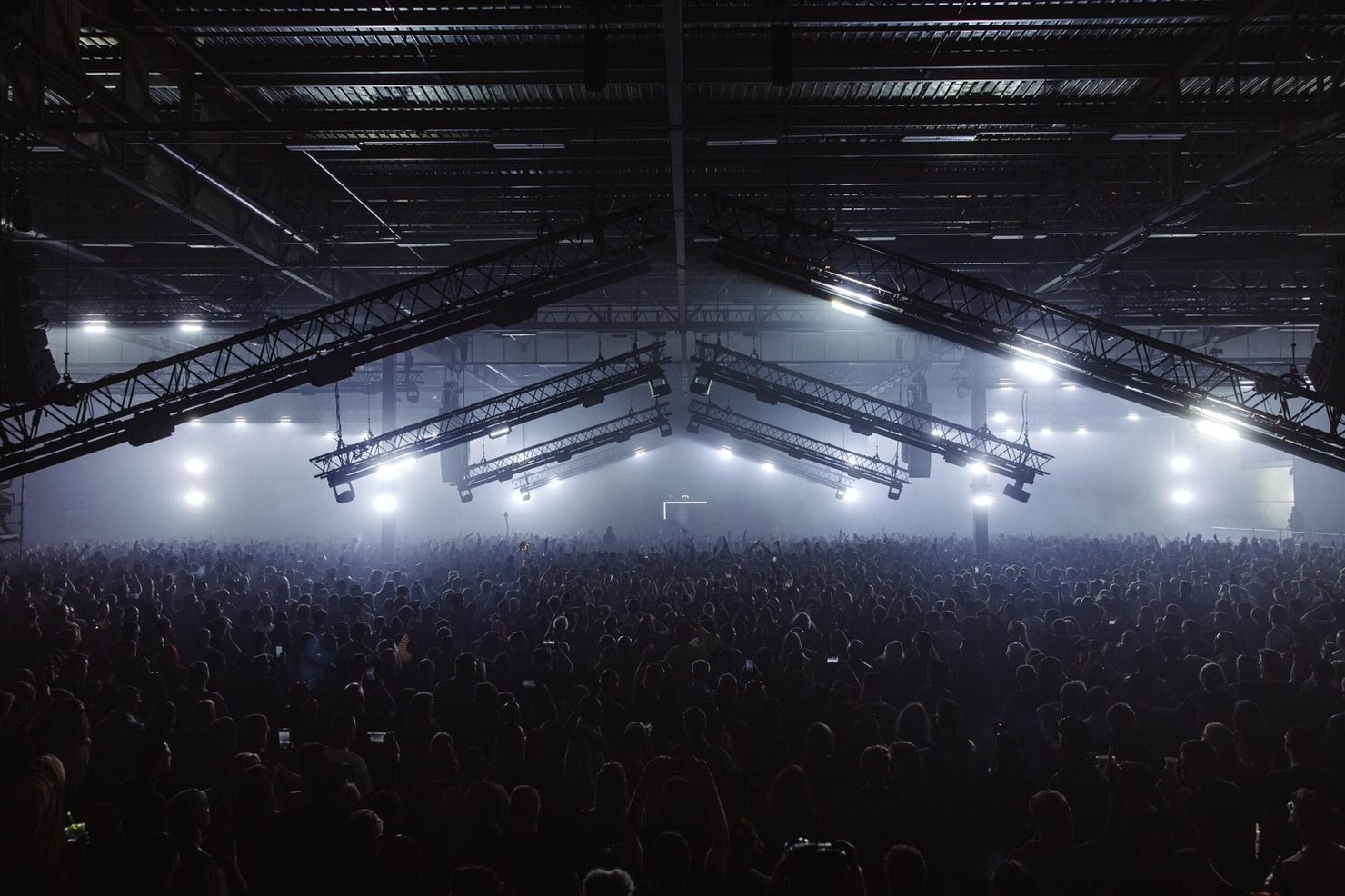
London does not have one best club. It has four very different machines, and picking the wrong one is how you waste a Saturday. FOLD, fabric, E1 and Drumsheds are the names that come up most when people argue about where to go for electronic music in the city, and on paper they look like rivals. They are not. They are built for different scenes, different scales and completely different ways of listening to a record. One is a 600-capacity 24-hour room on an industrial estate in Canning Town, one is a 1,600-capacity institution that helped define UK clubbing, one is a 1,600-capacity East London warehouse with a 700-capacity sister club next door, and one is a 14,999-capacity indoor festival in a former IKEA. This is a working DJ and producer's read on what each one actually does, who it suits, and how to choose between them in autumn 2026.
Quick verdict
The short version, before the detail.
- FOLD. Canning Town, around 600 capacity, Funktion-One, 24-hour licence. Best for: deep, late, hypnotic techno and a community that came to dance, not to be seen.
- fabric. Farringdon, about 1,600 across three rooms, the bodysonic Room One floor, 24-hour licence. Best for: range and depth across a full night, from headline house and techno to drum and bass and bass music.
- E1. Wapping, around 1,600 in the main warehouse, plus the 700-capacity Onyx in the same complex. Best for: warehouse-scale techno, hard techno, drum and bass, jungle and garage in one industrial site.
- Drumsheds. Tottenham, 14,999 across three main rooms. Best for: festival-scale electronic events, huge brand takeovers and once-a-season spectacle rather than a weekly local.
If you only remember one line: FOLD and fabric are clubs, E1 is a warehouse, and Drumsheds is an indoor festival. Everything below is about matching that to your sound.
| Club | Area | Capacity | Rooms | Licence | Best for |
| FOLD | Canning Town, E16 | around 600 | 2 | 24-hour | Deep techno, long sessions, Sunday day parties |
| fabric | Farringdon, EC1 | about 1,600 | 3 | 24-hour | House and techno Saturdays, bass and DnB Fridays |
| E1 and Onyx | Wapping, E1W | 1,600 plus 700 | 2 plus 2 | Standard late licence | Warehouse techno, jungle, DnB, garage all-dayers |
| Drumsheds | Meridian Water, N18 | 14,999 | 3 main rooms | Retained at 14,999 in 2025 with modified conditions | Brand takeovers, festival-scale daytime events |
FOLD: serious, late, techno-focused pressure
FOLD opened on 18 August 2018 at Gillian House on Stephenson Street in Canning Town, in a former print works on an industrial estate, and it was a direct answer to a wave of London closures. Founders Seb Glover, previously of the Hackney Wick venue Shapes, and DJ and producer Lasha Jorjoliani built it as an artist-led space rather than a commercial nightclub, and that intent still runs through everything: organic programming pulled from personal networks, a queer-positive safe space policy posted at the entrance, a strict no-photography rule, lockers instead of a cloakroom, and a DJ booth set at floor level rather than on a stage. People who love FOLD talk about it as a shelter, which tells you what kind of room it is.
The numbers are small on purpose. Capacity is around 600, with some listings putting it lower, so even on a peak night it stays intimate. The sound is the headline feature: a Funktion-One system in the main room inside a building whose industrial construction gives it natural soundproofing, which is exactly why the site was chosen. Pair that with a 24-hour licence from Newham Council, granted because the estate is well away from housing, and you get the thing FOLD is famous for: long, patient, hypnotic sessions that run far past the point where most London clubs have turned the lights on. The licence was briefly suspended in November 2019 and reinstated after a council hearing, and the club has run on the same terms since.
This is not a venue for a quick, drop-chasing night out. The programming leans into techno, acid and bass, deep and rolling more often than peak-time and brutal, and the room rewards staying put. The all-nighters are the draw, but UNFOLD, the Sunday daytime party with unannounced local line-ups, has its own following, the kind of session that turns a weekend into a marathon for people who treat dancing as devotion. If your idea of a good night is a single dark room, a serious system and a crowd locked into a groove for hours, FOLD is the most uncompromising option of the four. It is the small-room antidote to spectacle, and the case I made in small rooms versus festivals applies here more than anywhere in the city.
fabric: legacy, depth and multi-room culture
fabric opened on 29 October 1999 in the former Metropolitan Cold Stores on Charterhouse Street, opposite Smithfield Market in Farringdon, and it is the closest thing London has to a flagship. In 2026 it sits at number 13 in DJ Mag's Top 100 Clubs, down one place on the year but still the highest-ranked London venue in the poll, and that placing is earned on programming depth rather than scale. Capacity is about 1,600 across three rooms, each with its own sound system, and the layout is the point: you are meant to move between rooms across a night and hear different sides of electronic music rather than stand in front of one stage.
Room One is the famous one, built around the bodysonic dancefloor, with 400 bass transducers under the boards so the low end physically vibrates up through your feet. It is one of the most distinctive club experiences in the world and the reason fabric became a sound-system pilgrimage. Room Two has the raised booth and the harder edge, and Room Three is the small, sweaty room where a lot of the best moments actually happen. You are meant to use all three.
The programming is split by night and it is worth understanding before you book. Fridays are FABRICLIVE territory: drum and bass, jungle, grime, dubstep, UK garage, bassline and the harder, bass-led end of the spectrum, and the FABRICLIVE 27th birthday lands on 16 October 2026. Saturdays are the four-to-the-floor flagship, running through house, techno, electro, minimal and dub techno from internationally booked names, with Craig Richards and Terry Francis the residents whose Saturdays wrote the club's identity. So if you want bass music, aim for a Friday; if you want house and techno, aim for a Saturday.
fabric also holds a 24-hour licence, one of a small handful in the capital, which is significant given the club lost its licence entirely in September 2016 before a public campaign, a 160,000-signature petition and more than £300,000 in donations brought it back that November under new conditions, with the doors reopening in January 2017. What you get in 2026 is range done to a high standard: a club that can give you a credible headline room and two more rooms of genuine programming on the same ticket. If you want a complete night that moves through styles rather than a single sound, fabric is the most rounded pick on this list; the head-to-head with the other London institution is in fabric vs Ministry of Sound. I have played it, and the thing nobody tells you is how differently the same record lands in each of the three rooms.
E1 and Onyx: East London warehouse-scale clubbing
E1 opened in 2017 at 110 Pennington Street in Wapping, and it represents a different model again: the purpose-fitted warehouse. It holds around 1,600 across two rooms, the long industrial main space with bare walls and structural pillars that suits volume and forward motion, and a smaller studio room for more intimate, often bass-heavy nights. The programming is harder and more linear than fabric's multi-room curation, spanning techno, hard techno, drum and bass, jungle, UK garage and trance, and the main room is built for momentum rather than wandering. It is one of the venues most associated with London's current UK garage and hard-techno strength.
What makes E1 more interesting in 2026 is that it is now half of a pair. On 26 September 2025 the same team opened Onyx in the same Pennington Street complex, a 700-capacity sister club with a custom Funktion-One system and a two-room layout, after redesigning the space and adding a new bar. That gives the Wapping site real range: a big warehouse room for scale and a smaller, sharper room next door, inside shared infrastructure. It is one of the smarter venue developments of the last couple of years and turns a single club into a small cluster. This autumn the pairing shows what it is for: Switch Disco takes Onyx on 24 October, and E1 hosts the Jungle Mania meets AWOL Halloween all-dayer on 31 October, three arenas of jungle, drum and bass and house and garage running from 2pm.
E1 suits the night where you want size and a hard, driving sound without going all the way up to festival scale. It is louder and more anonymous than FOLD, more linear than fabric, and that is exactly its appeal for a certain kind of techno or garage night. Go to E1 when you want a proper warehouse, not a boutique room.
Drumsheds: an indoor festival, not a club
Drumsheds is the outlier, and calling it a club at all is a stretch. It opened in 2023 in the former Tottenham IKEA at 6 Glover Drive under Broadwick Live, and it is licensed for 14,999 people across three main rooms: the X Room at around 10,000, the Y Room at around 5,000 and the Z Room at around 1,000. By capacity it is larger than Wembley Arena and Alexandra Palace, and it sits in the very top tier of global club capacities. In 2026 it is number 45 in DJ Mag's Top 100 Clubs, up 24 places on the year, which tells you how fast it has scaled. It also survived the test a venue that size was always going to face: after a stabbing and two drug-related deaths in late 2024, Enfield Council reviewed the licence in January 2025 and kept the capacity at 14,999 with modified conditions, while the Met had pushed for a cut to 9,999. The full story is in the Drumsheds pillar.
The programming matches the size. The AW26/27 season opens with Defected on 19 September and runs through Terminal V on 23 October, elrow Horroween on 31 October, A State of Trance on 14 November, FUSE's 18th birthday on 28 November and Resistance on 5 December. These are not weekly resident nights, they are event-scale productions you plan a trip around, mostly daytime Saturdays finishing at 22:30. The experience is closer to an indoor festival than a night at a local: big sightlines, big production, big crowd energy, and a room so large that the intimacy of FOLD or even fabric is simply not on the menu. Every date, price and door time is in the Drumsheds season guide.
That is not a criticism, it is a different product. Drumsheds is where you go for the once-a-season spectacle, the line-up that needs a huge room, the moment that only works at scale. Just go in knowing what it is. If you want a connection with a small floor and a long set, this is the wrong postcode. If you want the biggest electronic events London can stage indoors, nothing else here competes, and the only real comparison is with Manchester, which I make in Warehouse Project vs Drumsheds.
Which club fits which sound?
Strip away the loyalty and it comes down to what you actually want from the night.
- You want deep, hypnotic techno and a real community: FOLD. Small, serious, late, and built for staying on one floor for hours.
- You want range and depth across a full night: fabric. Three rooms, a world-class main floor and programming that moves through house, techno, bass and beyond.
- You want warehouse-scale techno, hard techno, DnB or garage: E1, with Onyx next door when you want the same energy in a smaller room.
- You want a huge brand takeover or an event you plan a trip around: Drumsheds. Festival scale, festival production, festival crowd.
- You want the most distinctive sound system experience: fabric's Room One bodysonic floor or FOLD's Funktion-One, depending on whether you want legacy scale or intimate pressure.
- You want the biggest possible night: Drumsheds, every time.
A practical way to read it: the smaller the room, the more the night is about the music and the floor; the bigger the room, the more it is about the event and the spectacle. FOLD and fabric are where you go to listen, E1 is where you go to move, and Drumsheds is where you go for the occasion. For the month ahead, the dates worth booking across all four are in the October 2026 club calendar, and the wider map, with Printworks, XOYO and the rest, is the best London clubs guide.
The honest caveat
All four of these rooms exist against the backdrop I wrote about in why London clubs are closing: rising costs, licensing pressure and a city with 58 24-hour licences left where there were 91 in 2010. FOLD and fabric hold two of them. E1 built a second club rather than a bigger one. Drumsheds went the other way and bet on scale, then had to defend it in front of a council. None of those strategies is wrong, but they are different answers to the same question, and the club you pick is also a vote for which answer you want London to keep.
FAQ
Is FOLD or fabric better for techno?
They are both strong but different. FOLD is smaller, darker and more uncompromising, built for long, deep, hypnotic techno sessions in a room of around 600 with a 24-hour licence. fabric has more scale, a higher global ranking and a multi-room night, so it covers techno alongside house, electro and bass. For pure underground immersion, FOLD; for range and a flagship main room, fabric.
What is the capacity of each club?
FOLD holds around 600, fabric about 1,600 across three rooms, E1 around 1,600 in its main warehouse plus 700 at the neighbouring Onyx, and Drumsheds is licensed for 14,999 across three main rooms.
Which London club has the best sound system?
fabric's Room One is famous for its bodysonic dancefloor, where 400 bass transducers under the floor make the low end physically vibrate. FOLD runs a Funktion-One system in a building chosen for its natural soundproofing, and Onyx opened in 2025 with a custom Funktion-One of its own. They are reference-quality in different ways, one built around legacy scale, the others around intimate pressure.
Is Drumsheds a club or a festival?
In practice it is closer to an indoor festival. At 14,999 capacity it is larger than Wembley Arena, most of its events are daytime Saturdays finishing at 22:30, and its calendar runs on big brand takeovers rather than weekly resident nights. Treat it as an event venue you visit for a specific line-up, not a regular local.
Where are these clubs located?
FOLD is on Stephenson Street in Canning Town, East London. fabric is on Charterhouse Street in Farringdon, central London. E1 and Onyx share the complex at 110 Pennington Street in Wapping, East London. Drumsheds is at 6 Glover Drive, Meridian Water, in the former IKEA building in North London.
Which club is open 24 hours?
FOLD and fabric both hold 24-hour licences and are among only a small group of London venues with that distinction, which is why their nights can run far longer than a standard club closing time. Holding the licence does not mean every night uses it; check the listed finish time for the event you are booking.
Which is best for drum and bass or UK garage?
For bass music, fabric on a Friday is the obvious pick, when FABRICLIVE runs drum and bass, jungle, grime, UK garage and bassline across the rooms. E1 is the other strong option, with a programme that regularly leans into hard techno, drum and bass, jungle and UK garage, including the Jungle Mania meets AWOL Halloween all-dayer on 31 October 2026. fabric Saturdays and FOLD lean four-to-the-floor, so save them for house and techno.
How do you get to Drumsheds?
The closest stop is Meridian Water station, about a five-minute walk, on Greater Anglia services from Tottenham Hale, Stratford or Liverpool Street. The nearest Underground is Tottenham Hale on the Victoria line, with a £5 return shuttle bus running to the venue on event days. The address is 6 Glover Drive, N18 3HF.
Sources
- Wikipedia entries for FOLD, fabric and Drumsheds; Resident Advisor club pages and news on E1 and Onyx
- DJ Mag Top 100 Clubs 2026 for the fabric and Drumsheds placings
- Time Out, February 2026, on London's remaining 24-hour licences
- Resident Advisor, DJ Mag and NME on the January 2025 Enfield Council decision on Drumsheds
- Broadwick Live and Drumsheds listings for the AW26/27 season; fabric, E1 and Onyx listings for October 2026
This guide is part of House of MNEEMO's ongoing coverage of the electronic and club music scene, written by London-based DJ and producer MNEEMO, with millions of streams to his name and a party series running through some of London's best clubs. For the wider picture, read the best London clubs for electronic music in 2026; for the full Drumsheds story, see the Drumsheds 2026 guide.