Why AI Music Hasn't Taken Over Electronic Dance Music Yet
- MNEEMO

- Apr 15
- 8 min read
AI music topped Billboard country and R&B charts in 2025. Electronic dance charts remain mostly untouched. The reasons are structural, and the gap tells you something about what dance music actually is.
The short answer
Generative AI has made deep commercial inroads into several music genres over the past 12 months. Country music has an AI act at number one on Billboard's Country Digital Song Sales chart. R&B has a multimillion-dollar AI signing on Hallwood Media. Deezer reports that 34% of daily uploads to the platform are fully AI-generated. But Beatport, Traxsource, and the specialist dance charts have not been taken over in the same way. The reasons are structural, tied to how electronic dance music is actually consumed, performed, and traded, and they point to where the real pressure on DJs and producers will come from next.

Key facts
Deezer: ~34% of daily uploads are fully AI-generated (Reuters, late 2025)
Detection: 97% of listeners in Deezer/Ipsos 8-country study could not distinguish fully AI-generated from human-made songs
Billboard AI breakthroughs 2025: Breaking Rust (AI country act) hit No. 1 on Country Digital Song Sales; Xania Monet (AI R&B persona) became first AI act on Billboard radio chart
Suno: $250M Series C, $2.45 billion valuation (November 2025)
Label position shift: UMG settled with Udio (October 2025). WMG settled with Suno (November 2025). Sony still litigating both
Ye's Bully album: James Blake publicly requested his production credit removed (March 2026) amid AI speculation
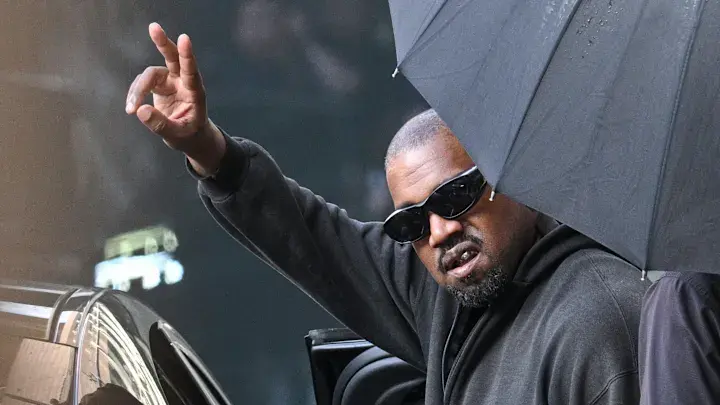
Silver Night: Viral AI cover of a 1990s pop song performed in Ye's voice, circulated widely in early April 2026, no official release
Electronic dance specifically: No confirmed AI act has dominated Beatport, Traxsource, or major dance charts as of April 2026
What the AI Music Takeover Actually Looks Like
The AI music story in 2025-2026 is not hypothetical any more. The data is concrete enough to describe clearly.
Breaking Rust, a fully AI-generated country act created by a previously obscure figure credited as Aubierre Rivaldo Taylor, reached number one on Billboard's Country Digital Song Sales chart for the week of 8 November 2025. It stayed at number one for a second week. Xania Monet, an AI R&B persona created by Mississippi poet Telisha Jones using Suno, signed to Hallwood Media after a reported $3 million bidding war and became the first known AI act to debut on a Billboard radio chart. By mid-November 2025, roughly one third of Billboard's Country Digital Song Sales top ten was AI-assisted in some form, per Billboard's own reporting.
The platform economy has moved in parallel. Deezer reports that fully AI-generated tracks now account for around 34% of daily uploads, and the platform has introduced flagging and algorithmic delisting as a defensive measure. A Deezer/Ipsos survey across eight countries found that 97% of listeners could not distinguish fully AI-generated music from human-made music in a blind test.
The capital has followed. Suno raised a $250 million Series C in November 2025 at a $2.45 billion valuation, funded by Menlo Ventures, NVIDIA's NVentures, Lightspeed, Matrix, and Hallwood Media. Udio closed its own major funding round after launching in April 2024 with backing from a16z, will.i.am, and Google Gemini's Oriol Vinyals. The Silver Night AI cover that went viral in early April 2026, featuring the apparent voice of Ye performing a 1990s pop song in English, showed how this infrastructure distributes at consumer level without any label or rights-holder involvement at all.
None of this is minor. It is the largest structural shift in how music is made and distributed since streaming.
The Majors Already Picked a Side
The most important signal for where AI music is headed is not the lawsuits. It is the settlements.
Universal Music Group settled with Udio on 29 October 2025, ending the largest AI copyright lawsuit in music and replacing it with a licensing deal that will launch a new AI-powered platform in 2026 trained on UMG's catalogue. Warner Music Group settled with Suno in late November 2025, becoming the first major to officially partner with Suno. WMG also acquired Songkick as part of the deal.
Sony is the only major still in active litigation against both platforms.
The shift matters because it tells you what the major labels now believe. Eighteen months ago the position was that AI music generation was mass piracy at an unimaginable scale. Today the position is that AI music is a licensing opportunity with a new revenue stream attached. The music industry establishment has moved from trying to stop generative AI to trying to monetise it.
For working artists, this is the real landscape. Not the Suno vs the labels war. The Suno with the labels deal.
AI in Electronic Dance Music: The Gap Nobody Is Talking About
This is where the picture changes.
Country music, R&B, gospel, and parts of pop have all seen AI acts break through commercially in 2025. Electronic dance music has not. No AI act has topped the Beatport house charts. No AI producer has landed in a Traxsource top ten. No generative AI track has become a certified anthem across major club rooms in the way Breaking Rust's Walk My Walk did across country Spotify.

The absence is itself a data point worth reading carefully. It is not because electronic producers are technologically behind. The tools are identical. Suno and Udio produce dance tracks as easily as they produce country ballads. Stems-based workflows, which AI excels at, are native to dance music in a way they are not to traditional songwriting.
The reasons the takeover has not happened in electronic dance are structural, and they tell you something specific about what this genre actually is.
Why AI Music in Electronic Dance Moves Differently
Reason one: DJ sets are live, venue-specific, and crowd-reactive. An AI system can generate a dance track in thirty seconds. It cannot read a room at 1am. It cannot feel when a crowd is tired, when a room needs tension, when the right moment for a breakdown has arrived. MNEEMO has written before about why small London rooms reward this kind of instinct in ways that large festivals and algorithmic playlists do not. That gap is the entire centre of gravity of electronic dance music. The track is not the product. The set is the product. AI can compete on track, but not on set.
Reason two: dance charts measure circulation in DJ pools, not digital sales. Country Digital Song Sales can be topped with a few thousand purchases. Breaking Rust's number one week involved approximately 2,000 to 3,000 downloads. Beatport's charts are driven by working DJs buying tracks to play out. That community has personal relationships with the people making the music, trades promos through known networks, and prizes tracks that behave well on big systems in real rooms. Gaming that community with a fictional AI act is considerably harder than gaming a digital sales chart with a $3,000 budget.
Reason three: the UK garage and tech house lane specifically rewards craft that is difficult for current generative models. The swing, the bass pressure, the low-end engineering, the way a track sits in a mix, these are the things that separate a record that works in a club from one that sounds fine at home. MNEEMO's own catalogue on Radar Recordsis built around this kind of engineering. Suno can produce a UKG-flavoured track in a minute. Whether that track survives a proper system at 1:30am is a different question, and the answer so far is that it mostly does not.

Reason four: the dance music community built its infrastructure around trust and attribution. Labels like Defected, Anjuna, Toolroom, Rinse, and ATW operate on personal relationships, A&R work, and artist development. A&R can hear a Suno track in the first bar. The gatekeeping layer between production and playlist is thicker in dance than in country or R&B, where digital sales charts and algorithmic playlists can be entered without anyone in the ecosystem knowing who you are.
Reason five: electronic dance audiences do not demand new-song consumption in the same way pop audiences do. Dance fans replay the same tracks for months, follow DJs to hear specific selections, and treat recorded tracks as raw material for DJ sets rather than end products. The content churn that generative AI thrives on is much weaker here. One strong record can live in sets for a year. A thousand AI-generated dance tracks do not beat that.
Silver Night Shows What the Real Threat Looks Like
The Silver Night AI cover that went viral in early April 2026 is useful to look at because it does not fit the Breaking Rust or Xania Monet pattern.
Silver Night is not a signed AI act. It is not on Spotify in a way that collects royalties. It did not top a chart. What it did was travel through remix networks, short-form video, and meme circulation, reaching millions of listeners across platforms in the space of about a week, through no label, no promotion, no release plan.
That model matters for electronic dance music because it is closer to how dance music has always spread than the Breaking Rust model is. Unofficial remixes, white labels, boot edits, SoundCloud-only releases, dubplates passed between DJs. This is the native distribution of dance music. Silver Night is the first major visible AI track to spread through these same mechanics with none of the permissions a legitimate release would require.
What this means for DJs and producers is that the threat to electronic dance music is probably not going to be an AI act topping Beatport. It is going to be AI-generated unofficial remixes, fake artist impersonations, and unauthorised vocal deepfakes circulating through the same promo pools and SoundCloud networks that working DJs rely on.
MNEEMO's own Cannonball bootleg remix with Flash lives in exactly this world. So do MNEEMO's Peso and Too Sweet edits. The SoundCloud bootleg tradition that has been the creative engine of UK dance music since the early 2000s is the same tradition that will be flooded with AI impersonations over the next 24 months.
What Is Actually Changing in 2026
The regulatory picture is moving. In March 2026 the UK government formally dropped its preferred opt-out model for AI training on copyrighted music, after significant creative industry pushback, and moved toward stricter creator protections and labelling requirements. In the EU, the AI Act's transparency rules around AI-generated content become applicable on 2 August 2026, with the European Commission having already published draft guidance in March 2026. Tennessee's ELVIS Act, signed March 2024, remains the strongest state-level voice protection in the US.
Platforms are also moving. Deezer flags and delists fully AI-generated tracks. Spotify announced AI credit disclosure standards and explicitly said it is "supporting a new industry standard for credits that shows when AI played a role (like vocals, instrumentation, or post-production)."
For electronic dance specifically, the question is whether Beatport, Traxsource, SoundCloud, and the specialist DJ promo pools (Inflyte, FATdrop, DJcity) will adopt equivalent disclosure rules. Most of them have not done so publicly yet. That gap is where unauthorised AI material will flow first.
What Working DJs and Producers Should Actually Do
Three practical positions worth holding.
First, do not assume the AI music takeover will look the same in dance as it looks in country. The structural protections that electronic dance music has, live performance, promo pool gatekeeping, craft-driven A&R, engineering requirements for systems, are real. They are not guarantees, but they are meaningful. Dance music has more time than country music had.
Second, expect AI impersonation before AI acts. The first major AI music event in dance will probably not be an AI artist dominating Beatport. It will be an AI-generated track appearing in a DJ's promo folder pretending to be a remix by a named artist who did not make it. This is how Silver Night travels. It is how the electronic version will travel too.

Third, the value of being a credible, verifiable human artist with a documented catalogue, live performance history, and label relationships is going up, not down. Every AI track that spreads without provenance raises the market value of artists whose provenance is clean. This is the real reason platforms like Radar Records and artist-first label structures matter more in 2026, not less.
AI music has taken over parts of the music industry. Electronic dance is not one of them yet. Whether the gap holds depends less on AI capability and more on whether dance music keeps the structural advantages it has always had: live, local, craft-based, relationship-driven, and played out loud in rooms where AI still cannot go.
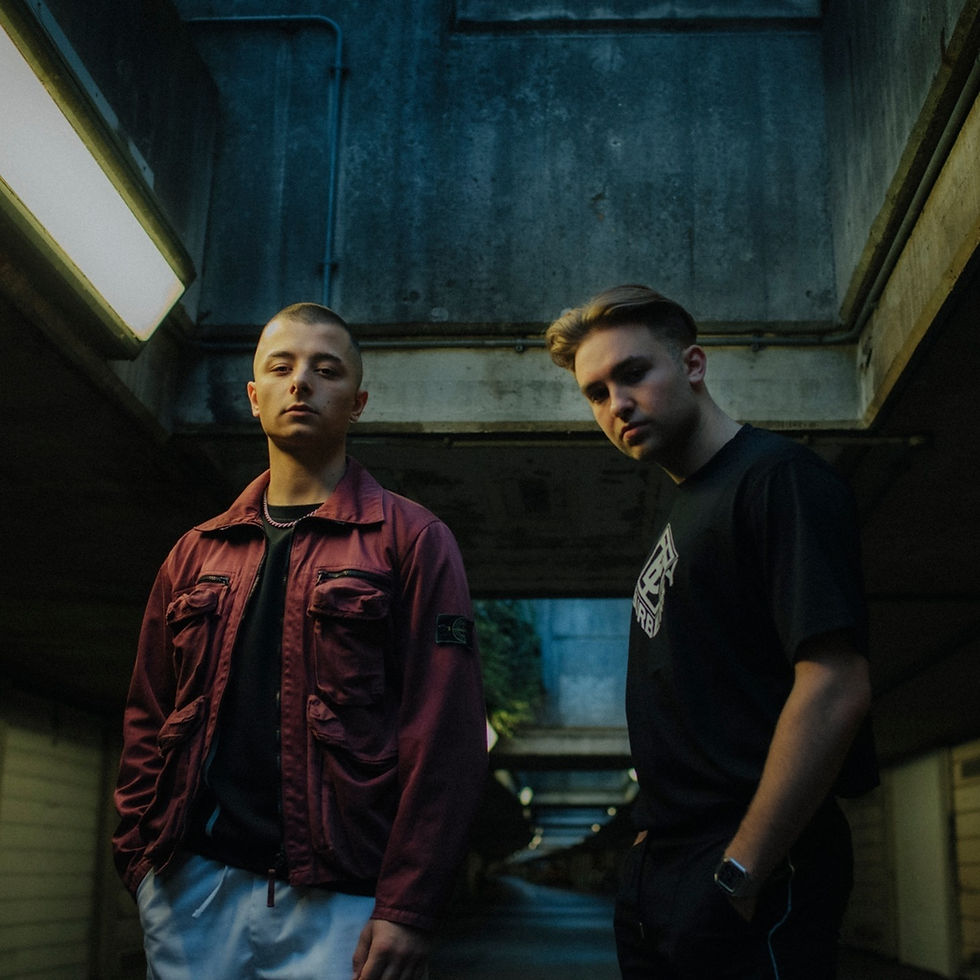
Published 14 April 2026 by MNEEMO, London-based DJ and producer, founder of HOUSE OF MNEEMO. Recent releases on Warsaw label Radar Records include GIVE YOU MORE, Down 405, and Never Come Back. Artist profiles: Resident Advisor, Spotify, SoundCloud. Full editorial archive and music at mneemo.com.