TSHA: The Self-Taught Producer Who Made Feeling Festival-Sized
Who is TSHA? Real name Teisha Matthews, the self-taught London producer behind Capricorn Sun and Sad Girl making emotional, melodic dance music on Ninja Tune.

TSHA's music does the hardest thing in dance music: it makes you cry and dance at the same time. Over two albums on Ninja Tune she has turned bright, melodic, emotionally open house into something big enough for a festival main stage and intimate enough for headphones at 3am, and she did it by teaching herself, from online tutorials, as a female producer whose production skills, her label says, were often overlooked. By 2024 Ninja Tune put her at well over 180 million streams, with a MOBO nomination and a Grammy nomination for her writing, and she has become one of British dance music's most distinctive voices, pushing a quieter revolution too: phones down, presence up. This is a working DJ and producer's guide to who TSHA is, the sound that made her, and why she matters. Her real name is Teisha Matthews, and the facts below were rechecked against current sources on 26 September 2026.
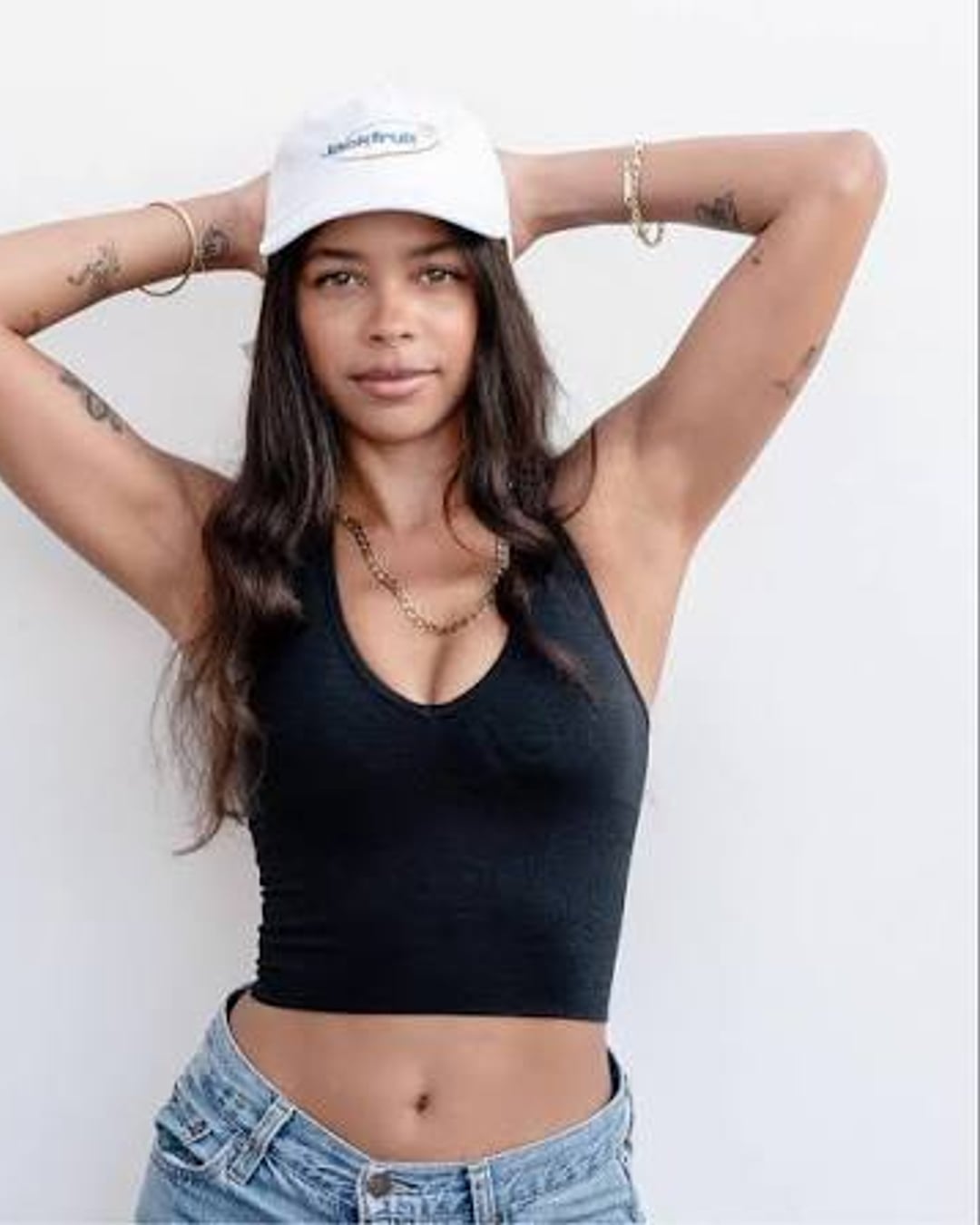
TSHA at a glance
- Real name: Teisha Matthews, a DJ, producer and live artist born on 26 December 1991 and raised in Fareham, near Portsmouth; she is 34 until her birthday on 26 December 2026.
- Label: Ninja Tune, home of her releases since the Flowers EP in November 2020.
- Debut album: Capricorn Sun (7 October 2022), named Album of the Year by DJ Mag and BBC Radio 1 Dance.
- Second album: Sad Girl (27 September 2024), her most danceable and personal record yet.
- The sound: bright, melodic house woven through with UK garage, breakbeat, rave and lush, emotive melody.
- The numbers: well over 180 million streams by 2024, a MOBO nomination for Best Dance Act and a Grammy nomination for her writing on Diplo's "Let You Go", per Ninja Tune.
- Latest single: "I Need U" with HoneyLuv featuring Ellie Maxwell, released 8 May 2026.
- Still to come in 2026: PIV's Ibiza night at Cova Santa on Tuesday 29 September, the last date of her Ibiza season.
Who is TSHA?
Behind the name is Teisha Matthews, and her route in is the opposite of an industry plant. She grew up in Fareham, near Portsmouth, a childhood she has described through the album interlude "Lonely Girl", and her way into rave came through her brother, a DJ, who taught her to mix. She then taught herself production from scratch, moving from Logic Pro to Ableton Live with the help of online tutorials, building what she has called "basic dance music tunes" until they became anything but.
The turning point was hearing Bonobo, a future Ninja Tune labelmate. "His mixture of organic sounds and live instrumentation with technology just blew my mind," she told MusicTech, and a later Bonobo show in Brixton pushed her to put together an EP. Her first Ninja Tune EP, Flowers, arrived in November 2020, she went on to deliver a BBC Radio 1 Essential Mix and become a DC-10 resident, and the self-taught outsider became one of British dance music's most celebrated new artists in barely a few years.
How old is TSHA? The Capricorn behind Capricorn Sun
Since her album title invites the question: yes, it is literal. Teisha Matthews was born on 26 December 1991, which makes her 34 years old as of September 2026, turning 35 the day after Christmas. Being born in late December places her sun sign squarely in Capricorn, and that is exactly what the debut album's name refers to: a record named for who she is on the natal chart, at a moment when she was working out who she was as an artist. It fits her better than most zodiac branding does. Capricorns are supposedly the patient, stubborn, self-made ones, and few one-line descriptions fit better for a producer who taught herself Ableton from online tutorials.
It also makes her rise easy to place on a timeline. She was 28 when her first Ninja Tune EP came out in November 2020, 30 when Capricorn Sun swept the album-of-the-year lists, and she enters her mid-thirties as an established headliner with a full Ibiza season to her name. In an industry that loves to anoint teenagers, TSHA is a reminder that most durable dance music careers are built, not discovered.
The sound: melodic house with a feeling
TSHA's music sits on bright, melodic house foundations, but what makes it hers is the emotion and the detail. She folds in UK garage swing, breakbeat, rave euphoria and bass-music weight, tops it with vocal chops and lush key stabs, and threads sophisticated percussion underneath, the kind of arrangement that betrays a producer who really learned her craft rather than chasing a formula. Tracks like "Sister", a vocal-chop-driven house record, became hallmarks precisely because they pair a serious dancefloor function with a genuine lump in the throat.
It is music engineered for catharsis. Where a lot of melodic dance music settles for pretty, TSHA goes for moving, building tracks that earn their big moments with patience and feeling. That emotional ambition is why her records translate from a sweaty club to a festival field without losing their soul.
Inside the studio: a Prophet-6, drum loops and patience
The self-taught origin story is well known; what she actually does at the desk is less so, and she laid a lot of it out in a MusicTech interview published in February 2023. Having started in Logic Pro and moved to Ableton Live, she now anchors her sessions around a small, well-chosen hardware core: a Sequential Prophet-6, the synth she reaches for first because, in her words, its presets are so good she can always find something great quickly, alongside a Roland TR-909 and a Behringer Neutron. That is a working producer's rig rather than a collector's wall, and it matches her whole approach, which is built on momentum rather than gear worship.
Her best practical habit is preparation. Before she sits down to write, she builds banks of drum loops, so that when an idea arrives she is choosing a groove rather than programming one from scratch, and her advice to newer producers is to do the same, because fiddling with drum loops once you are in the writing headspace only slows the process down. From there she works in layers, stacking melodic elements, vocal chops and percussion, then deliberately steps away from tracks to hear them fresh. For texture she also pulls from Tracklib, the licensed sample service, which lets her weave real recorded material into tracks without clearance headaches. None of it is glamorous. All of it explains why her records sound both handmade and finished, and why the emotional moments feel earned rather than preset.
Capricorn Sun: the album that won the year
Her 2022 debut Capricorn Sun was the record that confirmed it. A twelve-track journey blending bright electronica, shimmering dub, UK garage and breakbeat-touched vocals, it was hailed as Album of the Year by both DJ Mag and BBC Radio 1 Dance, and earned her MusicTech's Producer of the Year. It also showed her curiosity reached well beyond the club: "Water" featured Malian icon Oumou Sangaré, a genuinely global, respectful collaboration rather than a token sample. That instinct went back to her 2020 EP Flowers, whose single "Demba" wove the balafon of Trio Da Kali's Lassana Diabaté into a house framework.
That willingness to reach outwards, to treat dance music as a place where worlds meet rather than a closed formula, is a big part of why Capricorn Sun resonated so widely. It was emotional, ambitious and open, and it announced TSHA as an album artist, not just a singles producer.
Sad Girl and a more personal era
Her 2024 follow-up Sad Girl pushed further into both the dancefloor and herself. Released on Ninja Tune in September, it was billed as her most danceable work, leaning into the New York and Chicago house and techno grooves of her DJ sets, with TSHA putting her own vocals front and centre and making the music she wanted rather than seeking her peers' approval. It finds joy in hedonism and escapism while still addressing difficult feelings, the same cry-and-dance duality that defines her, even if some critics felt it traded a little of the debut's specificity for a broader sweep.
Either way, two strong albums in two years on a label like Ninja Tune is a serious body of work, and Sad Girl confirmed she is not a one-album artist but a developing voice. She has kept the momentum up since with a Sad Girl Remixes EP, her own curated Jackfruit party series, and a buoyant 2026 single, "I Need U" with HoneyLuv, while her DJ diary has expanded across the Ibiza superclub circuit, from Ushuaïa and Hï to Cova Santa.
"I Need U": the HoneyLuv partnership on record
The standout release of her 2026 so far is "I Need U", the collaboration with American house producer HoneyLuv featuring vocalist Ellie Maxwell, released on 8 May 2026 on Major Recordings and Warner Records. What makes it interesting is where it came from. As DJ Mag noted, the single grew directly out of the back to back sets the pair have been playing at rooms as big as Ushuaïa in Ibiza and Drumsheds in London, which is the healthiest possible way for a collaboration to happen: two DJs who already know how their tastes interlock on a dancefloor, bottling that chemistry in the studio. The track itself is classic TSHA, warm, vocal-led house with a lift in it, angled for the summer it was released into.
It also extends a collaborative streak that says a lot about her range. She has written with Diplo, on the song Ninja Tune credits with her Grammy nomination, fronted "Somebody" with Ellie Goulding and the jazz great Gregory Porter in September 2023, gone indie-adjacent with Master Peace on "Can't Dance" in 2024, and turned in an official remix of Johnny Corporate's "Sunday Shoutin'" for Defected in June 2024, the label's 25th year. Pop writers, jazz singers, house institutions: the common thread is that everyone wants the same thing from her, feeling with proper production underneath.
Breaking in when her production was overlooked
Here is the part of the story worth dwelling on. Her own label describes her as a female producer whose production skills were often overlooked, which is why MusicTech naming her its Producer of the Year for 2022 meant so much, and her rise is a quiet rebuke to that. She built her skills herself, signed to Ninja Tune, won Album of the Year, racked up well over 180 million streams, and picked up a MOBO nomination and a Grammy nomination for her songwriting, all while making music led by feeling rather than ego. In a scene that has not always made space for women behind the decks and the desk, she became one of its most acclaimed producers on her own terms.
That matters beyond her own career. Every barrier-breaking success makes the next one easier, and TSHA's combination of technical credibility and emotional openness has helped widen what a respected dance producer is allowed to be. She proved you can lead with feeling and still be taken completely seriously.
Phones down: TSHA and presence over documentation
In early 2025, EDM.com reported, she put her name behind one of dance music's most interesting movements, announcing a smartphone-free North American tour under her Jackfruit banner. The logic fits her music perfectly: if your whole project is about feeling something real on a dancefloor, a sea of phones filming the moment is the enemy of it. She joins a growing wave of artists asking crowds to put their phones away and actually be present, a reaction against constant documentation that chimes with the broader shift in club culture back towards connection and the unrepeatable night. For an artist who makes music to be felt rather than filmed, it is less a gimmick than a logical extension of everything she does.
The 2026 Ibiza season, date by date
If you want proof of how broad her church has become, read her 2026 Ibiza diary, as listed on Ibiza Spotlight. The season opened with ANTS at [UNVRS] on 23 May and ANTS at Ushuaïa on 6 June, the workhorse house brands of the island. Then came a Defected party at Chinois on 18 June, Pantheøn at Cova Santa on 12 July, and a genuinely eyebrow-raising booking: East End Dubs' Eastenderz night at Hï on 28 July, deep in minimal and tech-house territory. After that she played Our House, the Meduza and James Hype residency at Hï, on 12 August and Sonny Fodera at Pacha on 7 September, and the season closes with PIV's night at Cova Santa on Tuesday 29 September. That is seven different promoters across six venues in one season, from big-room ANTS to the PIV and Eastenderz end of the underground, and almost nobody else on the island moves across that whole spectrum in a single summer. We have broken down what separates Hï, Pacha, Amnesia and [UNVRS] elsewhere; TSHA is one of the few artists whose diary touches nearly all of them.
Back home, the UK festival summer ran alongside it. Boomtown's 2026 lineup listings billed her at Matterley Basin near Winchester, which ran from 12 to 16 August, including a back to back with Bristol heavyweight Eats Everything. Given that her no-phones Jackfruit shows and her B2B partnerships keep multiplying, the pattern is clear: the album artist and the club DJ are now equal halves of the TSHA project.
Essential TSHA tracks
To understand her quickly, start with "Sister", the vocal-chop house record that became a signature, and "Demba" with Trio Da Kali for her global, genre-blending ambition. "Dancing In The Shadows" shows the slow-building, orchestral, emotional side, while "Sweet Devotion" with Caroline Byrne and the wider Sad Girl material capture her harder, house-and-techno-leaning DJ self. Across them you hear the same thing: dance music that wants you to feel something.
Why TSHA matters
TSHA matters because she expanded what mainstream dance music is allowed to feel like. Self-taught and once overlooked, she turned emotional, melodic, globally curious house into award-winning, festival-filling music, and she did it as a woman who had to fight to be taken seriously in a scene that did not always make room for her. Two acclaimed albums, a Grammy nomination and a principled stand for phone-free presence later, she is both a major artist and a door-opener. In a world of disposable bangers, TSHA makes dance music built to move people in every sense, and that is exactly why it lasts.
FAQ
What is TSHA's real name?
Teisha Matthews. She is a DJ, producer and live artist, born on 26 December 1991 and raised in Fareham, who records for Ninja Tune.
What kind of music does TSHA make?
Bright, emotional, melodic house woven through with UK garage, breakbeat, rave and bass music, known for vocal chops, lush melodies and sophisticated percussion.
What are TSHA's albums?
Her debut Capricorn Sun (7 October 2022), named Album of the Year by DJ Mag and BBC Radio 1 Dance, and her second album Sad Girl (27 September 2024), her most danceable and personal record.
Is TSHA self-taught?
Yes. Her brother, a DJ, taught her to mix, and she taught herself production using online tutorials, moving from Logic Pro to Ableton Live, before her first Ninja Tune EP, Flowers, in November 2020.
Has TSHA won awards?
Her debut was named Album of the Year by DJ Mag and BBC Radio 1 Dance, MusicTech named her its 2022 Producer of the Year, and Ninja Tune lists a MOBO nomination for Best Dance Act and a Grammy nomination for her writing on Diplo's "Let You Go".
What are TSHA's best songs?
Highlights include "Sister", "Demba" featuring Trio Da Kali, "Dancing In The Shadows" and "Sweet Devotion" with Caroline Byrne, plus the buoyant 2026 single "I Need U" with HoneyLuv.
How old is TSHA?
TSHA was born on 26 December 1991, making her 34 years old as of September 2026. Her late-December birthday makes her a Capricorn, which is what her debut album Capricorn Sun is named after.
Where is TSHA playing in Ibiza in 2026?
Her 2026 Ibiza season took in ANTS at [UNVRS] and Ushuaïa, Defected at Chinois, Pantheøn at Cova Santa, East End Dubs' Eastenderz and the Meduza and James Hype party Our House at Hï, and Sonny Fodera at Pacha on 7 September. The last date is PIV's night at Cova Santa on Tuesday 29 September.
Did TSHA play Boomtown 2026?
Boomtown's 2026 lineup listings billed her at Matterley Basin near Winchester, which ran from 12 to 16 August 2026, including a back to back with Eats Everything.
Sources
- MusicTech, 2 February 2023, interview on her self-taught start, Bonobo, her Prophet-6, TR-909 and Behringer Neutron setup, drum loop method and Tracklib use
- Ninja Tune artist biography (Capricorn Sun and Sad Girl reception, streams, MOBO and Grammy nominations, Fareham) and Wikipedia (birth date, Fareham, collaborations)
- Deezer release data for Flowers (13 November 2020), Capricorn Sun (7 October 2022), Sad Girl (27 September 2024), "I Need U" (8 May 2026), "Somebody", "Can't Dance" and the "Sunday Shoutin'" remix
- DJ Mag (May 2026) on "I Need U" with HoneyLuv featuring Ellie Maxwell and their B2B sets at Ushuaïa and Drumsheds; Defected on the Johnny Corporate "Sunday Shoutin'" remix (June 2024); Ibiza Spotlight's 2026 party pages for ANTS, Defected, Pantheøn, Eastenderz, Our House, Sonny Fodera and PIV; Boomtown 2026 dates
- The Vinyl Factory on the Trio Da Kali collaboration and the "Demba" single
- EDM.com on TSHA's smartphone-free tour and the wider no-phones movement; EDM.com and DUBIKS on the 2026 single "I Need U" with HoneyLuv; DJ Mag on the Sad Girl Remixes EP; 2026 Ibiza listings (Ushuaïa, Hï, Cova Santa) and her Jackfruit party series
This guide is part of House of MNEEMO's ongoing coverage of the electronic and club music scene, written by London-based DJ and producer MNEEMO, with millions of streams to his name and a party series running through some of London's best clubs.